The swift rise of electric vehicles has made battery manufacturing a fiercely contested field across the globe. Even the smallest dust speck or a brief change in humidity levels inside these vast plants can ruin the quality of lithium-ion cells. For that reason, operators must keep exceptionally clean surroundings to achieve reliable high yields. Experts in air quality management know that facilities need dependable collaborators who offer solid technical knowledge along with the capacity to support enormous production volumes. Healthy Filters stands out as a trusted specialist here, delivering sophisticated high-efficiency filtration solutions crafted precisely for the tough conditions found in battery plants. Their dedication to outstanding air cleanliness enables sites to satisfy worldwide requirements and, at the same time, control electricity expenses effectively. Besides, their persistent drive for new ideas helps distributors and producers internationally create advanced systems for storing energy.
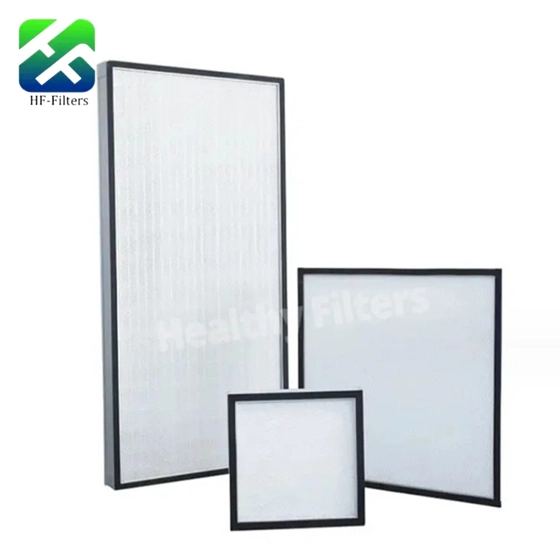
Environmental Rigidity in Battery Production Stages
Lithium battery fabrication includes various delicate steps in which the surrounding air greatly influences the safety features and service life of the finished items. Throughout the process, starting from raw material blending right up to putting cells together, engineers insist on carefully supervised atmospheric conditions so that no contamination occurs.
Particulate control for electrode coating processes
In the coating operation, metallic impurities must stay out of the environment entirely. When copper or aluminum dust mixes into the slurry or lands on the electrode surface as drying takes place, those particles often lead to dangerous internal short circuits during later battery use. Therefore, strong filtration plays a crucial part in protecting this phase and upholding the dependability of each cell produced.
Prevention of internal short circuits via ultra-clean air
Ultra-clean air becomes absolutely necessary while operators wind or stack the battery components. Sub-micron particles alone possess enough power to damage the separator layer, potentially causing serious thermal runaway incidents that endanger users and trigger expensive product recalls. Through rigorous air purification strategies, companies can substantially lower such hazards and improve the batteries’ durability over many cycles.
Humidity management in low-dew-point dry rooms
Lithium substances display extreme sensitivity toward moisture, which is why dry rooms require meticulous regulation. Filtration arrangements need to coordinate closely with desiccant dehumidifiers so that very low dew points remain steady during the whole manufacturing sequence. Such integration avoids moisture-induced damage and contributes to uniform product characteristics from start to finish.
Air purity standards for high-capacity lithium-ion cells
Batteries built for superior capacity demand the strictest air cleanliness levels, commonly reaching ISO Class 5 or even higher classifications. Meeting these demanding criteria ensures stable energy density along with prolonged cycle performance across the battery’s entire working life.
Multi-Stage Protection with Medium Efficiency Pocket Filters
Expensive terminal high-efficiency filters in the air distribution network benefit greatly from sturdy pre-filtration barriers. This stepped method traps most industrial dust at earlier points, which stops it from reaching the cleanroom’s overhead delivery system.
Shielding high-value terminal HEPA filters from heavy dust
Medium Efficiency Pocket Filters, placed in primary or secondary positions, prevent rapid overload on terminal HEPA units and therefore cut down on regular servicing charges noticeably. In addition, this protective layer prolongs the useful life of subsequent filters and maintains smooth workflow without frequent halts.
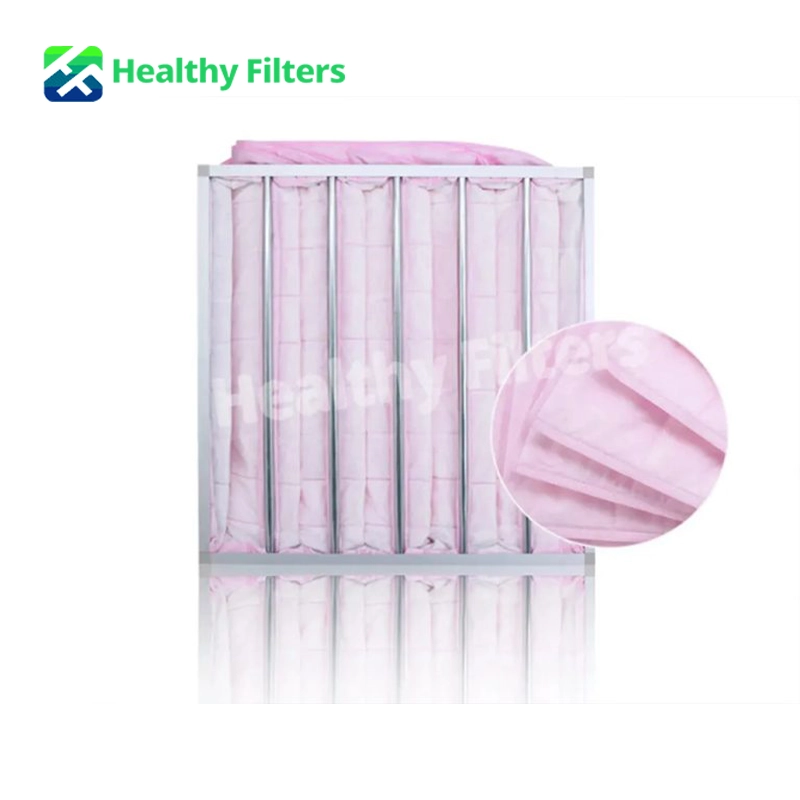
High dust holding capacity for continuous production lines
Since Giga-factories function nonstop every day, filter swaps that happen too often would interfere with output targets. Pocket filters provide ample media surface, so they gather large quantities of debris before airflow resistance increases significantly. Hence, they support consistent manufacturing rhythms with reduced stoppages for upkeep.
Energy-efficient glass fiber media for reduced pressure drop
Pink glass fiber media in these filters combines robust particle retention with quite low resistance to airflow. As a consequence, HVAC fans run at slower rates, delivering considerable savings in power consumption over long operational hours throughout the site.
Ensuring Leak-Free with Aluminum Frame HEPA Filtration
Air enters the cleanroom at the final filtration stage, where any chance of leakage around seals must disappear completely. The smallest unsealed spot might otherwise permit contaminants to drift into sensitive assembly zones.
Lightweight aluminum housing for cleanroom FFU integration
An Aluminum Frame Air Filter offers sufficient mechanical strength suitable for Fan Filter Units, yet its reduced mass simplifies handling and positioning inside broad ceiling layouts. This practical feature aids rapid deployment across extensive production spaces.
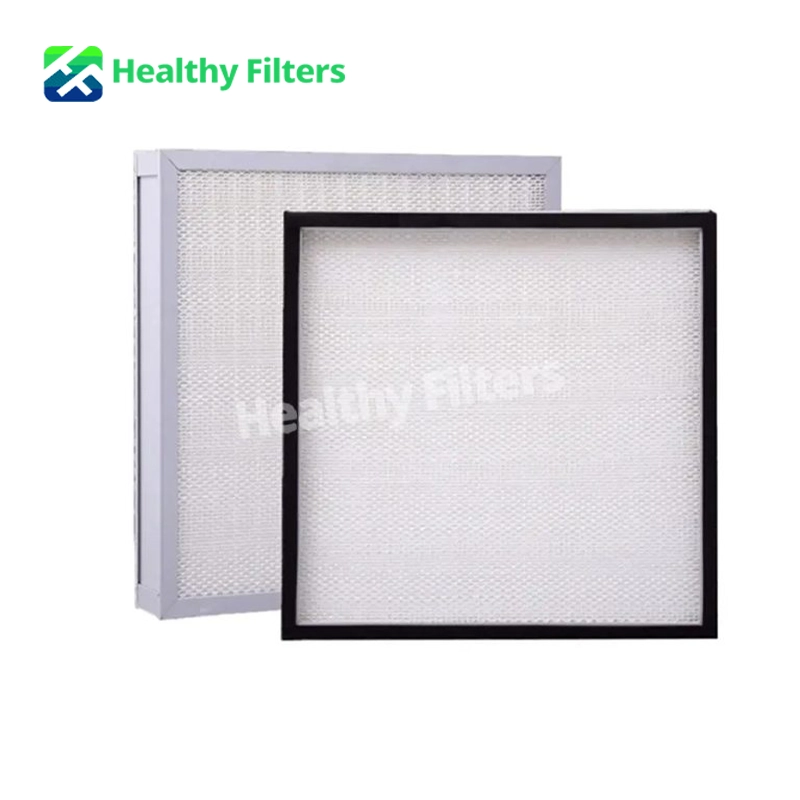
Mini-pleat technology for maximized filtration surface area
Mini-pleat structures depend on thermoplastic separators that keep pleat distances uniform. Consequently, more filter media fits inside a limited frame size, raising the system’s capacity to handle greater air volumes while preserving effectiveness.
Precise laminar airflow for assembly and electrolyte filling
During electrolyte addition, steady airflow direction prevents vapor spreading in unwanted ways. Filters of this type create even velocity fields, guiding air along a single predictable route through the workspace and thereby reducing contamination crossover.
Handling Thermal Processes and Chemical Off-Gassing
Drying ovens reach high temperatures for electrodes, whereas electrolyte processes release volatile substances. Filtration parts therefore require robustness against heat together with effective capture of chemical emissions.
High-temperature resilience in electrode drying ovens
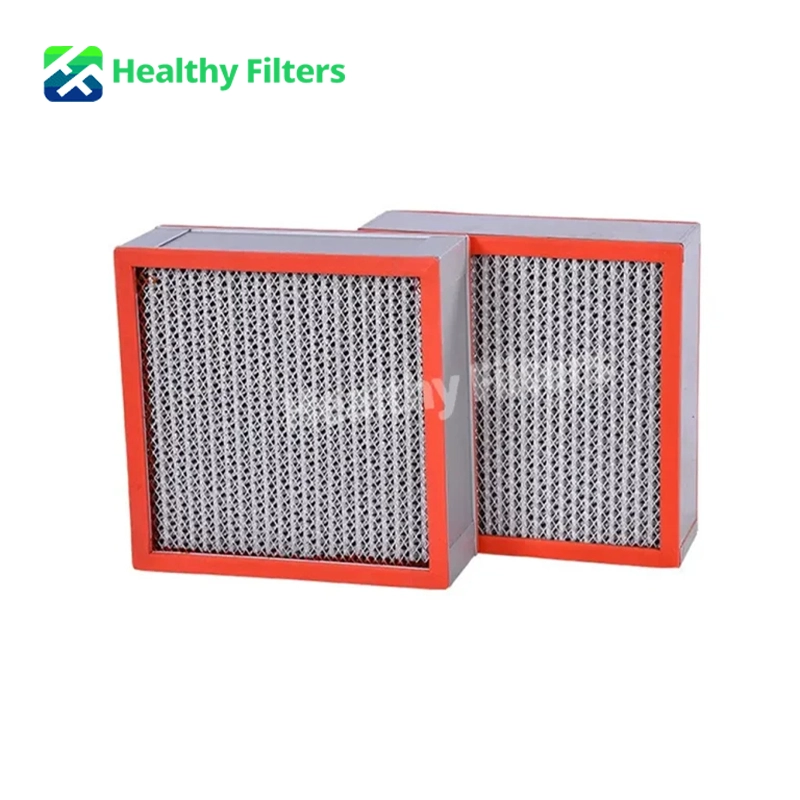
Slurry drying involves substantial heat increases, making High Temperature HEPA Industrial Filters essential for keeping oven air free from particles. Without adequate heat tolerance, media degradation or extra outgassing could compromise the drying procedure entirely.
Removal of VOCs and toxic odors during electrolyte injection
Electrolyte filling generates Volatile Organic Compounds that threaten worker health and environmental compliance alike. Suitable media captures these compounds prior to recirculation or release via exhaust paths. This measure fosters safer conditions on the floor and aligns with regulatory expectations.
Specialized fiberglass media for extreme thermal environments
Fiberglass media formulated for severe heat sustains its filtration performance through repeated temperature swings. Drying tunnels therefore remain uncontaminated and sanitary over extended production periods, which supports steady output quality.
Chemical adsorption using V Bank Activated Carbon Filters
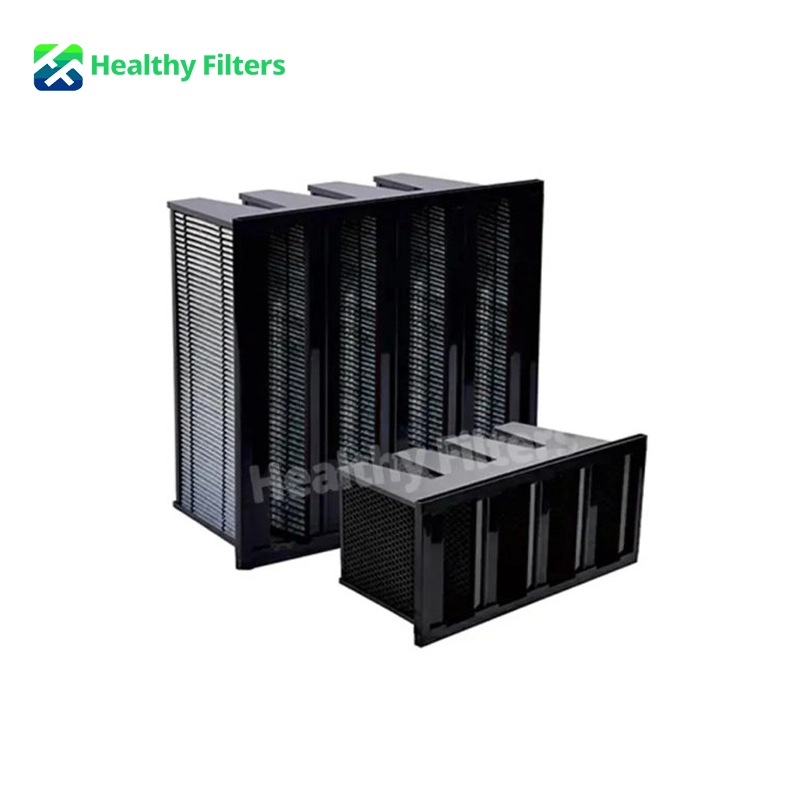
In cases demanding thorough removal of gaseous pollutants, a V Bank Activated Carbon Pleated Media Compact Air Filter utilizes a large carbon bed to eliminate odors and dangerous vapors consistently. Such an approach becomes especially useful where chemical emissions need comprehensive management.
 Operational Efficiency and Sustainability in Giga-factory Maintenance
Overseeing a Giga-factory calls for close monitoring of recurring expenditures. Appropriate filtration choices help decrease electricity demand and lighten the workload tied to component changes.
Extended filter life cycles for 24/7 manufacturing uptime
Combining pre-filters with HEPA elements wisely stretches maintenance intervals considerably. Production therefore continues for longer stretches, boosting profitability and dependability in daily operations.
Lower energy consumption through optimized filter resistance
Filters featuring modest initial pressure losses permit air handling equipment to achieve required volumes with smaller power draws. Yearly utility costs drop markedly thanks to these incremental gains.
Simplified replacement protocols for large-scale facilities
Standardized dimensions paired with straightforward frame designs enable technicians to perform swaps rapidly. Downtime linked to air quality servicing shrinks in huge manufacturing bays as a result.
Advancing Global Battery Production with Healthy Filters
Picking the correct filtration provider constitutes an important strategic move that affects yield figures and workplace safety. Suppliers should go beyond supplying items alone; they ought to present complete packages adaptable to the fast-changing battery industry landscape.
Comprehensive filtration solutions for Giga-factory projects
Battery production’s complexity necessitates an all-encompassing air quality plan. Pre-filtration through to specialized chemical trapping must integrate seamlessly to form a controlled, particle-free production atmosphere.
Quality assurance through rigorous E-E-A-T manufacturing standards
Thorough manufacturing protocols confirm that every filter meets its declared specifications reliably. This consistent performance builds the essential base for secure and high-output battery assembly operations.
Strategic partnership opportunities for international distributors
Global sourcing networks guarantee prompt component delivery whenever required. Nearby assistance and streamlined logistics shorten waiting times while lowering freight expenses for sizable ventures.
Excellence in OEM/ODM customized air filtration services
Each plant layout presents individual airflow and spatial demands. Bespoke designs allow exact matching to particular machinery setups and cleanroom arrangements, thereby optimizing overall system results.
FAQ
Q1: Why is high temperature filtration necessary in battery manufacturing?
A: High temperature filters are required for electrode drying ovens to ensure that air remains sterile and free of particles even at elevated temperatures, preventing contamination during the baking process.
Q2: How often should I replace pre-filters in a Giga-factory?
A: Replacement frequency depends on the dust load, but using high-capacity pocket filters generally allows for longer intervals, typically every 3 to 6 months to protect the terminal HEPA filters.
Q3: Can activated carbon filters remove electrolyte odors?
A: Yes, V Bank activated carbon filters are specifically designed to adsorb VOCs and chemical odors released during the electrolyte filling process, protecting the work environment.
Q4: What is the benefit of an aluminum frame over a wooden or galvanized frame?
A: Aluminum frames are lightweight, corrosion-resistant, and do not outgas or shed particles, making them the superior choice for high-grade cleanrooms in battery production.
Q5: Do these filters help in reducing the carbon footprint of a factory?
A: By using filters with low air resistance and high efficiency, your HVAC system consumes less energy, which directly lowers the overall carbon footprint of your manufacturing operations.