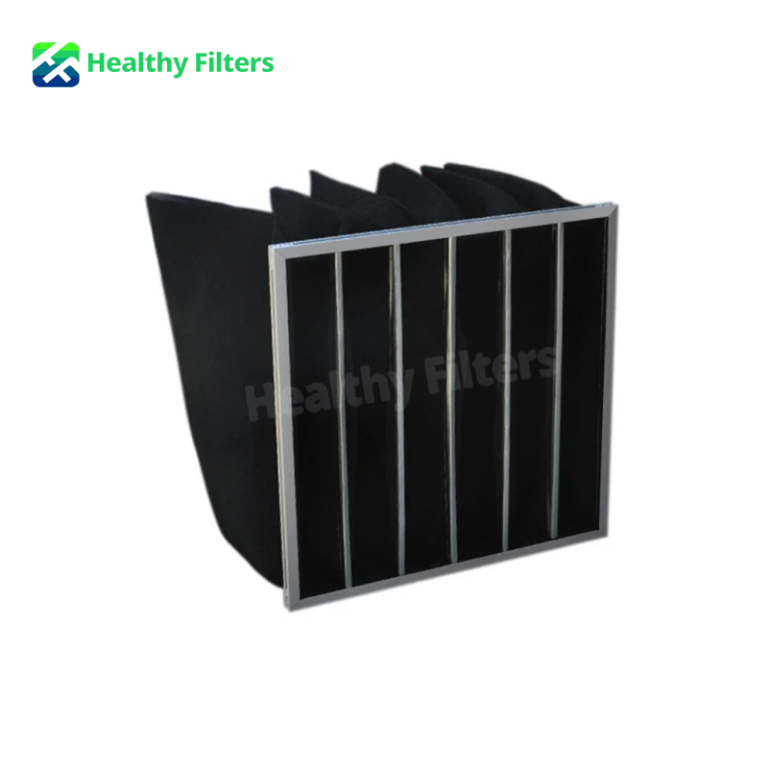
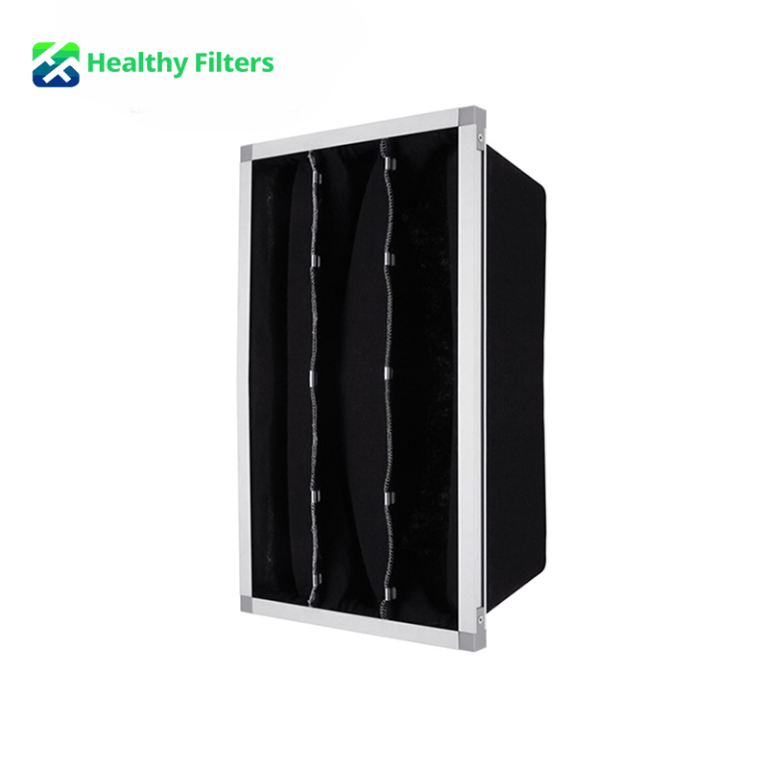
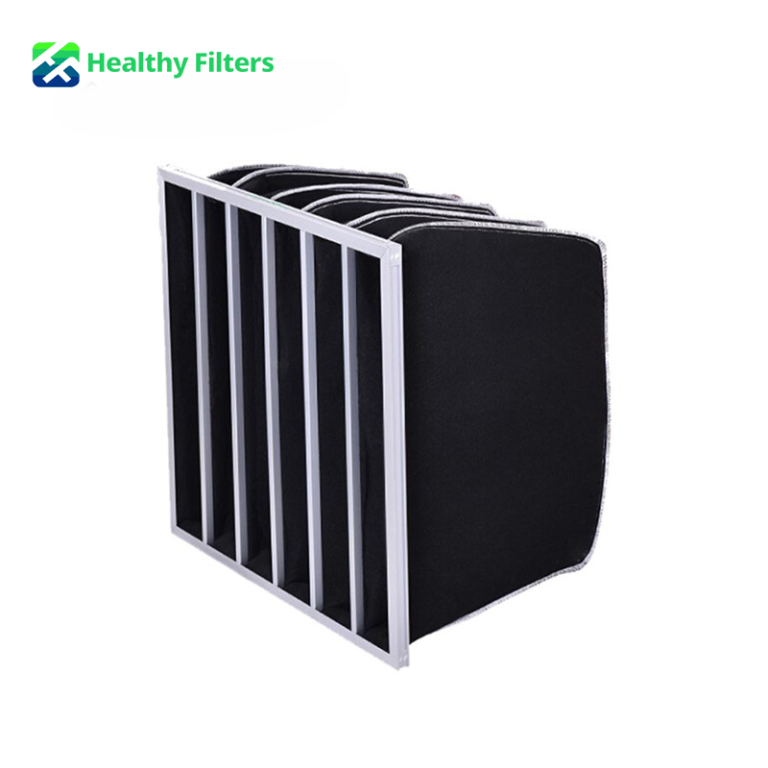
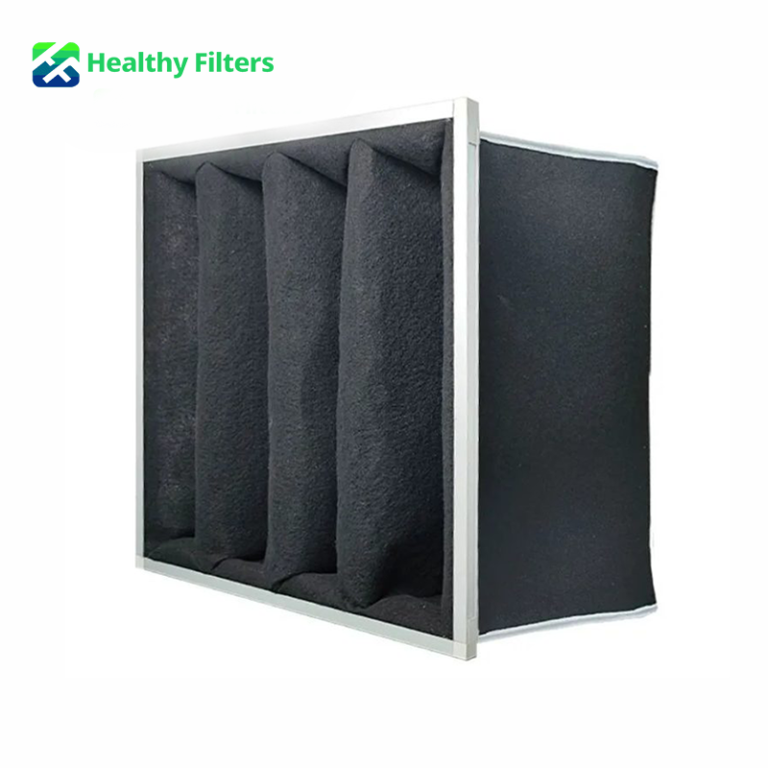
Activated carbon bag filters use pocket construction to provide a larger media area for selected odor and gas-control duties in HVAC systems. The pockets may use carbon-loaded or composite media supported for stable airflow, but the correct design depends on the contaminant, concentration, air volume, available depth, pressure budget, and installation conditions. Pocket count and length affect media area and handling, while stitching, welding, spacers, and the header frame influence stability. Dust loading can cover active media, so many systems benefit from an appropriate upstream particle filter. Buyers should provide the target odor or gas, filter dimensions, pocket count and depth, airflow, frame type, humidity, and any relevant test method. Choose pocket count and depth together with the carbon media so airflow and contact conditions are evaluated as one design. Capacity, removal efficiency, and service interval cannot be inferred from the filter shape alone; they require the selected carbon medium, stated operating conditions, and finished-filter testing. A current filter sample can clarify header and pocket details before production review.
How to Select Activated Carbon Bag Filters
- Target odor or gas challenge
- Pocket count, length, and support
- Airflow and pressure budget
- Carbon media, humidity, and dust pre-filtration
- Header frame and sealing arrangement
Related categories: Activated Carbon Filter Material, HVAC Bag and Pocket Filters, Activated Carbon Panel Filters.