
Volcanic eruptions make the air dirty, even far away. Fine ash blows in the wind. It gets inside homes and shops. Anak Krakatau in Indonesia is erupting again. People worry about the air they breathe.
Can HEPA air purifiers help? Yes, a good machine drops the room’s dust levels. But it is not a magic fix. You must still shut windows, sweep floors, and follow local health rules.
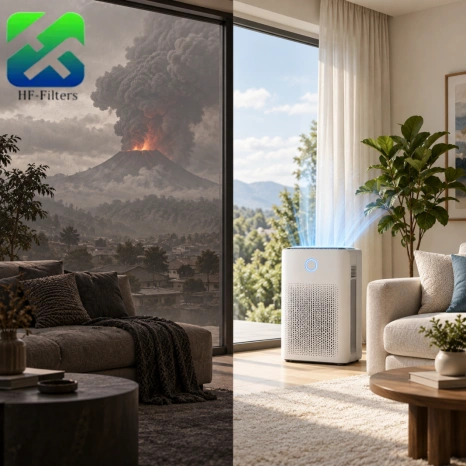
Indonesia’s Recent Volcanic Activity and Air Quality Concerns
Anak Krakatau has shown fresh activity. Local people watch the wind and ash reports. Fine dust travels far. If you live there, checking your indoor air is a must.
What Is Volcanic Ash and Why Does It Matter?
Volcanic ash is broken rock and minerals. The pieces vary a lot. Some form tiny floating dust. Inside, this dust covers floors, fans, and electronics. Footsteps kick it back up. This tiny dust clogs filters and adds bad pollution to your indoor air.
How Can Volcanic Ash Affect Indoor Air Quality?
Air moves into buildings through gaps and vents. Dirty outside air enters through open windows and doors. You also bring ash inside on your shoes. Keep doors and windows closed. Follow local tips for fresh-air settings. Sweep entry areas often. This cuts down airborne particles indoors.
Can HEPA Air Purifiers Help Filter Airborne Particles?
A good air purifier drops the number of floating particles. But results depend on airflow, room size, seals, and the filter’s condition. The machine only cleans air that passes through it. Settled dust stays on surfaces. Different filter stages do different jobs:
Pre-Filter: This traps big dust first. Options like G2 to G4 media or washable PP mesh hold a lot of dust. But massive ash loading blocks airflow.
HEPA / H13 / H14: These grab tiny particles. H13 media operates at 99.97% efficiency or higher for 0.3-micrometer particles. Check the test method, clean-air delivery rate, pressure drop, filter area, and seals.
Activated Carbon: Powdered carbon or sandwich carbon soak up smells and volcanic gases. Combining HEPA and activated carbon provides complementary filtration functions.
Multi-Stage Filtration: The best design uses a pre-filter, a HEPA stage, and carbon. Each layer has a specific job.
Choosing the Right Air Purifier Filter
For air purifier manufacturers, distributors, and private-label brands, selecting the right filter involves more than simply choosing an H13 or H14 filter.
Key factors to consider include:
True HEPA / H13 / H14: Choose the appropriate filtration level based on the application and purifier design.
HEPA + Activated Carbon: Combine particle filtration with additional odor and gas adsorption when required.
Custom Dimensions: Filter dimensions, pleat count, frame, gasket, and structure can be customized for different air purifier models.
Replacement Filters: Consistent dimensions and filtration performance are important for compatible replacement filters.
OEM / ODM: Customized filter materials, structures, and specifications can be developed for different products.
Private Label: Customized labels, packaging, cartons, and product configurations can support different brands and markets.
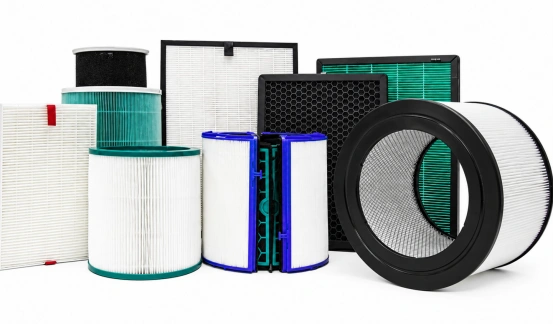
Customized Air Purifier Filters from Healthy Filters
At Healthy Filters, we provide customized air filtration solutions for air purifier manufacturers, distributors, and brands.
Our capabilities include pre-filters, HEPA filters, H13/H14 filters, activated carbon filters, and multi-stage filtration solutions. We can support projects from filter material and structure selection to customized dimensions, finished-filter production, testing, packaging, OEM/ODM, and private-label requirements.
With more than 15 years of experience in air filtration manufacturing and export, Healthy Filters works with customers on both standard replacement filters and customized air purifier filtration projects.
FAQ
Q1: Can a HEPA air purifier remove all volcanic ash from a home?
A: It reduces airborne particles that pass through the unit. Room size, airflow, and seals still affect the result.
Q2: Are H13 and H14 filters suitable for volcanic ash particles indoors?
A: They provide high-efficiency particle filtration when the assembly has suitable airflow and sealing.
Q3: Does activated carbon remove volcanic gases?
A: Activated carbon can adsorb selected gases and odors.
Q4: How often should you replace an air purifier replacement filter after ashfall?
A: Inspect it after visible ash exposure. Household reference ranges are 1 to 3 months for some pre-filters and 8 to 12 months for HEPA media.
Q5: What should you ask a custom HEPA filter manufacturer?
A: Ask for dimensions, media type, efficiency test conditions, airflow, pressure drop, and frame details.