
I’ve spent 10 years in cleanroom operations, and one truth holds: Air Purification in cleanrooms depends entirely on the right filters. Generic HVAC Filter options work for offices but fail in cleanrooms, where tiny particles ruin batches or trigger compliance issues. HEPA FILTER andMini Pleat Filter are the only reliable Cleanroom Filter choices—most facilities cut corners here, wasting time and money on air quality failures. This guide breaks down their necessity, how they work, and how to choose them—no fluff, just real expertise.
A Cleanroom Filter isn’t a standard HVAC Filter. Cleanrooms (ISO 5–8) need filters that trap particles as small as 0.1 microns (bacteria, debris), while office HVAC Filter only catches lint and dust. HEPA FILTER and Mini Pleat Filter are engineered for cleanroom Air Purification, working with HVAC systems to meet standards and protect your operation.
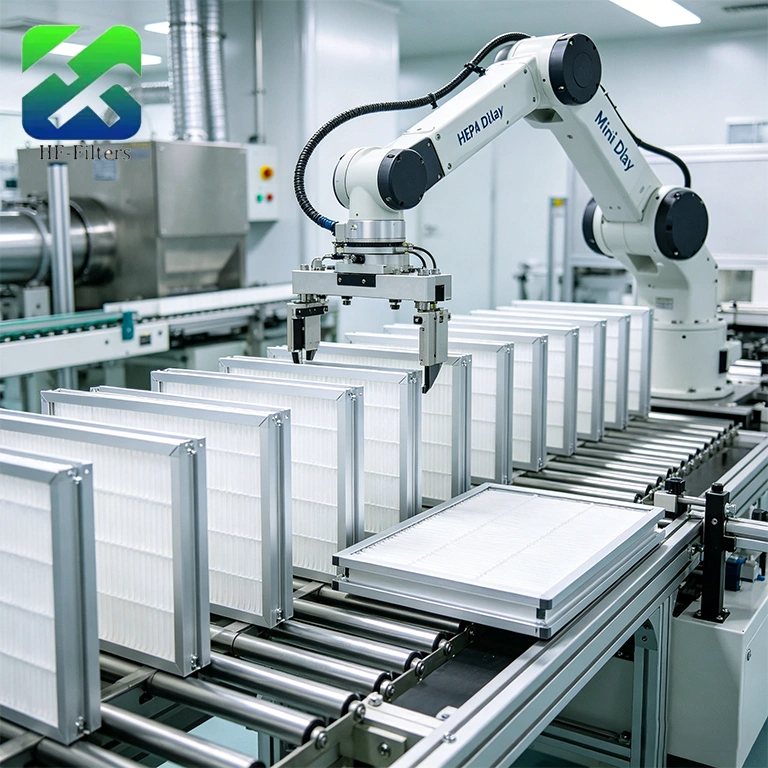
A semiconductor client learned this hard: they used a high-end HVAC Filter instead of a Cleanroom Filter, dropping yield by 30% and failing ISO 6 tests. Swapping to Mini Pleat Filter pre-filters and H14 HEPA FILTER fixed yields and compliance—proof generic HVAC Filter won’t cut it.
HEPA FILTER is the gold standard for cleanrooms. Certified to ISO 29463, it traps 99.97% of 0.3-micron particles—mandatory for ISO 5–6 spaces (pharmaceuticals, semiconductors). Unlike “HEPA-like” filters, it undergoes PAO leak testing, acting as the finalAir Purification line at HVAC duct terminals. No HEPA FILTER = no compliance or process protection.
Mini Pleat Filter protects yourHEPA FILTER and budget. As a high-efficiency pre-filter, its tightly pleated media catches 1–10 micron particles (dust, lint) before they clog the HEPA FILTER. HEPA FILTER costs $200–$600 and lasts 6–12 months with a Mini Pleat Filter; without it, it clogs in weeks. A Mini Pleat Filter is cheap, lasts 4–6 weeks, and cuts replacement costs drastically.
Both work with your HVAC Filter to boost efficiency. Cleanrooms run HVAC 24/7 with high air exchange rates—generic HVAC Filter causes high pressure drop, raising energy bills. HEPA FILTER and Mini Pleat Filter have low pressure drop, cutting HVAC costs by up to 18% while delivering top Air Purification.
They’re not interchangeable: Mini Pleat Filter is a pre-filter for ISO 7–8 cleanrooms or to protect HEPA FILTER in ISO 5–6 spaces. HEPA FILTER is the final filter for ultra-clean needs. Layering them creates an efficient, cost-effective Cleanroom Filter system.
Myth: “A premium HVAC Filter replaces them.” Wrong—HVAC Filter isn’t tested for cleanrooms, lacking the precision of HEPA FILTER and Mini Pleat Filter. A biotech client’s HVAC Filter clogged in 10 days, doubling HEPA FILTER replacements.
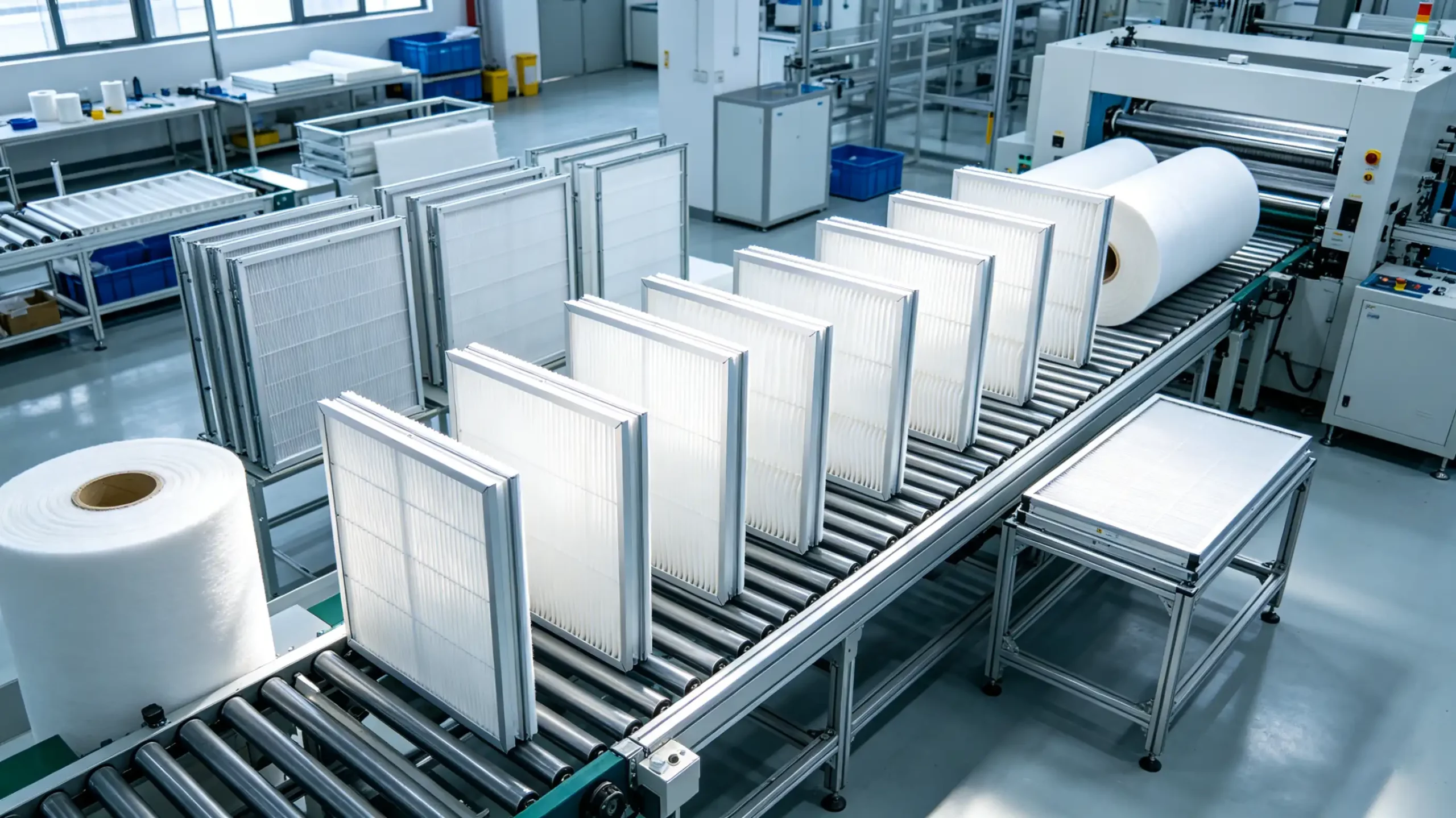
Choose quality: H13/H14 HEPA FILTER (ISO 29463 certified) and EN 779-certified Mini Pleat Filter with tight pleats and rigid frames. Cheap filters leak particles or shed fibers, ruining work.
At the end, HEPA FILTER and Mini Pleat Filter are cleanroom Air Purification backbones. They outperform generic HVAC Filter, protect equipment, ensure compliance, and save money—critical for any cleanroom operation.
FAQ (Practical Answers for Cleanroom Operators)
What’s the difference between HEPA FILTER and Mini Pleat Filter? A HEPA FILTER is a final Cleanroom Filter trapping 99.97% of 0.3-micron particles. A Mini Pleat Filter is a pre-filter catching 1–10 micron particles, protecting HEPA FILTER and boosting Air Purification.
Can a standard HVAC Filter be a Cleanroom Filter? No—HVAC Filter isn’t cleanroom-tested, lets fine particles pass, and risks non-compliance.
How often to replace them? Mini Pleat Filter: 4–6 weeks (busy) / 2–3 months (light). HEPA FILTER: 6–12 months or when pressure drop spikes 1.5x initial.
Which HEPA FILTER rating do I need? H13 for ISO 6–8; H14 for ISO 5 cleanrooms.