
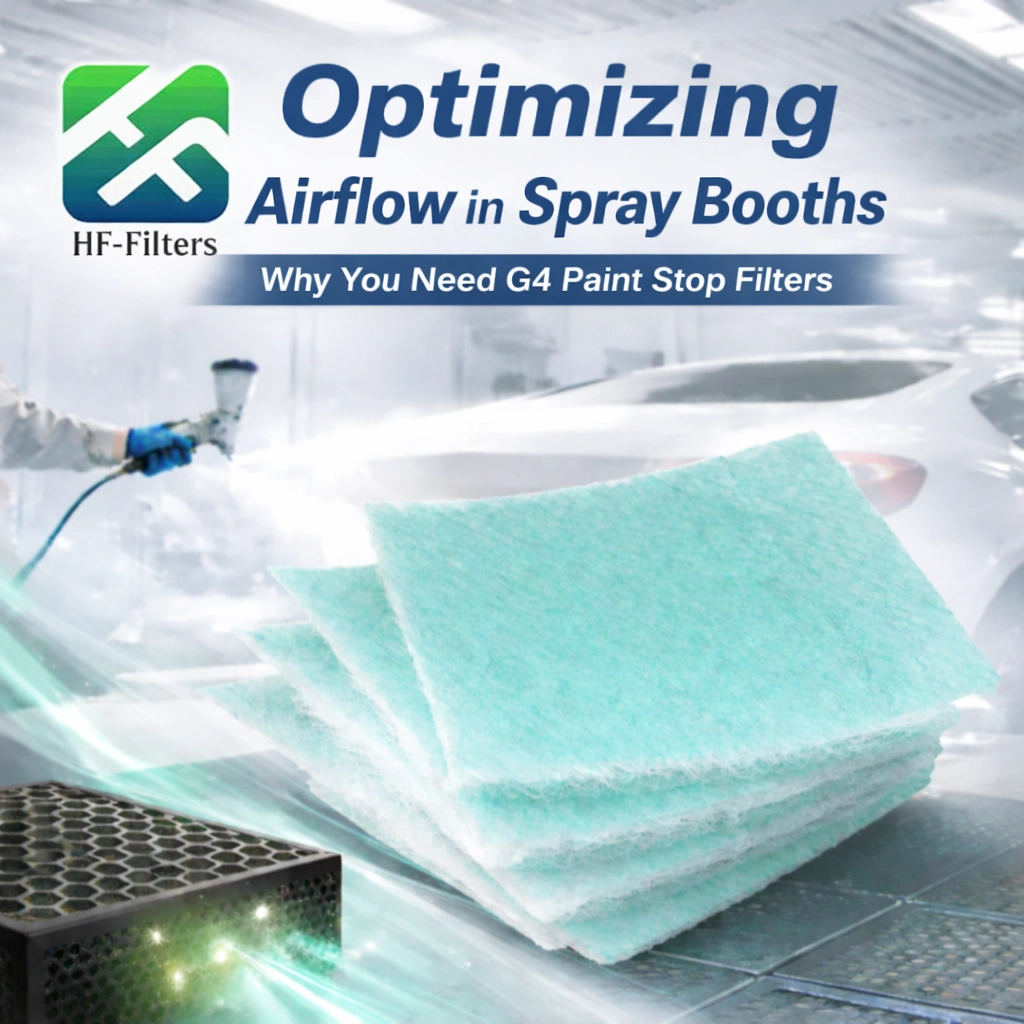
Ever had a clear coat look perfect until the very last second when a piece of lint ruins it? It is a nightmare for any painter. Most of the time, the issue is not your spray gun or the paint mix. It is the airflow in your booth. To keep air moving in a smooth, laminar way and stop turbulence from causing uneven drying, dust inclusions, or surface texture issues, you need filters that do more than just sit in the frame.
The professional baseline for these booths is the G4 standard. This level hits an average arrestance of 90%, which is the industry mark for keeping air clean while you work.
The Mechanics of a Flawless Finish
A high-performance filter is much more than a simple screen. High-strength fiberglass composition makes the core of the PS-100 series, providing the stability needed for constant ventilation. These filters use a color-coded system that really helps when the shop gets busy: the inlet side is green and the outlet side is white. It makes installation foolproof so you can get back to painting faster.
Fiberglass and Gradient Density
The real magic happens inside the material. Using a gradient density structure-sometimes called progressive encryption-the fibers get tighter toward the back. This allows for a large dust-holding capacity and small initial resistance. It grabs heavy paint mist on the green surface while trapping fine particulates deeper inside. This prevents your fans from working too hard and keeps the airflow steady throughout the day.
Managing Chemicals and VOCs
Painting involves more than just visible overspray; it involves invisible gases and smells. If your workspace starts to smell like a chemistry lab, your particulate filters need some help. Integrating primary efficiency activated carbon panels into your system can tackle these Volatile Organic Compounds (VOCs).
Activated Carbon and Honeycomb Structures
Advanced panels often wrap activated carbon particles inside non-woven fabrics. This setup offers dual effects: it filters physical dust and adsorbs harmful gases like benzene and formaldehyde. Using cardboard honeycomb structures filled with coconut shell carbon allows for low air resistance while providing a massive surface area to soak up those heavy paint odors.
Conclusion:Dealing with High Heat and Safety Standards
Bake cycles can be brutal on equipment. Materials like the PS-100 are designed for heat recovery systems, staying intact even when temperatures reach 100°C for extended periods, with short-term resistance up to 120°C. Safety is just as important as performance. Professional filters should meet European DIN53438 flame-retardant standards and carry certifications like CE or UL. It is one less thing to worry about when you are pushing for a deadline.
Air quality matters! If you need technical specs or custom booth solutions, reach out to hf-filters.com. Let’s keep your shop pristine!
FAQ
1. What are G4 Paint Stop Filters, and why are they essential for spray booths?
A: G4 Paint Stop Filters ensure optimal airflow and high arrestance, preventing dust and contaminants in spray booths. With a 90% arrestance rate, they protect your finishes from imperfections like “orange peel” and enhance the painting process efficiency.
2. How does the gradient density of PS-100 filters improve painting quality?
A: PS-100 filters feature a gradient density design, with fibers becoming denser towards the back. This increases dust-holding capacity and minimizes airflow resistance, effectively trapping both heavy paint mist and fine particles to ensure a flawless paint finish.
3. How do activated carbon panels reduce VOCs in a spray booth?
A: Activated carbon panels integrated into filters absorb harmful VOCs like benzene and formaldehyde, improving air quality in spray booths. With coconut shell carbon honeycomb structures, these panels reduce odors and gases while maintaining low air resistance and high efficiency.