Air filtration in factories often involves key figures. You check a spec sheet, note the listed lifespan, and think your setup stays safe. But the difference between lab tests and real factory conditions proves large. Depending on dates instead of true data can harm air quality or cause extra costs. To keep top work, you need a helper that focuses on new ideas and simple making. Shenzhen Healthy Filters Co., Ltd, started in 2016, offers low-cost fixes for clean air. Their 30 cubic meter CADR test center and ISO9001 approval show they put quality first. If you act as a seller or final user, their person-focused goods and promise of skilled teamwork set them as a top name in air filtration.
The Gap Between Theoretical Filter Life and Reality
Theoretical lifespan sets a base from steady lab settings. In tests, air moves at fixed speed with set dust bits. Your plant seldom matches that order. Factory spots bring changes like chemical smells, mixed dust sizes, and shifting tasks that use up a filter’s hold much quicker than guides say. These factors shorten real use.
Manufacturer Rated Service Life
Many makers give a service life from EN779 or ISO 16890 rules. These scores assume work at set air flow, like 1.5m/s for common fiberglass types. Such figures help with buying, yet they miss the special dust mix in your line. You must adjust for your own setup to plan well.
Impact of Industrial Dust Loading
Dust hold amount, often in grams per square meter, sets how much dirt the material takes before pressure rise turns key. If your work includes strong cutting, joining metals, or wood work, the filter fills fast. One rated at 400g/m² may run six months in easy spots, but just six weeks in heavy areas. This quick fill raises costs if not watched.
Environmental Humidity and Airflow Variables
Wet air harms many filter kinds quietly. High dampness makes dust stick on the surface, building a block that stops air flow right away. Also, if your air system lacks speed changers and runs full always, the strain on material grows, cutting its work time versus one with changed flow. Both issues demand close checks.
Identifying Critical Signs of Decreasing HEPA Filtration Efficiency
Efficiency changes over time, not fixed. A HEPA filter traps 99.97% of bits at 0.3 microns, but that drops if the material’s build weakens. You should not wait for full breakdown to see dirty air. Early signs help keep safety.
Increased Pressure Drop Across the Media
Pressure drop in Pascals (Pa) marks filter health best. Each has start resistance and end limit, like from 35 Pa to 250 Pa. When it reaches the high end, the fan works much harder, raising power use and risk of motor damage. This common sign warns of needed change.
Visible Particulate Accumulation on Downstream Sides
Dust or color change on the clean filter side signals big trouble. It points to leaks or rips in material. HEPA types prove touchy; a small seal gap or fold bend lets many tiny bits pass free. Quick fixes stop spread.
Unacceptable Particle Counter Readings in Cleanrooms
In exact fields like chip making or drug work, looks alone fail. You need hand tools to check if air from filter hits H13 or H14 levels. If 0.3-micron numbers rise, the filter likely fills or breaks inside.
Maximizing Performance With 0.3 Microns Deep Pleated Fiberglass Hepa Filter
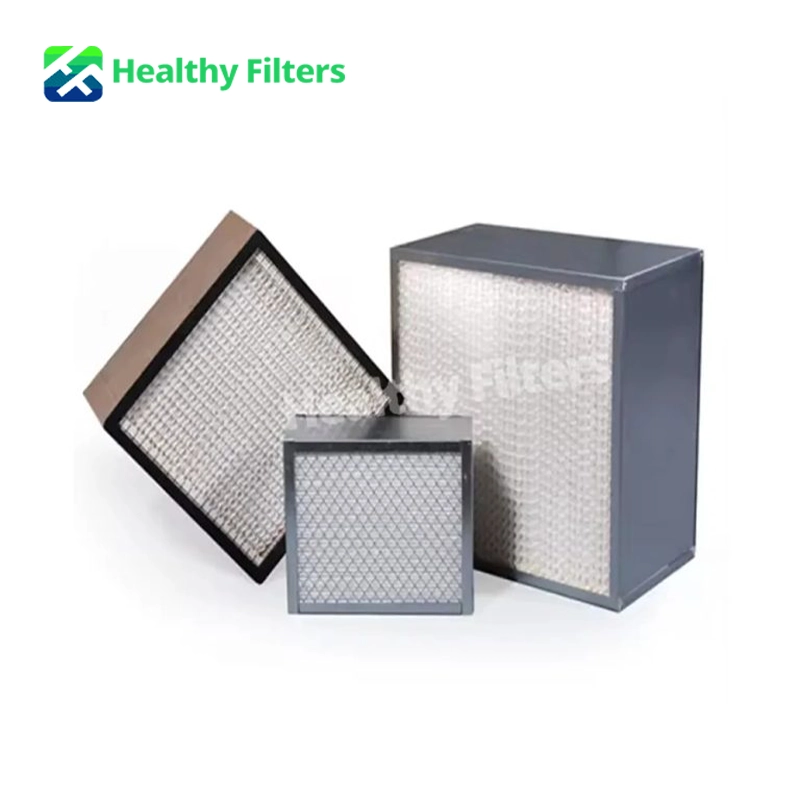
For factory air systems, the 0.3 Microns Deep Pleated Fiberglass Hepa Filter gives a strong answer to theory-reality gaps. This build handles big air flow in making without folding under push.
Superior Dust Holding Capacity of Deep Pleat Design
Deep folds raise the full area of material in the same frame. This spreads dust over more space, cuts start resistance, and slows the reach to end pressure. More area means longer run time. Such design boosts value.
High Efficiency H13 Rating for Industrial HVAC Systems
H13 scores 99.95% catch rate. In usual factory work, this guards key machines and stops fine dust in pipes. Good fiberglass material keeps steady hold as it fills. This aids long-term clean air.
Robust Construction of Healthy Filters Fiberglass Media
Fiberglass suits hot spots and steady against chemicals. Unlike some fake stuff that softens or loses pull over time, this brand’s fiberglass holds strain traits full through service, even at 130-250 degrees. It stands up to hard use.
Achieving Optimal Air Quality With H13 H14 Cleanroom HEPA Air Filter
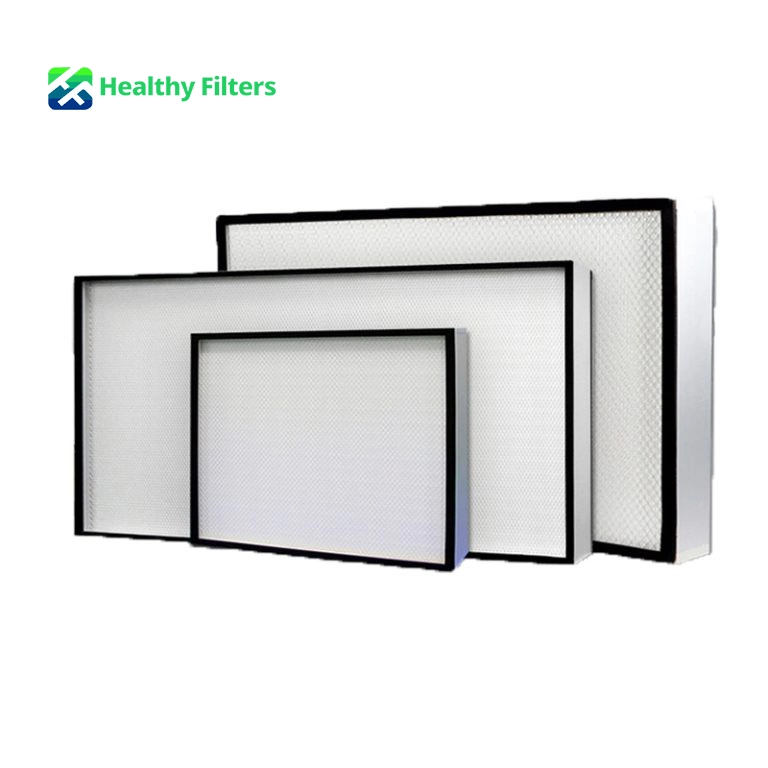
For chip or drug rooms, basic filtration risks your work. The H13 H14 Cleanroom HEPA Air Filter fits these no-risk spots where pure air meets ISO needs.
Precision Filtration for Microelectronics and Pharmacy Environments
H14 hits 99.995% efficiency. Fine glass fiber paper and hot-melt spacers make even fold space. This stops bad spots in air flow where dirt might build.
Customized Dimensions for Specific Cleanroom Grid Systems
Room tops vary from standard. You can order set sizes and depths, like 69mm, 90mm, or 150mm, for good fit in gel or seal grids. Bad match harms as much as bad filter. Custom work solves this.
Stringent Leak Testing Standards for Maximum Reliability
Each room filter needs leak checks before place. Media with CE, ROHS, and SGS marks meets hard safety and quality rules for clean spots.
Calculating the ROI of Timely Filter Replacement Schedules
Swap filters too soon, and you lose on parts; too late, and you pay on power and fixes. The right time in your plan boosts money back.
Prevention of Costly Production Line Contamination
Bad batch costs in chips or pills top new HEPA prices. Watch bits and change before fail to guard goods and name.
Reduced Energy Consumption of Fan Motor Units
Clogged filters make fans pull harder through tight material. This pulls more power. In big plants, one month’s extra run on dirty filters costs more than new ones.
Extended Service Life of Secondary Ventilation Equipment
Clean air helps people and air systems. Use pre-filters like G3 or G4 cloth to grab big dirt, so HEPA stages last longer. Layered plans keep each part in right bounds. This extends full setup life.
Partner With Healthy Filters for Premium Air Purification Solutions
Pick a filter helper beyond just boxes. You need aid that knows air flow and dust ways in factory spots. A true partners will guide well.
Professional Guidance From Healthy Filters Technical Experts
Years in air filtration let the team check your spot for best change times. They offer fixes fit to your clean air aims, not just sales. This builds smart plans.
Global Distribution Network for Reliable Supply Chains
Stop time hurts making. A world net brings filters on time, so you stock less on site. This rests on skilled teamwork and user focus.
Custom OEM Services for Specialized Industrial Requirements
For odd machine needs, OEM bend lets custom size or multi-use filters. From first plan to set room making, steps ensure fine work. This meets special calls.
FAQ
Q1: Can I wash my fiberglass HEPA filters to save money?
A: No. While some PET or PTFE filters can be cleaned, fiberglass media is fragile and cannot be washed. Attempting to do so will destroy the micro-fine structure and ruin the filtration efficiency.
Q2: What is the main difference between H13 and H14 filters?
A: It comes down to the percentage of capture. H13 filters are 99.95% efficient, while H14 filters increase that to 99.995%. H14 is typically required for higher-class cleanrooms.
Q3: How long should a typical HEPA filter last in a cleanroom?
A: While ratings vary, many cleanroom filters have a lifetime of 8 to 12 months. However, this depends entirely on the effectiveness of your pre-filtration stages.
Q4: Why does my fan motor keep overheating?
A: This is often caused by a filter that has exceeded its final pressure drop. The fan has to overcome too much resistance, causing the motor to draw excess current and generate heat.
Q5: What are pre-filters used for?
A: Pre-filters, like G2 to G4 cotton or synthetic media, are designed to catch large dust and debris. This prevents the HEPA filter from clogging prematurely with “easy” particles, saving you money.