
Wildfire smoke brings bad things like PM2.5, soot, and ash. These tiny bits easily get inside homes and offices through air vents.
Are you picking between MERV 13 and HEPA? The right choice depends on how big the dust is. It also depends on how thick the smoke is, how hard your fan blows, and what your system can handle.
What Is MERV 13?
MERV grades use the ASHRAE 52.2 test rules. MERV 13 filters catch most dirt sizes from 1 to 10 microns. They do a good job blocking normal dust, pollen, and big pieces of ash. But they struggle a bit with super tiny things. When facing dirt around 0.3 micron, they only stop about 60% to 85% during standard tests.
Where Does MERV 13 Fit?
A MERV 13 filter lets air flow through pretty easily. So, it fits nicely into most central HVAC units without needing new parts. It also costs less money. You can just swap it out like normal.
When fires are small, it cuts down the smoke inside. But if the smoke gets really thick, use it as an early pre-filter. A folded MERV 13 catches big ash first. This keeps your next filters completely safe.
What Is an H13 or H14 HEPA Filter?
The EN 1822 rule sorts filters by the trickiest dirt they face. An H13 HEPA grabs at least 99.95% of test dust. The stronger H14 kind gets at least 99.995%. This super-fine cleaning is perfect for PM2.5. It traps tiny soot and smoke bits. These are the exact things that slip right past weaker filters.
What Are the Trade-Offs?
HEPA paper blocks the air much more than MERV 13. Because of this, you might need a stronger fan. You might also need a bigger filter box or a whole new air machine.
Also, HEPA cannot clear away bad gases like carbon monoxide. You must add an activated carbon filter to catch harmful gas fumes.
How Do MERV 13 and HEPA Compare?
| Index | MERV 13 Filter | H13/H14 HEPA Filter |
| Standard Basis | ASHRAE 52.2 | EN 1822:2009 |
| Approx. 0.3 Micron Efficiency | 60%–85% | ≥99.95% |
| Best For | Daily dust and big ash | Fine smoke and PM2.5 |
| Air Resistance | Low | Medium to high |
| Typical Use | Main HVAC vents | Cleanrooms and smoke units |
Which Setup Fits Your Smoke Scenario?
Your building type and the amount of smoke help you pick. Always check your fan power and filter size first. A great filter fails completely if dirty air sneaks around its frame.
Commercial Buildings
Try mixing them together for big HVAC vents. Put a MERV 13 pre-filter right in front of an H13 main filter. The first one grabs big ash and heavy dust. Then, the HEPA handles any leftover fine smoke. This combo stops the final filter from clogging too fast. It saves you time on fixes.
Residential Air Conditioning
MERV 13 is a smart, simple upgrade for normal homes. It cuts down indoor smoke when fires are small. Just make sure to change it early if it looks dirty or if the air stops blowing hard.
Hospitals, Labs, and Industrial Workshops
Places dealing with thick smoke need extra help. They use separate H13 or H14 systems with strong fan rules. If smelly or toxic fumes are around, put HEPA together with activated carbon. Always follow the local air safety rules.
How Can Healthy Filters Support Wildfire Air Treatment?
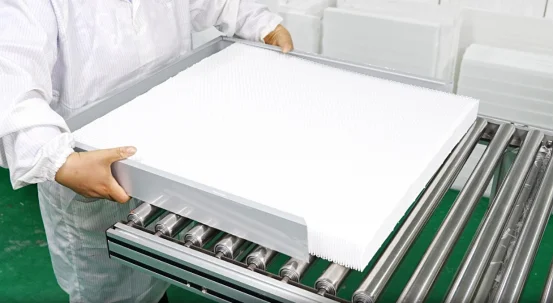
Picking a filter is just the start. Snug frames, tight seals, and fire safety matter just as much. Healthy Filters makes folded MERV 13 pre-filters for normal air vents. They also build glass fiber H13/H14 HEPA filters. These work great for cleanrooms and heavy smoke jobs.
Their HEPA lineup even has UL900 fire-safe models. These are perfect for super strict safety plans. Getting custom sizes stops dirty air from leaking past weird frames. You can check out all these HEPA products at Healthy Filters.
FAQ
Q1: Is MERV 13 effective against wildfire smoke?
A: It blocks a lot of large dust. But it is weaker than HEPA when stopping 0.3 micron things.
Q2: Is H13 better than MERV 13 for PM2.5?
A: Yes. H13 scores much higher on tests for grabbing tiny dirt.
Q3: Can HEPA remove wildfire gas pollutants?
A: No. You must add activated carbon to trap nasty gases and smells.
Q4: Should you use MERV 13 before HEPA?
A: Yes, most times. It grabs heavy ash early. This helps the HEPA part last longer.
Q5: Which filter is best for wildfire air quality?
A: It really depends on the smoke. MERV 13 gives good basic safety. Pick H13/H14 when the smoke gets super heavy.