
Why Haze Loads Change Filter-Bank Decisions
Smoke brings more dirt to your outside air intake. Your Indonesia haze air filter plan needs to track airflow. It also needs to watch dust buildup at each step. As dirt fills the filter, the pressure drop goes up. If the fan lacks extra power, the air slows down. This happens before your next regular service visit.
Begin by checking your building’s intake spot. Note the outside air rate and daily run times. Write down the filter dimensions and fan pressure, too. Next, record the clean-filter pressure drop and the starting air speed. These numbers give you a clear baseline for the haze season. Local PM levels tell you why dirt builds up faster. At the same time, AHU numbers show how well the machine works.
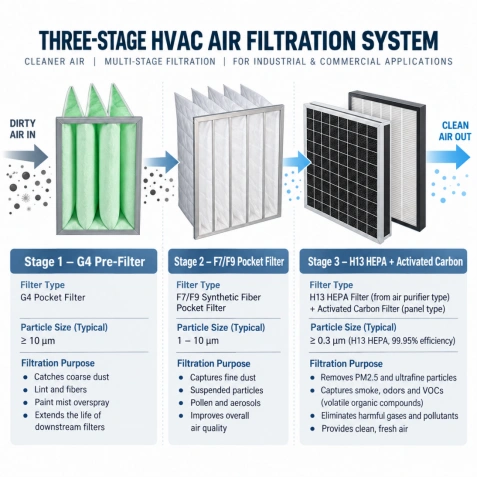
How Does a Three-Stage Indonesia Haze Air Filter Work?
A staged setup gives a clear job to each filter. The G4 catches big dust pieces and fibers. Next, the F7 or F9 cleans out smaller bits before the last step. Then, the H13 or H14 does the final cleaning. You use these when your building rules and fan power need them. These HVAC filters for haze must have enough surface area. They also need tight seals to handle the planned airflow.
The lineup offers G4 panel filters. It also has F7 and F9 pocket filters, plus H13/H14 HEPA filters. One known G4 panel configuration measures exactly 595 × 595 × 25 mm. It handles 3,200 m³/h of air. This unit starts with a 35 Pa initial pressure drop and ends at a 250 Pa final pressure drop. Look at the early and middle filter options first. Find the shapes that fit. Then, pair your choice with your AHU’s airflow and pressure limits.
Pick the F7 or F9 based on real testing facts. Look at the pressure-drop numbers for your normal airflow. Always check the fan curve after putting in all filters. A HEPA filter for smoke catches tiny bits based on its strict class rating. But bad seals and loose frames let dirty air sneak past. The H14 also demands a clear goal and plenty of fan push.
When Should You Add Activated Carbon?
Peat-fire smoke leaves both solid dirt and bad gases. HEPA media grabs the solid floating bits. Activated carbon traps specific gases and bad smells. Its success depends on the carbon type and the amount used. Humidity, air speed, and contact time matter, too.
Put an activated carbon filter for odor in your plan if you want to stop specific smells. The product group offers powdered-carbon media, carbon composites, and three- or four-layer sandwich media. Always ask for test facts about your specific gas and room conditions. A simple carbon tag does not tell you how long it lasts. Change the carbon based on smell, not air pressure. The activated-carbon filter range shows the setups you can buy.
How Can You Set Haze-Season Changeout Triggers?
Pick the time to swap filters based on pressure drops. Check the air flow, fan limits, and how the filters look. Look closely at the frames for gaps, torn media, wet spots, and uneven dirt. Write down the outside PM numbers and AHU facts. Note the run hours and swap dates. Mark dates on a calendar for basic planning. But use actual meter readings to make the final swap choice.
For data center haze filtration, start with the first filter’s air speed and pressure. The listed G4 configurations work well for server rooms and gear cooling. Check your cold air push and fan power after adding each new stage. Offices, schools, hospitals, and factory floors all need different air rules. Make sure you check your specific building needs before picking a final HEPA grade.
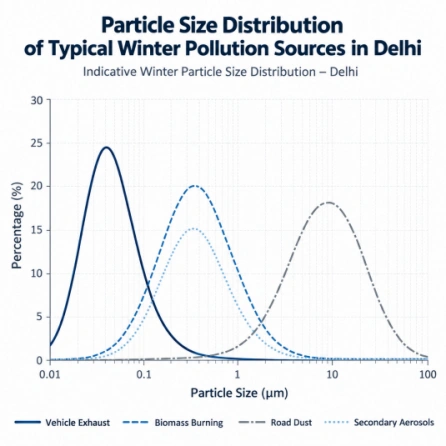
A Regional Filter Range for Haze-Season Facilities
First, get your frame sizes, airflow facts, and pressure readings. List the exact dirt you want to stop. Then, match the filter stages against your actual AHU. Healthy Filters supplies G4 pre-filters, F7/F9 pocket filters, and H13/H14 HEPA options.
They also make activated-carbon media. Their book shows custom sizes and mixed options. Tell them your machine size and daily room facts when asking for a quote. These small details help them build a filter setup that truly fits your site.
FAQ
Q1: Does a HEPA filter remove peat-fire smoke?
A: A HEPA filter catches solid bits in smoke based on its strict class. Bad gases and smells need a different check and a separate carbon stage.
Q2: Should an AHU use activated carbon with HEPA filtration?
A: Add carbon only when you have a clear smell goal. You must also have test facts for that exact air speed and room humidity.
Q3: How often should filters be changed during Indonesia’s haze season?
A: Use actual pressure drop numbers, air speed, fan limits, and physical dirt levels. Write down these numbers often to set a timing plan for your specific building.
Q4: Can an existing AHU use H13 or H14 filters?
A: Check your filter dimensions, tight seals, and gap paths first. You also must check the fan curve and static pressure before adding a final HEPA step.
Q5: How should you choose between F7 and F9?
A: Compare trusted catching scores and pressure-drop facts for your normal air speed. Then, check that the fan has enough power to push air through all the filters.