
When sourcing HEPA filters for cleanrooms and other facilities, there is one common question, which is whether H13 or H14 HEPA filters should be used.
H14 filters may seem like the obvious choice since they offer higher filtration. However, choosing a HEPA filter is more than just comparing an efficiency figure. Several factors come into play including airflow, the initial pressure drop, the conditions in which the filter is installed, and how the filter is operated.
So, which should you choose? The right choice is the one that is required by your filtration system.
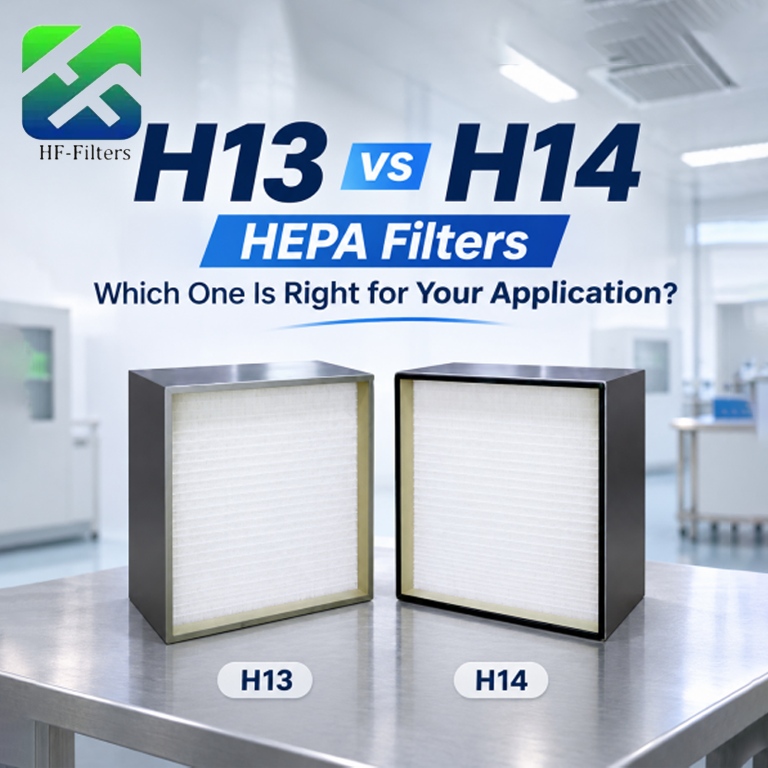
1、H13 vs. H14: Understanding the Efficiency Difference
In terms of efficiency, H13 and H14 filters are classified under EN 1822. Both are assessed at MPPS instead of relying on a single particle size.
As shown in the table below, the main difference between the two is the minimum efficiency.
| Parameter | H13 HEPA | H14 HEPA |
| Overall efficiency at MPPS | ≥99.95% | ≥99.995% |
| Maximum overall penetration | 0.05% | 0.005% |
| Local efficiency | ≥99.75% | ≥99.975% |
| Typical selection | High-efficiency filtration | More demanding filtration |
Note that higher class does not mean the HEPA filter is suitable for all the applications.
2、When Should You Choose H13 or H14?
The right grade depends on the cleanliness target and the filtration system.
H13 HEPA filters are commonly considered for:
Commercial and industrial HVAC systems
Hospital ventilation and general healthcare areas
Laboratories with defined filtration requirements
Air purification equipment
Cleanroom applications where H13 meets the project specification
H14 HEPA filters are worth considering for:
Pharmaceutical production areas
Critical cleanroom environments
Precision electronics manufacturing
Applications with stricter particle-control requirements
Systems where the project specification explicitly requires H14
Typically, these are factors that influence selection, but they do not apply to all situations. A filter’s required filtration level is determined by the facility design, applicable codes/regulations, and project specifications.
3、Does H14 Always Have a Higher Pressure Drop?
Not necessarily, but this is an important point for buyers.
The higher the required filtration efficiency, the more variation there will be among media types. An H14 filter may have a higher pressure drop at startup when compared to an H13 filter of similar size and construction.
However, pressure drop is also influenced by:
Filter media structure and permeability
Effective filtration area
Pleat depth and pleat spacing
Rated airflow and face velocity
Filter dimensions and construction
Increased filtration area can be accomplished with an appropriate pleated design to aid in controlling the air flow resistance.
Prior to making the switch from H13 to H14 filters, verify if your current fan is able to meet the operating pressure required by the new filter. If it is not capable of meeting this requirement, you may find that the higher-efficiency filter causes reduced air flow throughout the system, and/or increases the amount of electrical power used to operate the system.
4、What Should Buyers Check Before Ordering?
For OEM projects and for replacement in industrial settings, it’s simply not sufficient to just compare H13 and H14 grades.
A useful purchasing specification should include:
Efficiency grade: H13 or H14, with the applicable test standard.
Dimensions: Width, height, and depth of the finished filter.
Rated airflow: Required air volume under operating conditions.
Initial pressure drop: Resistance measured at the specified airflow.
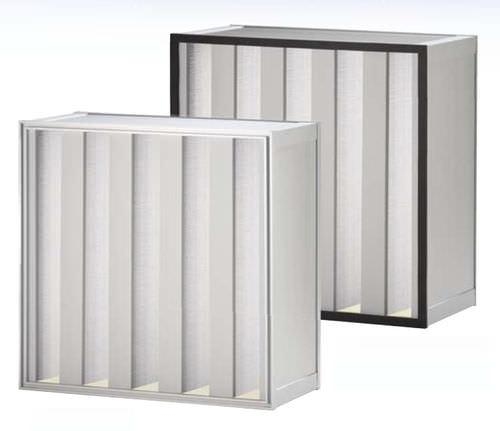
Filter construction: Mini-pleat, deep-pleat, V-bank, or another design.
Frame/seal – aluminum, galvanized steel, plastic, gasket, and/or gel seal.
Testing Documentation: Ensure you know exactly which performance and leakage tests should be performed on the final version of your filter.
These details allow the manufacturer to provide an appropriate recommendation of a system configuration, rather than just provide the top-of-the-line option.
Choosing the Right H13/H14 Filter for OEM Projects
Customization may be equally important to filtration effectiveness for manufacturers of filters, suppliers of HVAC equipment, and other users of industrial products.
Healthy filters provides both H13 and H14 HEPA filtering options with various types of construction (i.e. mini-pleat, deep-pleat, and V-bank). Additionally, healthy filters can work with you on the size of the filters, the types of filtration media used, the material of the filter frame, and the type of seal used for your application.
To provide you with an accurate estimate of what kind of filter would work best for your system, please share your filter’s drawing, rated airflow, required efficiency, and maximum allowable pressure drop.
The goal is more than just switching from an H13 filter to an H14 filter; it’s to provide the level of filtration needed while maintaining the airflow and operating parameters of the equipment.
Frequently Asked Questions
Q1: Is H14 significantly better than H13?
H14 has higher minimum efficiency under EN 1822. It allows one-tenth the overall particle penetration of H13 at MPPS.
Q2: Can I replace an H13 filter with an H14 filter directly?
Not always. Check dimensions, airflow, pressure drop, sealing, and fan capacity before making the replacement.
Q3: Is H13 sufficient for cleanroom applications?
It can be suitable when H13 meets the cleanroom design and project specifications. The required grade depends on the cleanliness target and system design.
Q4: Does H14 always have a higher initial pressure drop?
No. Pressure drop depends on media, filtration area, pleat design, and airflow, not just the efficiency grade.
Q5: Can H13 and H14 HEPA filters be customized for OEM production?
Yes. Dimensions, filter construction, frame materials, media, and sealing options can be specified according to equipment and project requirements.
Need Help Selecting H13 or H14 HEPA Filters?
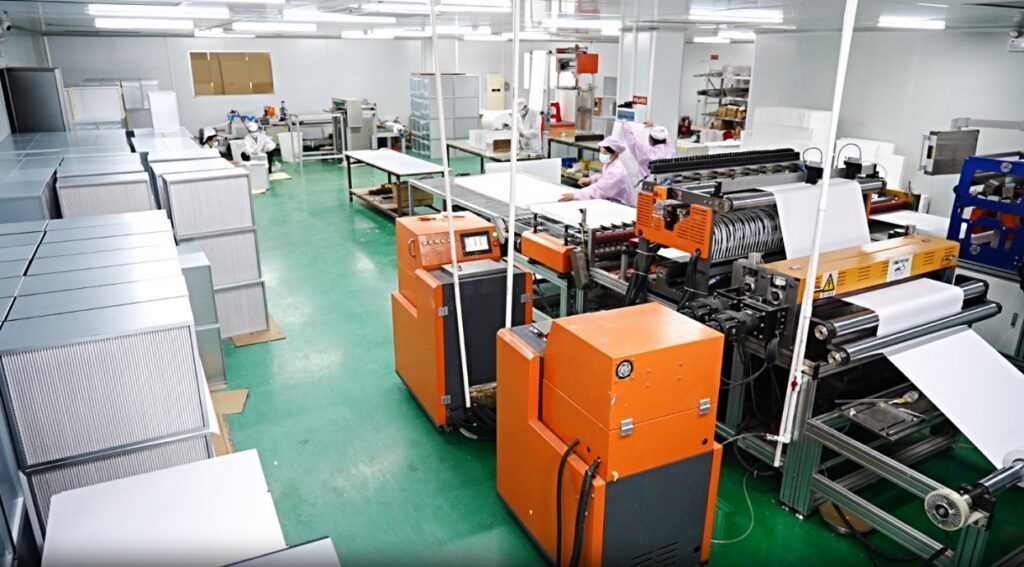
Healthy Filters supports customized HEPA filter manufacturing for industrial HVAC, cleanroom, pharmaceutical, and OEM applications.
Send us your required efficiency, filter dimensions, airflow, and application details to discuss a suitable filtration solution.
Contact Healthy Filters for OEM & ODM HEPA filter solutions.