
Finding the proper mix of fresh air and equipment performance is an ongoing task for plant supervisors and cleanroom specialists. Handling specs such as CADR and MERP can seem tedious. Yet, these figures decide if your site remains in line with rules or deals with expensive stoppages. If you seek a supplier that grasps the details of filtration, Healthy Filters shines with its ISO9001 approved production and modern 30-cubic-meter test facility. Started in 2016, this skilled group offers tailored options that meet tough CE and UL rules. Whether you act as a distributor needing steady supply or an OEM requiring a custom unit, their focus on accuracy and US-based storage make them a top air filtration provider.

Decoding the Science of CADR and MERP for Optimal Air filter Performance
Many folks see a rating and think bigger is always superior. However, filtration involves compromises. CADR shows the amount of cleaned air from a purifier. MERP indicates how effectively the filter grabs particles from 0.3 to 10 microns. A dense filter may trap all dust. But it could block your HVAC setup. This raises power costs. The key is locating that ideal point. There, air remains pure without straining your fan.
Definition of Clean Air Delivery Rate in Industrial Filtration
CADR shows the cubic feet per minute of air with particles of a certain size removed. It basically reveals how quickly the system purifies the space. This measure helps users gauge the speed of air cleaning in real settings.
Correlation Between MERP Ratings and Particle Capture Efficiency
MERP ratings go from 1 to 20. Higher figures mean better trapping of small items like bacteria and smoke from tobacco. Thus, a strong MERP value ensures finer particles stay caught. This link aids in picking filters for specific needs.
Common Misconceptions in Higher Ratings Versus Actual Airflow
A tall MERP rating boosts starting resistance. This can cut the overall air volume in your plant if the blower lacks strength. People often overlook this. As a result, they face slower air movement despite the high rating.
Importance of Balancing Filtration Efficiency and Energy Costs
A filter with good dust capacity keeps airflow steady over time. It avoids quick pressure falls that spike energy use. Therefore, smart choices save money in the long run. They maintain clean air without extra strain on systems.
Why MERP 18 to 20 Ratings Matter in Critical Cleanroom Environments
In fields like drug making or chip production, a single small particle can spoil an entire lot. Here, basic filters fall short. High-quality ones become essential. For such strict spaces, the Gel Seal Merv 18 19 20 Air Mini-Pleated HEPA Filter changes the game. Its gel seal forms a tight barrier without leaks. Traditional seals cannot compete. This ensures all air goes through the filter material.
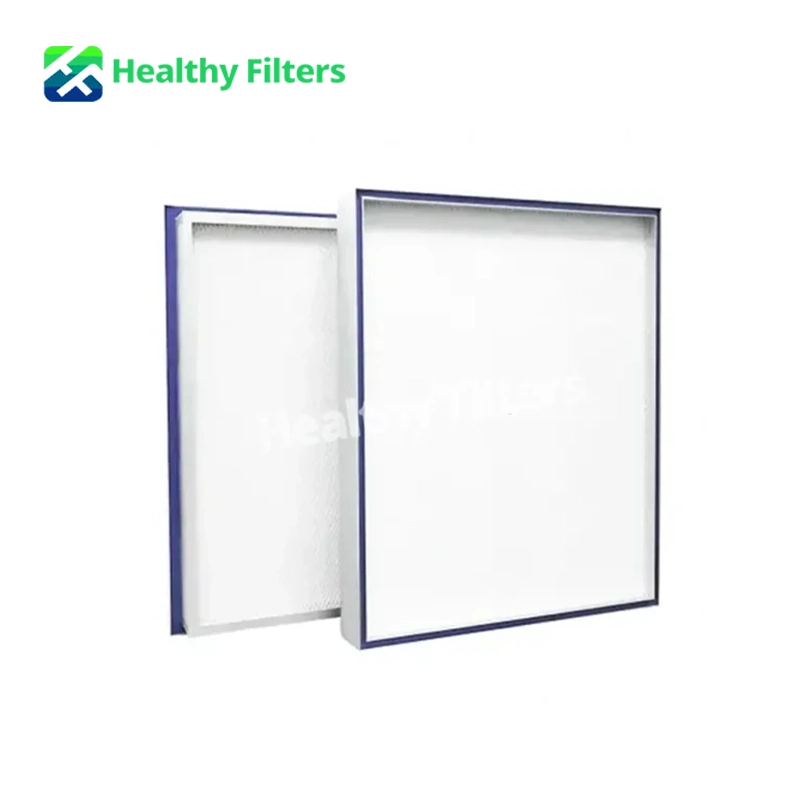
Technical Superiority of Gel Seal Merv 18 19 20 Air Mini-Pleated HEPA Filter
These filters use fine mini-pleated material to boost surface area in a small frame. They reach MERP ratings up to 20. Such design allows for strong performance in tight spots. It handles tough conditions without failing.
Benefits of Gel Seal Technology for Zero Leakage Performance
The liquid gel makes a firm airtight link between the filter and holder. This beats usual clamping methods. Hence, it stops any air from slipping by. This feature proves vital in sensitive areas.
Applications in Pharmaceutical Labs and Semi-Conductor Manufacturing
Top labs need steady air purity to avoid contamination spread. So, MERP 18-20 filters serve as the go-to choice for protection. They fit well in these high-stakes setups. Their reliability supports safe operations daily.
Enhanced Durability of Mini-Pleated Designs in High-Pressure Systems
Mini-pleats give solid structure. They stop the material from flapping or ripping under strong blower force. This toughness extends filter life in busy plants. It reduces the need for frequent fixes.
The Role of H14 HEPA Filters in Achieving Ultra-Clean Air Standards
True HEPA often means H13 or H14 levels. An H14 filter catches 99.995% of particles at the most penetrating size. This comes from glass fiber or special papers. For tough jobs, the H14 High Efficiency HEPA Air Filter with deep pleats works best. It holds lots of dust before a swap. This setup suits demanding uses.
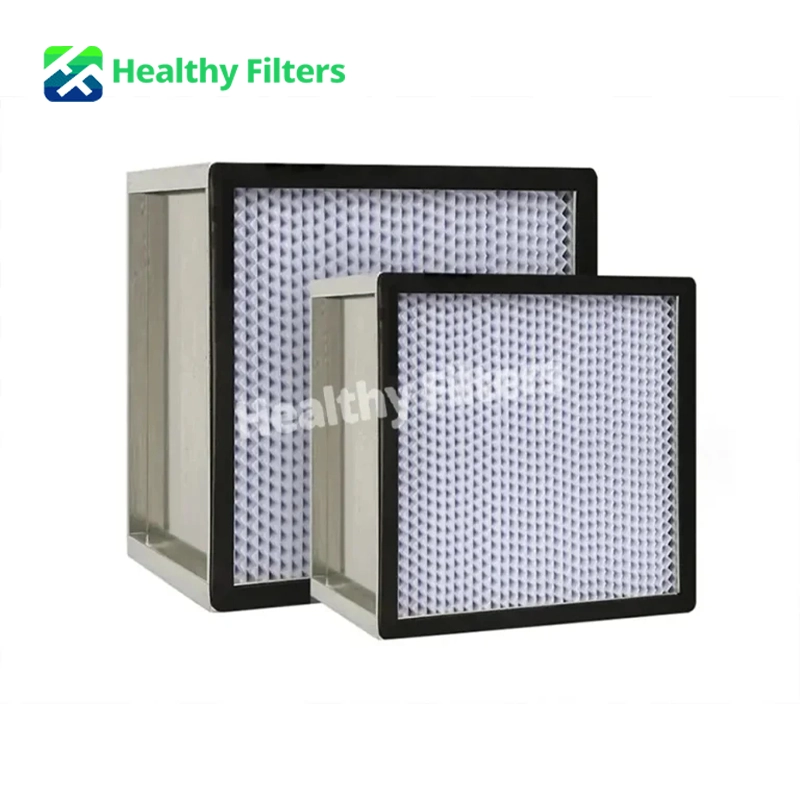
Structural Advantages of Deep Pleated Paper Separate H14 HEPA Filters
Deep pleats offer much more filter space than flat ones. This cuts the starting resistance. As a result, air flows easier at first. It supports steady operation in large systems.
Achieving 99.995 Percent Filtration Efficiency for Sub-Micron Particles
H14 grade gets tested to block almost all particles down to 0.3 microns. No tiny bits slip through the material. This high standard meets strict clean air goals. It protects against the smallest threats.
Comparison Between Standard Grade and H14 Grade Filtration Power
A basic Merv 8 filter blocks lint and hair. In contrast, an H14 stops tiny viruses and smoke from burning. The difference shows in tough tasks. H14 handles what standards cannot.
High Dust Holding Capacity for Long-Term Industrial Operations
Deep pleated styles store more dirt. So, you replace less often and avoid production halts. This saves time and cuts costs over months. It keeps things running without interruptions.
Selecting the Right Air filter Based on Your Specific Ventilation Needs
Picking a filter goes beyond its size. It matches the air quality you require. Consider the pressure drop or resistance. High resistance, like 330pa in some glass types, hikes energy bills. A wise step is adding a pre-filter. Use needle-punched fabric or G4 mesh to grab large bits first. This extends the life of your costly HEPA unit by twice as much.
Assessment of Airflow Resistance and HVAC System Compatibility
Review your system’s static pressure rating. Make sure it copes with HEPA or high-MERP resistance without getting too hot. If not, you risk breakdowns. Proper checks ensure smooth integration.
Identification of Targeted Pollutants and Micron Size Requirements
For oil mist issues, skip “N” rated items. Choose synthetic media that manages the chemical demands. This targeted pick boosts effectiveness. It prevents damage from specific contaminants.
Evaluation of Maintenance Intervals and Replacement Costs
Weigh labor and downtime costs, not just the filter price. Opt for durable deep-pleated types over cheap ones. They last longer and reduce overall expenses. This approach keeps budgets in check.
Integration of HEPAFIL Solutions into Existing Air Handling Units
Current filtration units fit into old setups with ease. But confirm sizes and seal types match your tracks. This avoids installation problems. It ensures quick and reliable upgrades.
Global Standards and Certifications for High-Efficiency Air Filtration
Air filtration uses terms like EN1822 and ASHRAE 52.2. These serve real purposes. They safeguard health. European rules use H10-U17 scales. The US favors MERP. Knowing overlaps aids buying from global sources. Without a report on 0.3 micron efficiency, performance is just a guess.
Understanding EN1822 and ASHRAE 52.2 Compliance Frameworks
EN1822 sets the main European rule for HEPA filters. ASHRAE 52.2 controls the MERP system in North America. Both guide reliable choices. They help match products to local needs.
Impact of Proper Filtration on Indoor Air Quality Compliance
Local health codes demand certain filtration for kitchens, hospitals, and factories. This protects workers. Good filters meet these rules. They improve overall air inside buildings.
Role of Rigorous Testing Methods in Product Reliability
Tests like NaCl salt or DOP oil mist confirm efficiency claims. Factories run these before shipping. Such steps build trust in every unit. They spot flaws early on.
Benefits of Partnering with Certified Manufacturers for Quality Assurance
ISO9001 certified makers with cleanrooms deliver consistent quality. Your filter today matches the one from last year. This steady output supports long-term plans. It minimizes surprises in supply.
Partner with Healthy Filters for Premium Air filter Solutions and Global Support
Dealing with air filtration details gets simpler with a quality-focused ally. From strong H14 units to gel-sealed ones for clean zones, the best pick smooths your work. Advanced test sites and lean methods ensure the right filter for your plant. This leads to a safe space and solid profits.
FAQ
Q1: What is the main difference between H13 and H14 HEPA filters?
A: H13 filters have a filtration efficiency of 99.97%, while H14 filters are more precise, reaching 99.995% efficiency for particles as small as 0.3 microns.
Q2: Can I wash my HEPA air filter to save money?
A: Generally, no. Most high-efficiency HEPA filters, especially those made of glass fiber, are fragile and will lose their filtration structure if they get wet or are scrubbed.
Q3: How often should I replace my industrial air filter?
A: It depends on the environment, but most industrial HEPA filters last between 6 to 12 months. You should replace them immediately if the pressure drop exceeds the system’s limit.
Q4: Does a higher MERP rating always mean better air quality?
A: Not necessarily. If the MERP rating is too high for your HVAC fan, it will reduce airflow, which can actually lead to poor air circulation and “stale” pockets in the room.
Q5: Why is gel seal better than a rubber gasket?
A: Gel seals provide a “liquid” airtight bond that fills every tiny gap in the frame, making it much more effective at preventing leaks in ultra-clean environments like operating rooms.