
I visited a factory once where maintenance logs seemed normal—filters changed, equipment checked, nothing unusual.
Then the manager showed me the hours column.
That’s when it hit me.
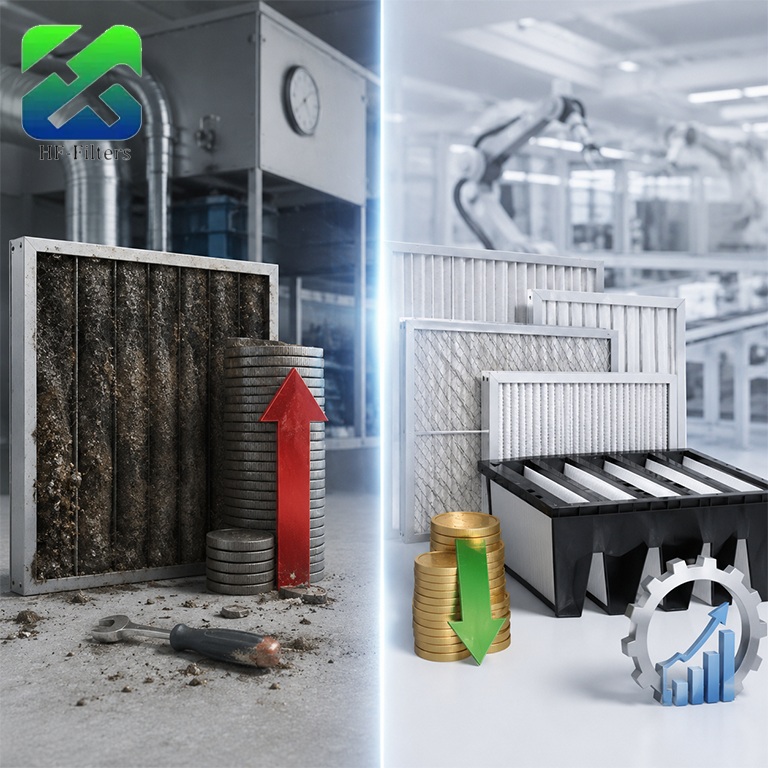
The filters themselves weren’t expensive. The cost came from stopping production, replacing them, checking airflow, and starting everything back up. One small filter could eat up days of labor over a year.
This is why many facilities are reconsidering standard solutions in favor of Custom Air Filters.
Why Customization Matters
Not all factories are the same. Dust type, airflow, and operating hours vary. A filter that works fine in one plant can clog too quickly in another.
For example, a Laminar Flow Hood in an electronics lab requires extremely consistent airflow. Using a generic High Efficiency Filter might technically meet specs, but if it isn’t tailored to the actual dust load, the hood will need cleaning more often, maintenance time increases, and production slows.
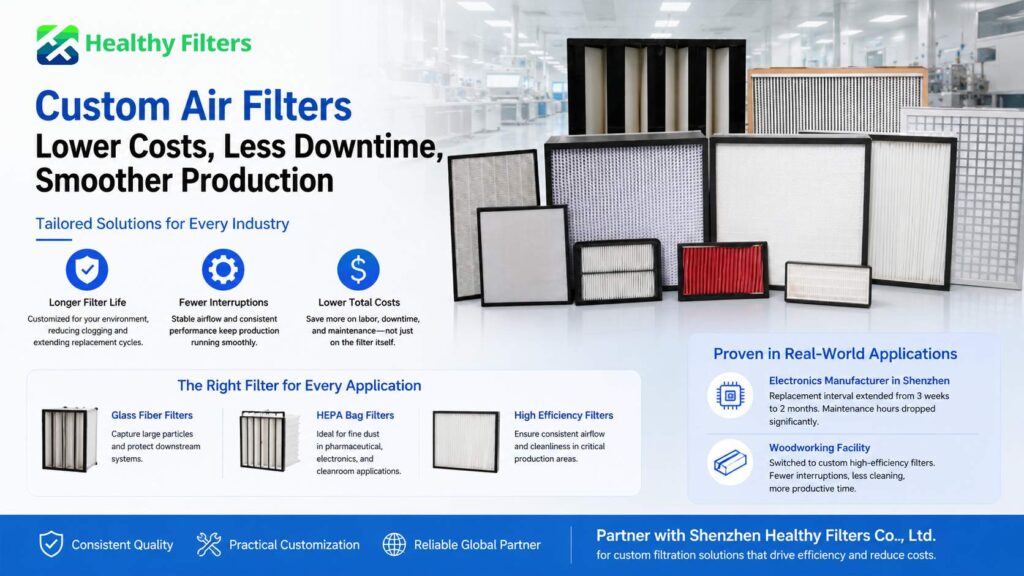
Switching to a Custom Air Filter designed around the specific environment often doubles filter life. Less downtime. Fewer interruptions. Lower labor costs.
Choosing the Right Filter
Experience shows that mixing filter types usually works best:
Glass Fiber Filters handle large particles and protect downstream systems.
HEPA Bag Filters capture fine dust in sensitive environments, like pharmaceutical or electronics production.
High Efficiency Filters offer predictable performance in areas where airflow and cleanliness are critical.
The key isn’t the label. It’s matching the filter to the real-world conditions of your operation.
Field Insights
One Shenzhen-based electronics manufacturer struggled with uneven airflow in Laminar Flow Hoods. Standard filters clogged quickly. Switching to custom solutions from Shenzhen Healthy Filters Co., Ltd. extended replacement intervals from 3 weeks to 2 months. Maintenance hours dropped, downtime decreased, and staff could focus on actual production.
Another woodworking facility replaced cardboard and pleated filters monthly. After analyzing dust load and airflow, they opted for tailored high-efficiency solutions. The result: fewer interruptions and less labor spent cleaning filters.
In both cases, the savings weren’t in the initial price. They were in reduced labor, predictable schedules, and smoother production.
FAQ
Do custom air filters really save money?
Yes. When designed for actual conditions, they last longer and require fewer unexpected replacements.
Are HEPA filters always better?
Not necessarily. The best filter depends on dust type, airflow, and operational goals.
Why include Glass Fiber Filters?
They capture large particles first, protecting downstream filtration and extending overall system life.
Why work with Healthy Filters?
Shenzhen Healthy Filters Co., Ltd. offers consistent quality and practical customization. Their approach helps facilities reduce unexpected maintenance and improve workflow without overspending.
Takeaway
The cheapest filter upfront rarely ends up being the cheapest overall.
The filters that fit your plant, match your airflow, and last longer reduce downtime, labor, and frustration. That’s where real savings come from.
Custom solutions—thoughtfully designed—turn filtration from a routine headache into a quiet efficiency booster.