
Most car owners treat Automobile Air Filter replacement as a simple plug-and-play job. Pop the cover, swap the filter, done. But after years of checking and fixing botched filter replacements, I can tell you straight: cutting corners here ruins the whole point of upgrading to H13 HEPA grade HEPA Filtration.
Many drivers invest in a premium Car Cabin Filter and wonder why they still smell dust, pollen, or outside traffic fumes. Their Car Air Purifier effect feels nonexistent, and airflow turns sluggish. Nine times out of ten, it’s not the filter’s fault—it’s careless replacement mistakes that kill performance. Today, I’ll break down the most frequent errors people make when replacing their H13 HEPA automobile filters, and how to avoid them.
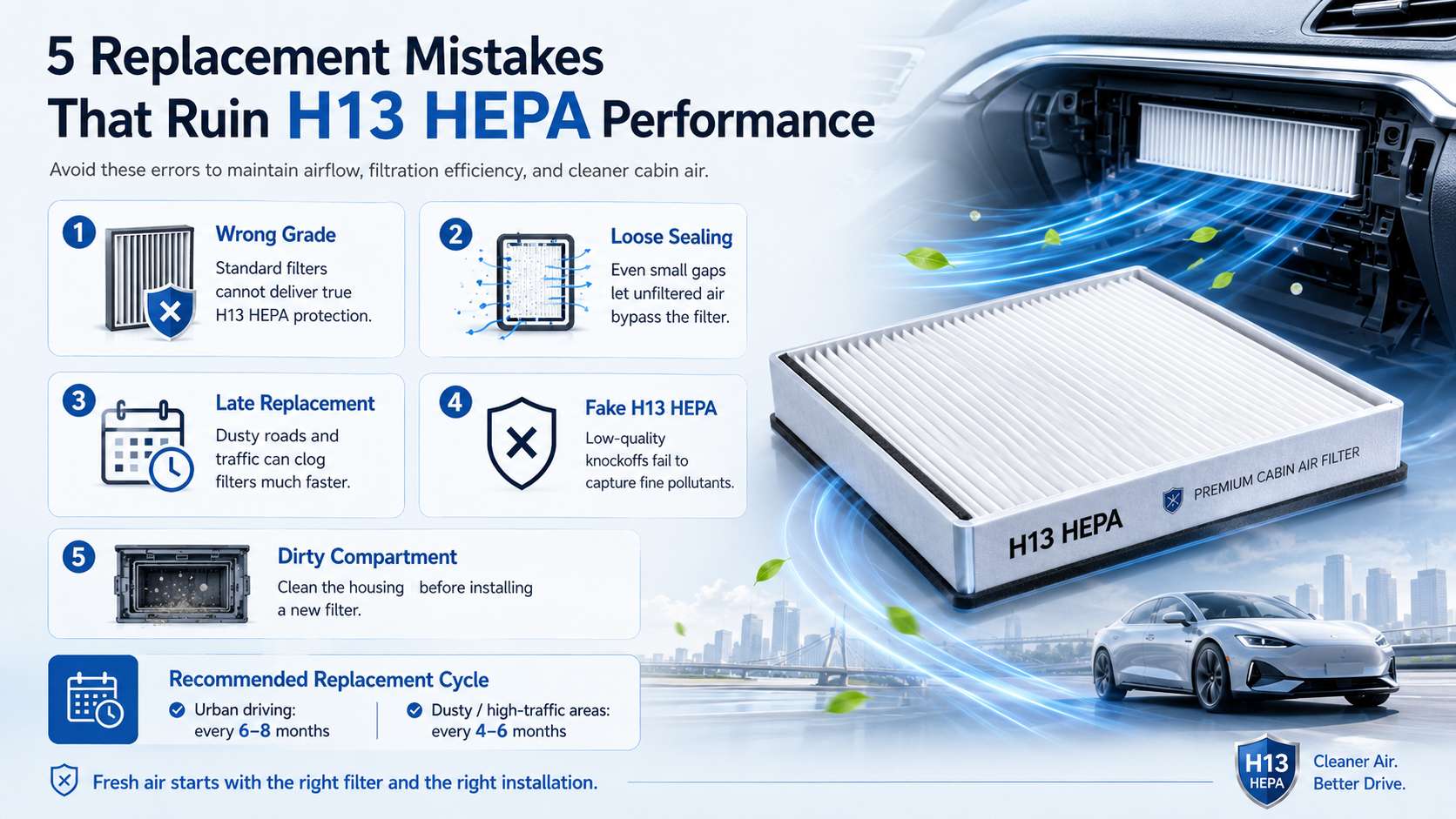
1. Choosing the Wrong Grade: Confusing Standard Filter with H13 HEPA
This is the most common mistake I see. A lot of car owners shop for cheap generic Automobile Air Filter replacements without checking the grade. They think all cabin filters are the same, but basic filters only block large dust and leaves—they offer zero true HEPA Filtration.
H13 HEPA is a high-efficiency standard specifically built to trap fine particles, pollen, mold spores, bacteria, and even ultra-fine traffic pollutants. If you replace your original premium Car Cabin Filter with a regular low-grade filter, you completely lose the built-in Car Air Purifier function. Your cabin air will never feel fresh, and allergens keep circulating inside the car.
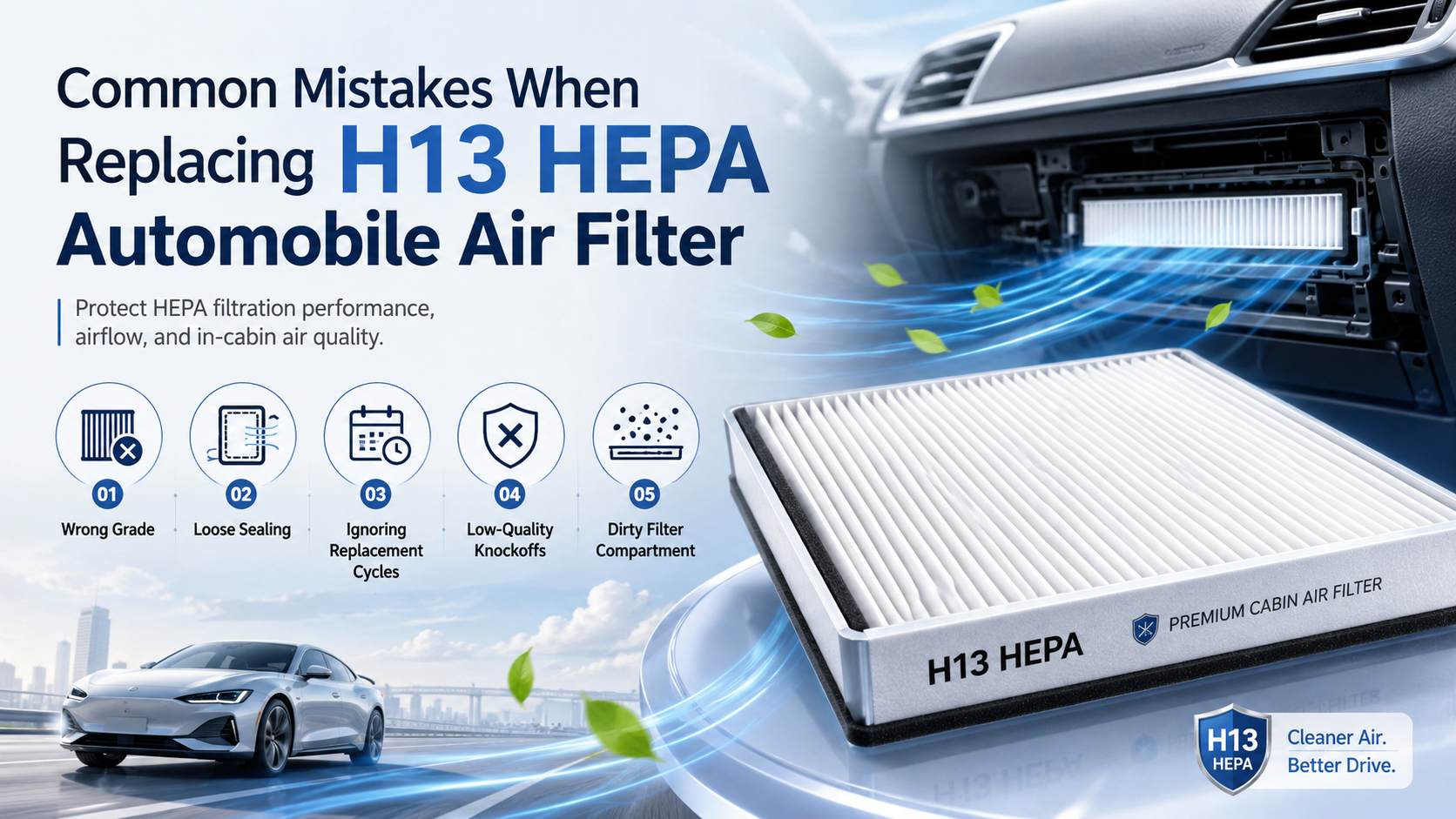
2. Improper Installation & Loose Sealing
Even the best H13 HEPAAutomobile Air Filter fails if installed incorrectly. Many people rush the job, failing to fully seat the filter or leaving gaps around the frame. A tiny unsealed gap is enough to let unfiltered air bypass the HEPA Filtration layer entirely.
I’ve inspected countless cars where the new Car Cabin Filter was slightly crooked or not locked in place. The result? Dust and odors still get in, airflow weakens, and drivers mistakenly think the H13 HEPA filter is ineffective. Always make sure the filter fits flush and the cover is tightly secured after replacement.
3. Ignoring Replacement Cycles
A lot of car owners stick to a fixed replacement schedule without considering their driving environment. If you often drive in dusty urban areas, traffic-heavy roads, or construction zones, your Automobile Air Filter clogs far faster than normal.
A saturated H13 HEPACar Cabin Filter loses its HEPA Filtration capability gradually. It restricts ventilation, weakens your car’s internal air circulation, and disables the original Car Air Purifier effect. Waiting too long to replace it not only worsens air quality but also puts extra strain on your car’s blower system.
4. Buying Low-Quality Knockoff H13 HEPA Filters
The market is flooded with fake “H13 HEPA” cabin filters at super low prices. These counterfeit Automobile Air Filter products claim to deliver professional HEPA Filtration, but they use substandard media with no real efficiency guarantee.
These cheap filters lack dense fiber layers, cannot block fine pollutants, and even shed powder residue that harms your ventilation system. If you want a reliable Car Air Purifier effect, always choose genuine, verified H13 HEPA grade Car Cabin Filter products instead of uncertified alternatives.
5. Forgetting to Clean the Filter Compartment Before Installation
This small detail makes a massive difference. Most people install a new H13 HEPAAutomobile Air Filter directly over a dirty compartment full of old dust, debris, and mold buildup.
The leftover contaminants immediately pollute the new filter, weakening HEPA Filtration performance right after installation. Your new Car Cabin Filter clogs prematurely, and the expected Car Air Purifier effect never kicks in. A quick wipe and clean before installation can double your filter’s service life.
Final Thoughts
Upgrading or replacing your H13 HEPAAutomobile Air Filter is one of the most affordable ways to improve in-car air quality. But careless replacement habits negate all the benefits of professional HEPA Filtration. By avoiding these common mistakes, you can fully leverage your Car Cabin Filter’s performance, enjoy clean, fresh air, and maintain a stable Car Air Purifier effect all year round.
FAQ
Is H13 HEPA better than a regular car cabin filter? Absolutely. H13 HEPA grade HEPA Filtration captures ultra-fine particles, pollen and bacteria that standard Automobile Air Filter cannot, delivering true Car Air Purifier performance.
How often should I replace my H13 HEPA Car Cabin Filter? For urban driving, replace every 6–8 months. For dusty or high-traffic areas, replace every 4–6 months to keep consistent HEPA Filtration results.
Can a wrong filter installation ruin HEPA filtration performance? Yes. Gaps and loose placement let unfiltered air bypass theH13 HEPACar Cabin Filter, completely disabling your car’sCar Air Purifier function.