
A lot of people spend weeks comparing filtration efficiencies.
Then they install the filter and discover the real issue was airflow.
That happens more often than you might think.
When hospitals or cleanroom operators start looking for a Deep Pleated HEPA Filter, the conversation usually revolves around specifications. H13. ULPA. Pressure drop. Efficiency ratings.
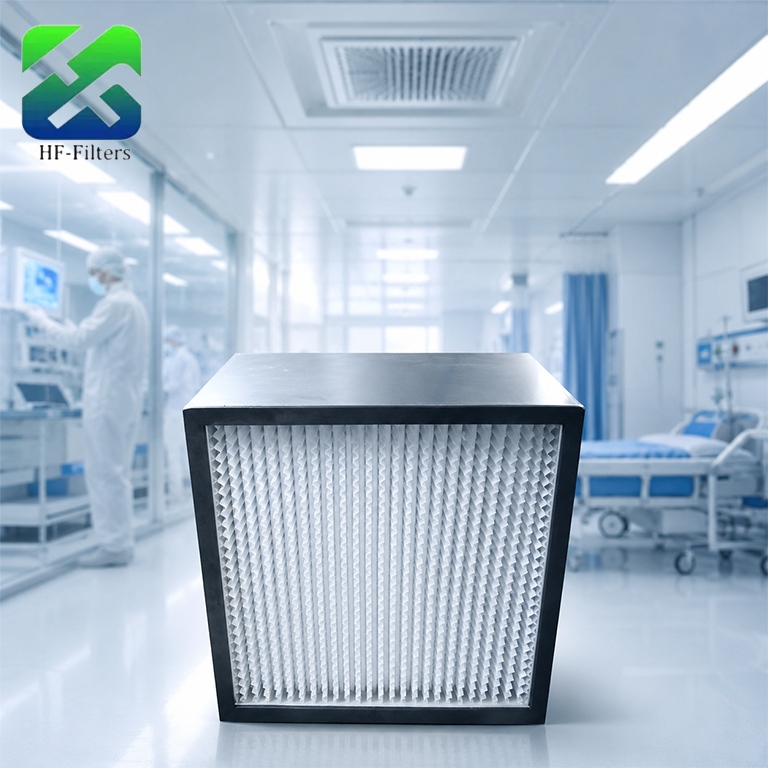
All important.
But not always the deciding factor.
I’ve seen facilities replace perfectly good filters simply because the original selection didn’t match the way the building was actually being used.
A laboratory running around the clock faces very different conditions from a hospital ward that experiences fluctuating occupancy throughout the week.
The filter may be the same on paper. The result often isn’t.
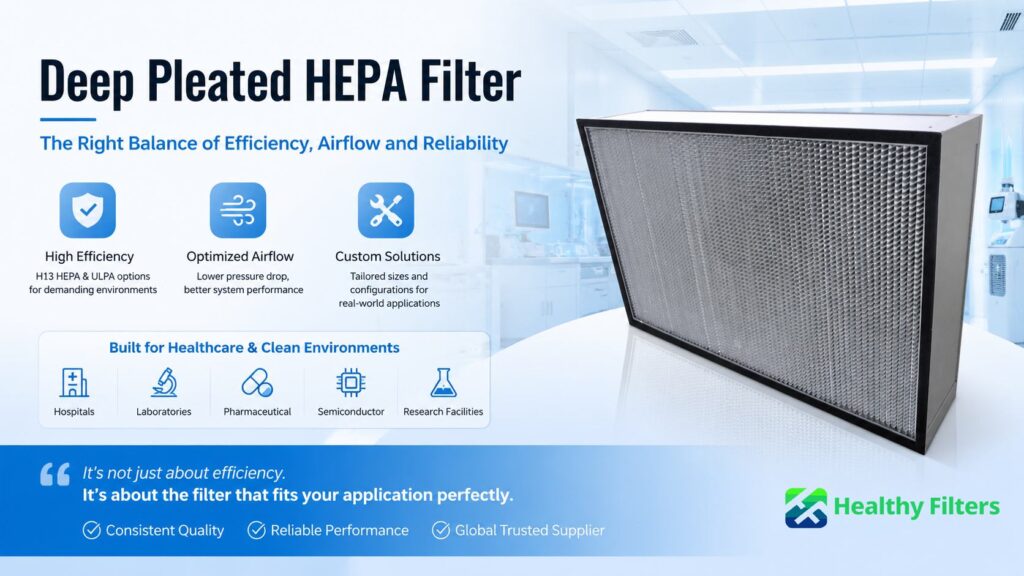
For many healthcare projects, an H13 HEPA Filter remains the practical choice. It delivers the level of performance most facilities need without creating unnecessary resistance inside the ventilation system.
That balance matters.
Higher efficiency sounds attractive until energy bills start climbing or maintenance teams find themselves replacing filters more often than expected.
The same applies to ULPA Filters.
They’re excellent products when the application genuinely requires them. Semiconductor facilities, advanced pharmaceutical production, and certain research environments often do.
A general hospital? Not always.
Sometimes buyers pay for performance they’ll never actually use.
That’s where experience tends to matter more than specifications.
Over the last few years, more contractors and distributors have moved toward custom-built filtration solutions rather than relying entirely on catalogue products. The reason is fairly simple: buildings rarely behave exactly the way drawings suggest they will.
A slightly different airflow requirement. An unusual housing size. A maintenance schedule that doesn’t match the original design assumptions.
Small details, but they affect performance.
Manufacturers such as Shenzhen Healthy Filters Co., Ltd., better known as Healthy Filters, have seen increasing demand from customers looking for that kind of flexibility. Not necessarily because they want a more advanced filter. In many cases, they simply want a filter that fits the application properly.
And that’s often overlooked.
The best Medical Air Filtration system isn’t always the one with the highest efficiency rating.
It’s the one people stop worrying about.
FAQ
Is an H13 HEPA Filter enough for a hospital?
For most hospital areas, yes. It’s one of the most commonly specified options because it balances filtration efficiency and airflow performance.
When should an ULPA Filter be used?
Usually in environments where contamination control requirements are significantly stricter than standard healthcare applications.
Do custom filters really make a difference?
Sometimes the difference is surprisingly small. Sometimes it’s the reason a system performs properly. It depends on the application.
What should buyers focus on besides efficiency?
Airflow, pressure drop, maintenance intervals, and supplier consistency are often just as important as filtration ratings.