Cold, dry winter air makes your skin crack, your throat hurt, and your furniture creak. A good evaporative humidifier fixes all of that in a few hours, but only if the wick filter stays clean and healthy. When minerals pile up or germs start growing, you suddenly get weak mist, strange smells, or white dust everywhere. The best news is that a few simple habits and the right cleaning steps can easily double or triple how long your wick lasts.
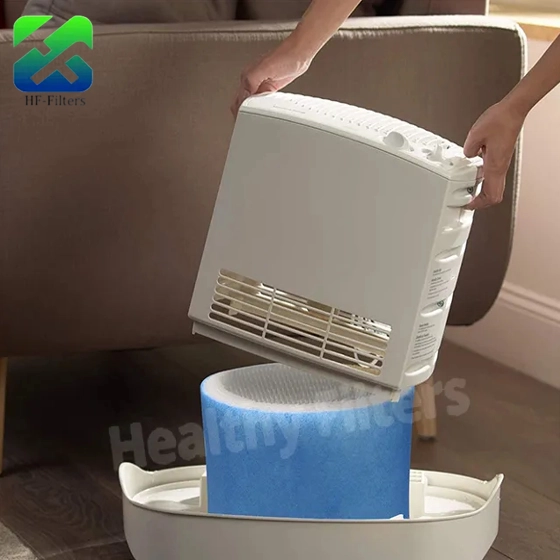
Know Your Wick Filter Type Before Cleaning
Every wick is a little different, and using the wrong cleaning method can ruin it in minutes. Knowing your type saves time and money.
Washable Antimicrobial Paper / Non-woven Wick Filters
Most new paper and cloth wicks now come with built-in germ protection from the factory. These wicks happily accept gentle vinegar cleaning several times before they finally need replacing.
Blue Mesh Treated Layer Filters
The bright blue mesh carries a special long-lasting coating that keeps fighting germs even after many washes. You see this smart design in popular replacements like the Blue Mesh Treated Layer HC-14.
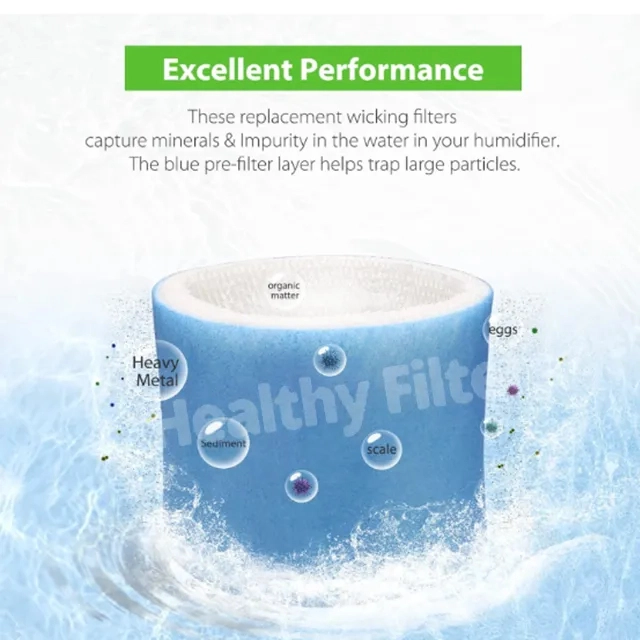
High-Density Folded or 3D Mesh Long-Life Filters
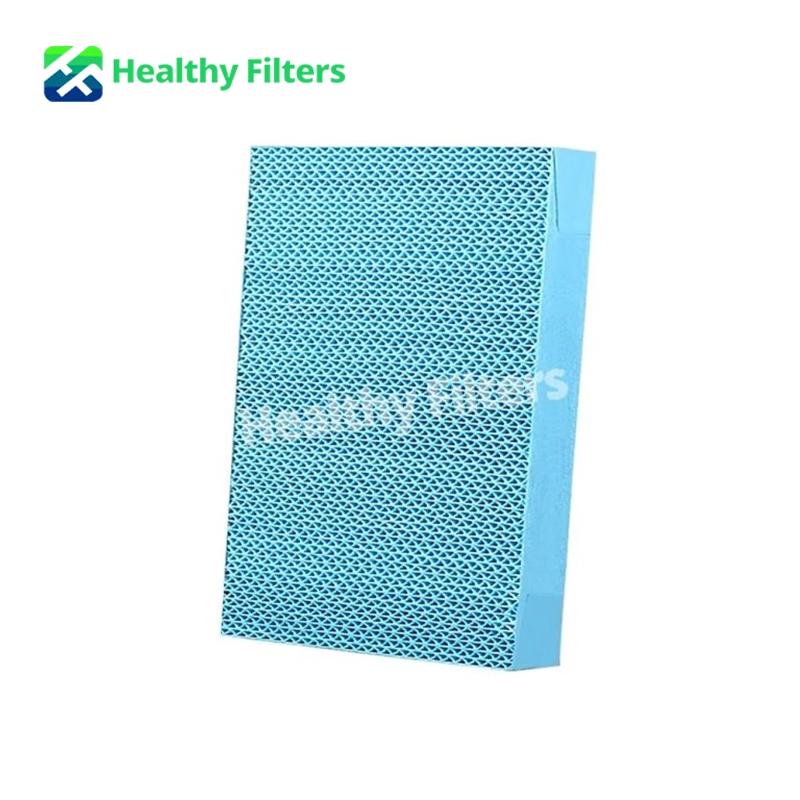
Thicker polyester mesh wicks are built tough and can handle dozens of wash cycles without falling apart. Many families find these strong mesh wicks stay useful for six extra months compared to plain paper ones.
Daily & Weekly Quick Care Habits
Five minutes of easy care each day stops huge problems from ever starting. These tiny habits make the biggest difference.
Empty and Dry the Tank Every Day
Germs double in size every twenty minutes when water sits overnight. Pour out the leftover water and let the tank dry completely while you sleep, and your wick stays much cleaner.
Use Distilled or Demineralized Water Only
Tap water carries minerals that turn rock-hard inside the wick and ruin it forever. Distilled water costs just pennies per gallon and can make your filter last months longer.
Keep the Unit Level and Away from Direct Sunlight
A tilted machine keeps one side of the wick soaked all the time, and mold loves that. Bright sunlight also speeds up germ growth, so pick a cool, even spot on a flat shelf.
Wipe Exterior and Base Weekly
Dust and little spills around the bottom carry dirt straight to the wick. A quick wipe with a damp cloth once a week keeps everything fresh and stops hidden germs.
Step-by-Step Deep Cleaning Guide
Your wick will let you know when it’s ready for a good clean. It feels stiff like cardboard, looks kind of gray and dirty, or just smells off. That’s the moment to give it a proper wash. These steps work for pretty much any wick that’s made to be cleaned.
Tools You Need
Nothing special here. Just grab some plain white vinegar from the kitchen, any soft brush (even an old toothbrush is perfect), a big bowl or just use the sink, and a couple of towels.
Safe Removal of the Wick Filter
Turn the whole thing off and unplug it first, and then carefully pull the wick straight out. Go slow because wet paper or mesh tears super easy.
White Vinegar Soaking Method
Fill your bowl or sink with half warm water and half white vinegar, with the warmth like a nice bath, not hot. Push the wick all the way under and let it sit there for twenty to thirty minutes. The vinegar does all the work and eats away the hard white stuff.
Gentle Brushing and Thorough Rinsing
Take it out and lightly scrub the dirty spots with the brush or your fingers, nothing rough. Then hold it under the cold tap and keep rinsing until the water runs clear and you don’t smell vinegar anymore.
Complete Air-Drying
Put the wick standing up where air can get all around it. Maybe on the counter near a window or on a laundry rack. Leave it alone for a whole day, sometimes two. Do not use a hairdryer and do not put it in the sun. Heat ruins it.
Reinstallation and First-Run Check
When it feels light and completely dry, pop it back in the same way it came out. Plug the machine in, turn it on, and let it run for half an hour. You should see lots of mist and smell nothing weird. If it looks and smells fresh again, you did it right.
When to Replace Instead of Clean
Some damage stays no matter how carefully you wash. Knowing these signs keeps your family breathing safe air.
Visible Hard Water Scale That Won’t Dissolve
If thick white crust stays after two full vinegar soaks, the tiny holes are blocked forever. At that point, cleaning cannot bring back good performance.
Persistent Bad Odor After Cleaning
Musty smells that return in hours usually mean mold has grown deep inside the fibers. No amount of washing can fix that safely.
Reduced Water Evaporation / Weak Mist Output
When a perfectly cleaned wick still gives almost no mist, the capillary action is broken. A fresh wick is the only real solution.
Tears, Deformation, or Mold Spots
Any rip, strange bend, or black dots means germs could spread into your room. Replace it right away to protect everyone’s health.
Why Choose Healthy Filters as Your Long-Term Supplier
Great cleaning habits matter, but starting with a truly well-made wick matters just as much. That’s where the right supplier, like Healthy Filters, changes everything.
Professional Manufacturer with ISO9001
Every batch goes through strict checks in a spotless factory room, so that you can always receive the same high quality, box after box.
Different Materials to Fit Every Need
You can pick wood-pulp paper for super water absorption, aluminum foil for extra strength and fast wicking, tough PP mesh for repeated washing, or other materials. The materials can work best for your machine and your local water.
USA Warehouse for Fast Shipping
Popular items ship the same day from Nashua with no minimum order. Your new wick arrives at your door in just days.
Full OEM/ODM Capability & Free Sample Support
Shops and distributors get custom sizes, packaging, and free samples at no cost. Growing your own brand becomes simple and fast.
Exclusive Antibacterial Blue Mesh Technology
Only their special blue treatment blocks 99.97% of airborne particles wash after wash. Thousands of happy customers prove it works in real homes every day.
FAQ
Q1: How often should you clean a humidifier wick filter?
A: Clean every one to two weeks with hard water or every three to four weeks with distilled water. Always empty the tank daily to stay extra safe.
Q2: Can all wick filters be washed?
A: Most modern wicks with germ protection handle gentle vinegar cleaning many times. Still check your machine manual first to be sure.
Q3: Why does my humidifier smell bad even after cleaning?
A: Smell usually hides in the tank or base, not just the wick. Wash every corner well, and replace the wick if the odor keeps returning.
Q4: Is it safe to add essential oils directly to the water tank?
A: Never add oils or scents. They stick to the wick forever, lower performance, and can make breathing harder.