
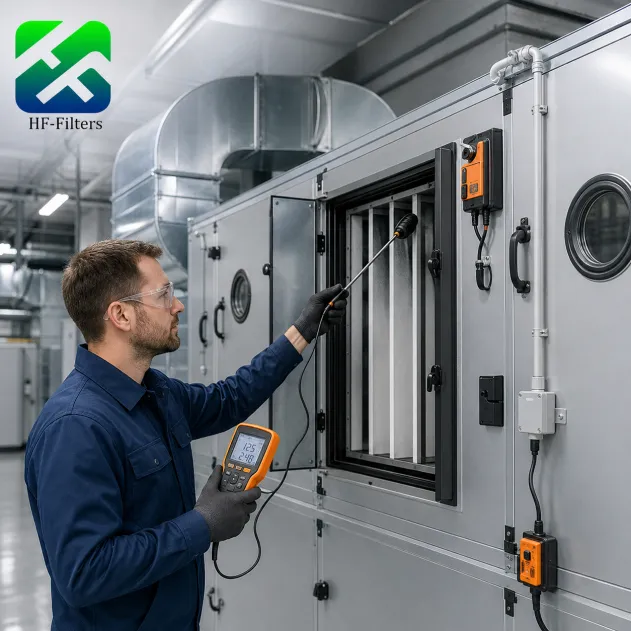
The fan runs. The motor sounds normal. The ductwork does not look blocked. So why does the airflow test still fail? In many HVAC projects, the answer sits inside the filter section. A filter is not just a dust barrier; it adds resistance, changes air distribution, and can decide whether your system reaches the designed airflow.
Why Is Airflow Still Low When the Fan Works?
Airflow testing failure often starts before the site team brings out the meter. If the selected filter does not match the fan curve, duct layout, and target air volume, the system may lose airflow from day one.
Initial Pressure Drop Is Already Too High
A filter with initial pressure drop too high makes the fan work harder right after installation. In one typical pre-filter range, synthetic media can start around 15 to 25 Pa, while final resistance may reach 250 Pa. That gap matters. If you stack pre-filter, bag filter, and HEPA filter without pressure allowance, airflow drops fast.
Why Can the Wrong HEPA Grade Hurt Airflow?
A higher grade does not always mean a better project result. You need the right grade for the room, process, and fan capacity. That sounds obvious, but many failed sites missed this small point.
Wrong HEPA Grade Creates Unwanted Resistance
True HEPA is often linked with 99.97% efficiency, but media behavior differs. Glass fiber media can reach very high efficiency and handle heat, but it usually brings higher resistance. PP+PET composite media can offer high efficiency with lower resistance, though cost changes. Choosing H14 when H13 is enough may pass particle targets and still fail airflow testing. For critical areas, you can review suitable HEPA and ULPA filters before locking the specification.
Why Does Pleat Design Matter?
Two filters can share the same size and grade, yet behave differently in a real AHU. The reason is inside the frame.
Poor Pleat Design Limits Effective Filtration Area
Pleat count, pleat depth, spacing, hot-melt separators, and support strength affect how air moves. Too tight, and the air path narrows. Too loose, and the filter area is wasted. Healthy Filters notes that precision pleating increases filtration area and dust holding capacity. That is exactly what your project needs when space is tight and airflow cannot drop.
How can we prevent incorrect air filters from affecting the entire HVAC system?
Use filters that fully meet specifications. Higher airflow, initial resistance, and filtration efficiency are not always better; the key is to choose filters that best meet the relevant parameters of your HVAC system.
Strict production and testing procedures. From materials to finished products, we employ rigorous testing and production procedures, complying with ISO9001 standards. Finished products undergo 100% smoke leakage testing to ensure no damage to the filter material during production.
What Healthy Filters offers:
1. Professional engineering support
To help you choose the most suitable filter and customize air filters according to different project requirements.
2. Rigorous production and testing process
10 years of experience in the air filter industry. Filter materials and finished products have complete test reports. Production strictly follows ISO9001 standards, and 100% testing is conducted on finished products. Each batch of finished products comes with a corresponding test report, ensuring quality.
3. One-stop service from production to transportation
We provide safe packaging and fast transportation services to ensure goods arrive intact.
Are you still struggling to choose the wrong filters and suppliers? Contact us! Numerous project case studies are available for your reference. Our professional engineers will be your dedicated consultants, providing you with a one-stop air filter solution!
FAQ
Q1: Why does airflow testing fail even when the fan is correct?
A: The filter may add more resistance than the fan can handle, especially after several stages are installed.
Q2: Is H14 always better than H13?
A: No. H14 may raise resistance. If H13 meets the cleanroom target, it can be the safer airflow choice.
Q3: What is the first thing to check on site?
A: Check filter direction, frame sealing, pressure drop, and whether the installed model matches the approved sample.
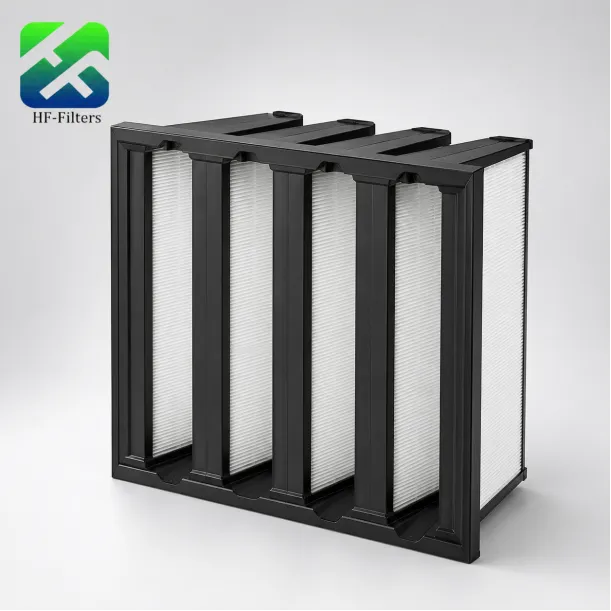
Q4: Can a V-bank filter solve low airflow?
A: It can help, but only when the V-bank filter design, sealing, and AHU space match the airflow target.
Q5: How Can Healthy Filters Help?
A: Healthy Filters can help you select filter media, review pressure drop, adjust pleat design, build OEM filter solutions, and reduce airflow testing risk before shipment.