
Maintenance teams ask me this question a lot.
“Do we really need a schedule for HVAC filters?”
Honestly, it depends.
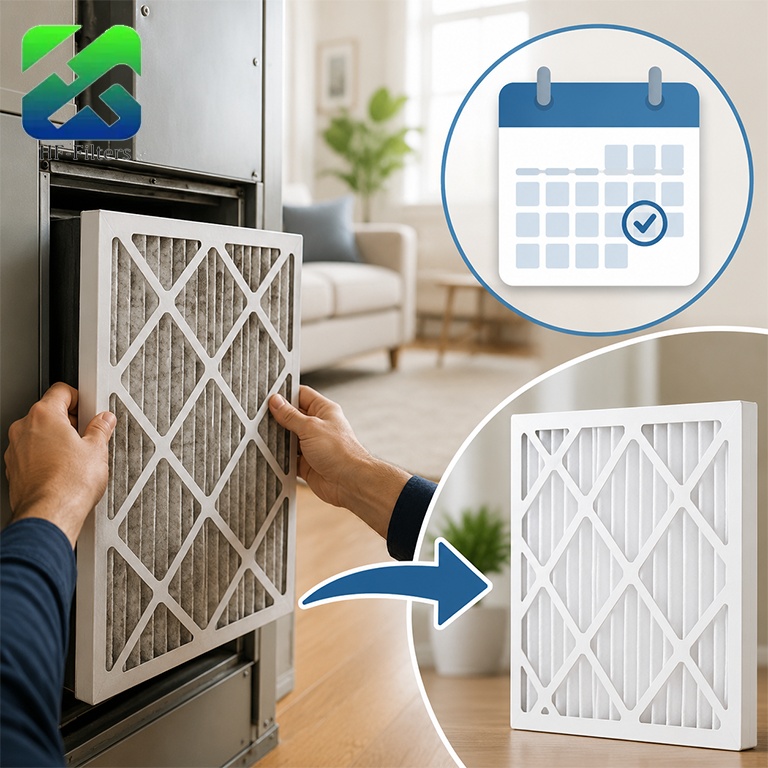
Some offices? Every 3 months is fine.
Factories with dust or fumes? One week and the filter is clogged.
Airflow tells you more than a calendar.
If you notice pressure rising or fans working harder, the filter is tired. Don’t wait. But don’t replace too early either—wasting a filter is money lost.
Observations from the Floor
I visited a plant once. They replaced filters every two months. Routine.
Checked airflow and particle load. Most filters could have lasted four months.
Result? Less maintenance, no surprise shutdowns, lower costs.
Facilities often overlook conditions:
Dust levels
Operation hours
Equipment changes
Filters see it all.
High Temperature Situations
Some processes run hot: ovens, drying tunnels, paint curing lines.
A normal HVAC filter fails fast here.
High Temperature Filter is needed. Designed for heat. Keeps airflow steady. Captures particles reliably.
Choosing the right filter type matters as much as when to replace it.
Industrial Filtration Reality
Industrial air is harsher than office air. Fumes, dust, heat—filters get stressed.
Replacing on calendar alone doesn’t work. Monitoring airflow, pressure drop, and contamination is smarter.
Healthy Filters—Shenzhen Healthy Filters Co., Ltd.—knows this. OEM or custom filters. High-temperature, industrial, or standard HVAC. They help choose the right product for your conditions, not just sell the catalog.
Quick Practical Tips
Use pre-filters when possible. Protect the main filter.
Monitor airflow weekly if possible. Pressure drop = time to change.
Don’t bend or crush filters. Fragile media fails fast.
Work with experienced suppliers who understand real conditions.
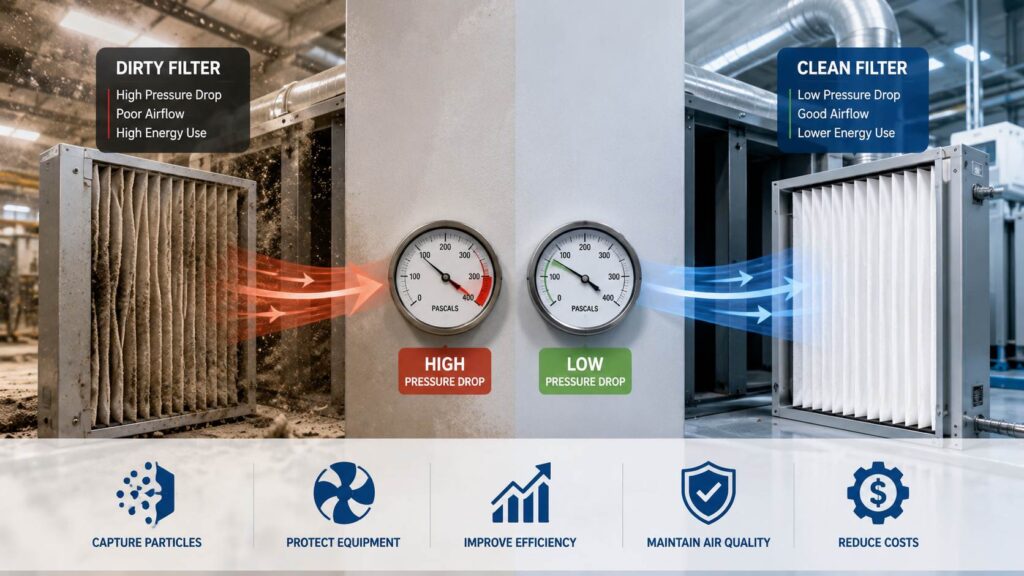
This is simple. But it prevents downtime. Saves money. Maintains air quality.
FAQ
How often should I replace HVAC filters?
Depends on environment. Offices may follow 3-month cycles. Industrial sites rely on airflow and pressure readings.
What happens if a filter isn’t replaced?
Fans work harder. Energy use rises. Equipment stress increases. Air quality drops.
When do I need a High Temperature Filter?
For ovens, drying lines, or any process with high heat exposure. Standard filters fail quickly.
Why work with Healthy Filters?
They provide consistent quality, OEM/ODM solutions, and expertise in real-world industrial and HVAC applications.
Bottom Line
Don’t follow a calendar blindly.
Watch your filters. Listen to the airflow.
Use the right filter for your environment.
Work with suppliers who understand your challenges.
That’s how you save money, reduce downtime, and keep your system running efficiently.