
I’ve spent years visiting factories and warehouses, and the same conversation keeps coming up.
“We try to buy cheap filters, but we always end up spending more,” said one maintenance manager at a furniture shop.
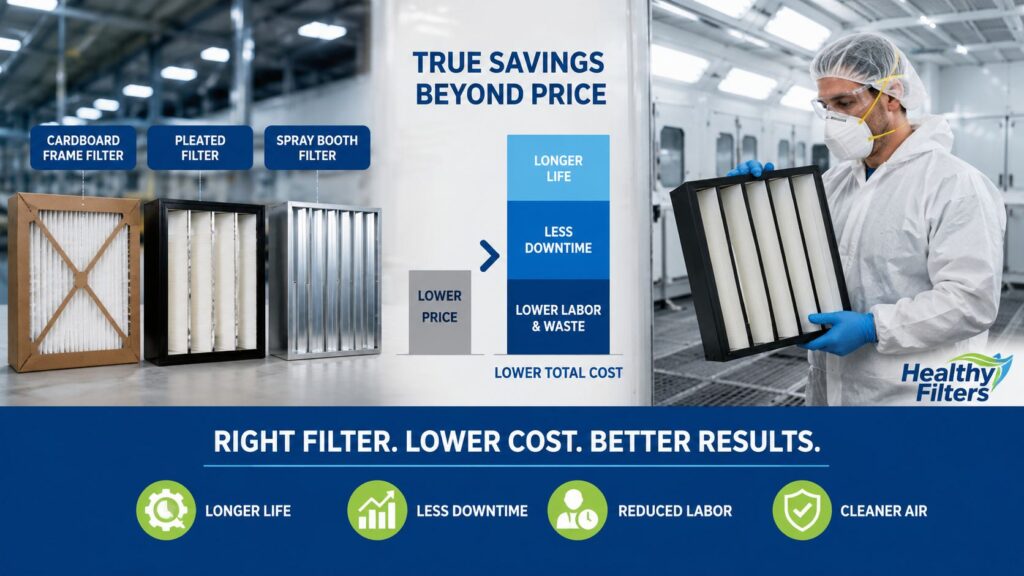
It makes sense when you look closer. Spray booth filters, cardboard frame filters, and pleated filters aren’t just about the price tag. Labor, downtime, and wasted materials quietly pile up, often unnoticed until the yearly review.
At a midwestern paint shop, they were changing booth filters every three weeks. They switched to a slightly more expensive option from Healthy Filters, and suddenly replacements were happening every six weeks. Less disruption, less waste, fewer complaints. The upfront cost went up. Total cost went down.

Picking the Right Filter
The first mistake I see is comparing products as if they were all doing the same job.
A cardboard frame filter in a warehouse isn’t the same as a pleated filter in a dust-sensitive woodshop. And a spray booth filter for fine finishes doesn’t compete with a pre-filter for HVAC.
Efficiency, lifespan, and initial price are meaningless if the filter isn’t suited to the environment.
Field Observations
A woodworking shop kept replacing cardboard frame filters every month. Pleated filters lasted six months and saved the team hours of labor.
An auto parts line used cheap spray booth filters. Paint defects and downtime went down when switching to high-quality filters from Shenzhen Healthy Filters Co., Ltd.
A logistics warehouse found better cardboard frame filters allowed a three-month replacement cycle instead of monthly. Fewer filter swaps, cleaner air, less hassle.
The lesson is clear: matching the filter to the job saves money more than chasing the lowest price.
Tips from Experience
Talk to the maintenance team. They know which filters actually last.
Measure your dust load and airflow. Don’t just buy the cheapest industrial filter element on the shelf.
Consider supplier reliability. Inconsistent filters create surprise downtime. Healthy Filters has built trust through consistent quality and support.
FAQ
How often should a spray booth filter be replaced?
Usually 4–8 weeks, depending on how busy the line is. Longer-lasting options reduce labor headaches.
Are cardboard frame filters okay for dusty workshops?
They work in low-to-medium dust areas. For heavy dust or sensitive operations, pleated filters are better.
Why bother with pleated filters if they’re expensive?
Because fewer replacements, less downtime, and cleaner operations often save more than the initial cost difference.
Why consider Healthy Filters?
They consistently deliver well-made filters and can help you figure out which filter works best for your environment. That reliability itself saves money.
Bottom Line
The cheapest filter upfront rarely ends up being the cheapest overall. What really matters is total cost—including labor, downtime, and defects.
The right filter for the right job—whether it’s a spray booth filter, a pleated filter, or a cardboard frame filter—makes all the difference. And working with a supplier you can rely on, like Healthy Filters, is worth every penny.
When you look past the unit price, the savings often appear in places you didn’t expect.