
Choosing the right FFU HEPA filter is not just about picking the highest grade. You also need to think about airflow, pressure drop, cleanroom class, noise, replacement cost, and the risk level of your process. A wrong choice can mean weak air delivery, higher power bills, or worse, failed cleanroom testing.
What Is an FFU HEPA Filter?
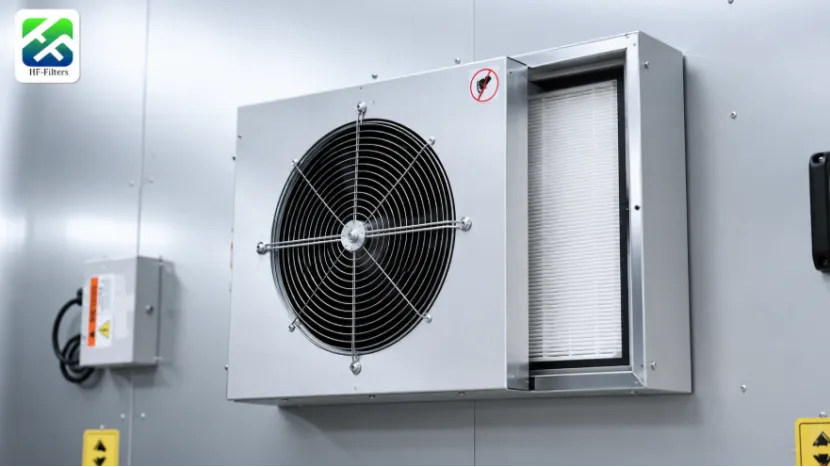
An FFU HEPA filter is a filter used inside a HEPA fan filter unit to send clean air into a controlled room. In daily projects, you may see it in labs, medical areas, electronics workshops, and pharmaceutical cleanrooms.
How It Works
The fan pulls air in, pushes it through the filter, then sends clean air down into the room. A Healthy Filters FFU HEPA filter can use stainless steel or galvanized steel frame, 0.4–0.8m/s adjustable wind speed, and 1000–2000m³/h airflow. Quiet matters too. Nobody wants a cleanroom that sounds like a machine room.
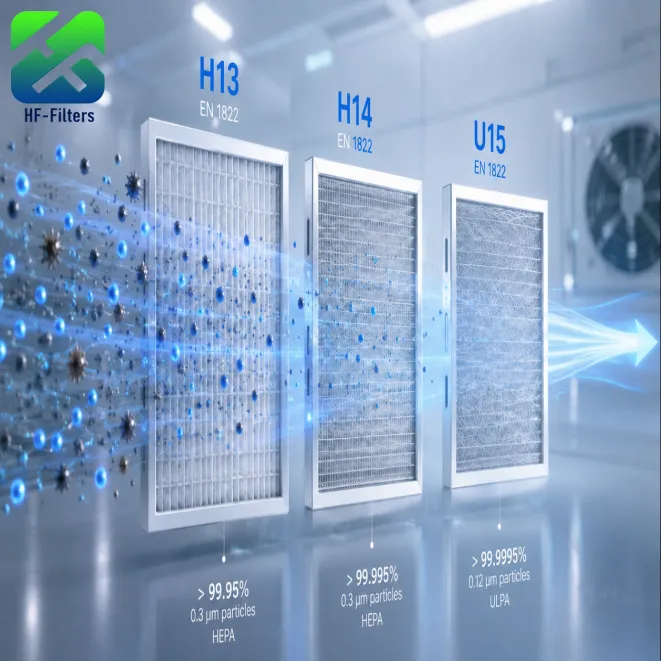
How Should You Compare H13 vs H14 vs U15?
The real question is not “which one is best?” It is “which one fits your cleanroom risk?” H13 vs H14 vs U15 depends on particle control, air resistance, and budget.
H13 HEPA Filter
An H13 HEPA filter is a practical choice for many general cleanrooms and labs. Knowledge base data lists H13 glassfiber filter paper efficiency at ≥99.95% for 0.3µm particles, with resistance ≤330Pa. It gives strong filtration without pushing the fan too hard.
H14 HEPA Filter
An H14 HEPA filter is better for stricter spaces, such as GMP areas, hospitals, and sterile rooms. The same data lists H14 efficiency at ≥99.995% for 0.3µm particles, with higher resistance ≤420Pa. Higher grade, yes, but also higher load.
U15 ULPA Filter
A U15 ULPA filter is for ultra-clean work, such as semiconductor or precision production. Do not choose it just because it sounds safer. It can raise cost and fan pressure.
What Should You Check Before Buying?
Before you order a custom FFU HEPA filter, check size, frame, airflow, seal type, and test documents. Small details decide whether installation goes smoothly.
Buying Checklist
Ask for the filter grade, actual size, pressure drop, frame material, noise level, and quality report. For long-term use, low resistance and large dust holding capacity help reduce maintenance trouble. Healthy Filters also provides flexible OEM solutions, fast delivery, and filter materials for air purification systems through its official website.
Healthy Filters is a Shenzhen-based filtration manufacturer with ISO9001 production, cleanroom testing resources, OEM flexibility, and practical support for custom cleanroom filter projects.
If you are looking for a reliable supplier of FFU HEPA filters, welcome to contact Healthy Filters. We support customized sizes, frames, and efficiencies according to your needs, and provide complete test reports.
FAQ
Q1: What Is the Best HEPA Filter for FFU?
A: For most cleanrooms, an H13 HEPA filter gives a good balance of filtration, airflow, and cost.
Q2: Is H14 Better Than H13?
A: H14 captures finer particles, but it also brings higher resistance. Use it when your process needs stricter control.
Q3: Do You Need a U15 ULPA Filter?
A: Only for ultra-clean areas. For many standard cleanrooms, H13 or H14 is enough.
Q4: What Makes a Low Noise FFU HEPA Filter Important?
A: Lower noise helps staff work more comfortably, especially in labs or medical cleanrooms.
Q5: Can You Order a Custom FFU HEPA Filter?
A: Yes. You can request custom size, frame material, airflow, filter grade, and sealing method from a qualified FFU HEPA filter supplier.