
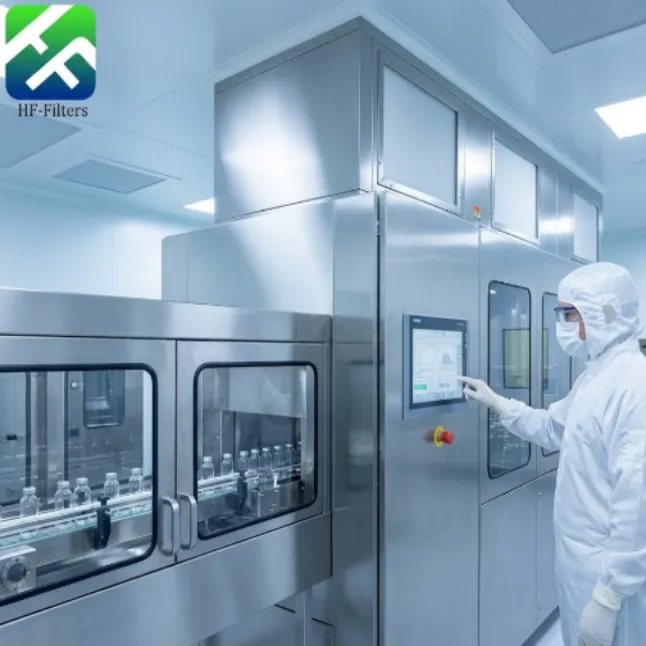
Why Do HEPA Filters Matter in Sterilization Tunnels?
In injectable drug production, glass vials, ampoules, and cartridges must pass through hot air before aseptic filling. A 2024 industry white paper notes that hot air up to 350°C is used in static ovens and depyrogenation tunnels, and this air is typically filtered through special high-temperature HEPA filters before entering the tunnel airflow.
Healthy Filters builds practical, customizable filtration products for clean air systems, backed by ISO9001 production, cleanroom capability, and OEM support. Its high-temperature HEPA filter is relevant when you need clean hot air, not just clean room air.
What Can Go Wrong?
If a sterilization tunnel filter cannot handle heat, the media may crack, the seal may fail, or air may bypass the filter. That is a real headache during validation. You may see rising pressure drop, uneven airflow, or particle risk near containers that should already be ready for filling.
How Should You Choose a Depyrogenation Tunnel HEPA Filter?
A depyrogenation tunnel HEPA filter should be chosen by temperature, efficiency, resistance, structure, and test support. Do not buy only by H-class. The whole build matters.
Check Temperature and Media
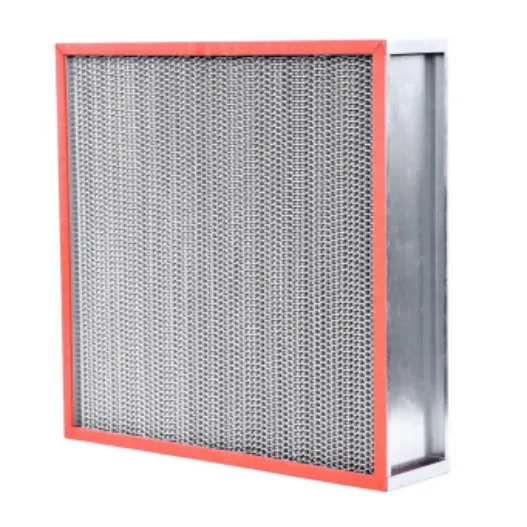
Knowledge base data states that high temperature HEPA filters use high-temperature fiberglass or superfine glass fiber paper, aluminum foil separators, high-temperature sealant, and galvanized or stainless-steel frames. The same section lists temperature resistance at 250°C and 350°C.
Check Efficiency and Resistance
For H13 and H14 choices, look at airflow and pressure drop together. The knowledge base lists HF-HT models with H13 initial resistance below 220 Pa and H14 below 240 Pa, with average efficiency ≥ 99.97% at 0.3μm. That kind of number helps you talk with engineering, not just purchasing.
Why Use Glass Fiber HEPA Filter Design?
A glass fiber HEPA filter fits high temperature air filtration better than many synthetic options. The knowledge base notes glass fiber filter paper is made for high-efficiency air filtration and high-temperature purification projects. It also warns that glass fiber is brittle and not washable, so good frame support and careful handling matter.
Where Do Aluminum Separators Help?
An aluminum separator HEPA filter keeps pleats spaced under hot airflow. In a tunnel, that means steadier airflow, less media contact, and lower risk of uneven loading. Small detail, big consequence. Anyone who has replaced filters before a batch run knows this.
How Can Healthy Filters Help?
You can work with Healthy Filters when you need a custom high temperature HEPA filter for a pharmaceutical HEPA filter project. The company supports OEM work, custom sizes, and filter solutions for clean air systems, which is useful when your tunnel housing is not a standard size.
FAQ
Q1: What Type of HEPA Filter Is Used in a Sterilization Tunnel?
A: A high temperature HEPA filter with glass fiber media, metal frame, heat-resistant sealant, and stable separator structure is commonly used.
Q2: Is H14 HEPA Filter Always Required?
A: Not always. H14 gives higher efficiency, but you should also check temperature rating, pressure drop, airflow, seal quality, and validation needs.
Q3: Why Is Glass Fiber Used?
A: Glass fiber handles high heat better than many synthetic media and supports high-efficiency filtration in hot clean air systems.
Q4: What Is HEPA Filter Integrity Testing?
A: It checks whether the installed filter leaks through the media, frame, gasket, or sealing surface.