
Air filtration has grown into more than just catching dust. It has become a detailed science, shaped by the urgent need to remove tiny particles, chemical gases, bad smells, and even germs from the air we breathe indoors. Modern systems are not only about mechanical filters anymore. They now include chemical layers that react with or pull in harmful substances. These chemicals make air safer and fresher in homes, offices, hospitals, and factories. When companies look for high-quality air filtration products, they do not only want basic performance. They also need reliability, custom designs, and technical know-how. That’s why many turn to Healthy Filters. This manufacturer has earned a strong reputation in the industry. They produce HEPA filters, activated carbon filters, humidifier filters, and other solutions.
Why Is Activated Carbon Widely Used in Air Filtration?
Among all chemical agents, activated carbon is one of the oldest and still the most popular. The reason is simple: its structure is full of small holes that make a huge surface area. This allows it to grab many different kinds of pollutants from the air.
High Adsorption of Volatile Organic Compounds
Volatile Organic Compounds (VOCs) are common indoors. Think of fresh paint smell, cleaning sprays, or new furniture — all of these release VOCs like benzene and formaldehyde. Activated carbon has the ability to catch these chemicals through both physical trapping and chemical bonding. That’s why carbon filters are widely used in homes and factories. They keep the air cleaner and reduce risks from harmful gases.
Effective Against Odors and Gases
Activated carbon is not just about chemicals. It also does very well at removing strong smells from cooking, pets, or smoke. It can also tackle gases like sulfur dioxide or ozone that can be irritating. Some carbon filters use treated catalytic particles. These special versions work better with more complex gases, making them suitable for industrial use.
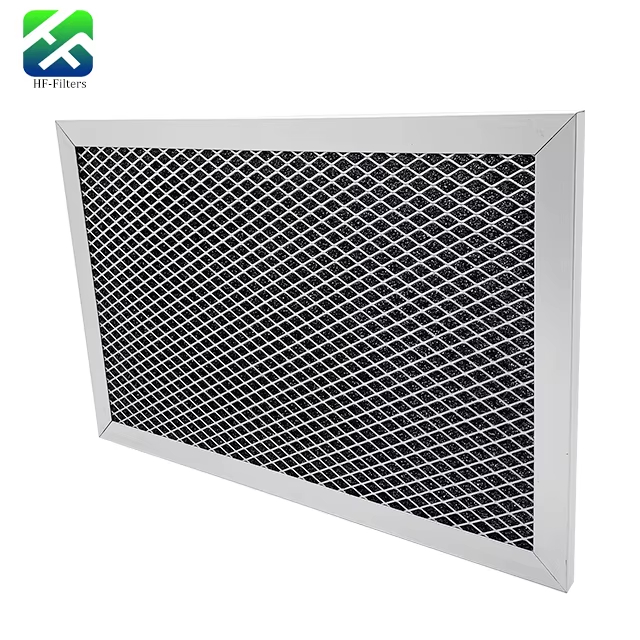
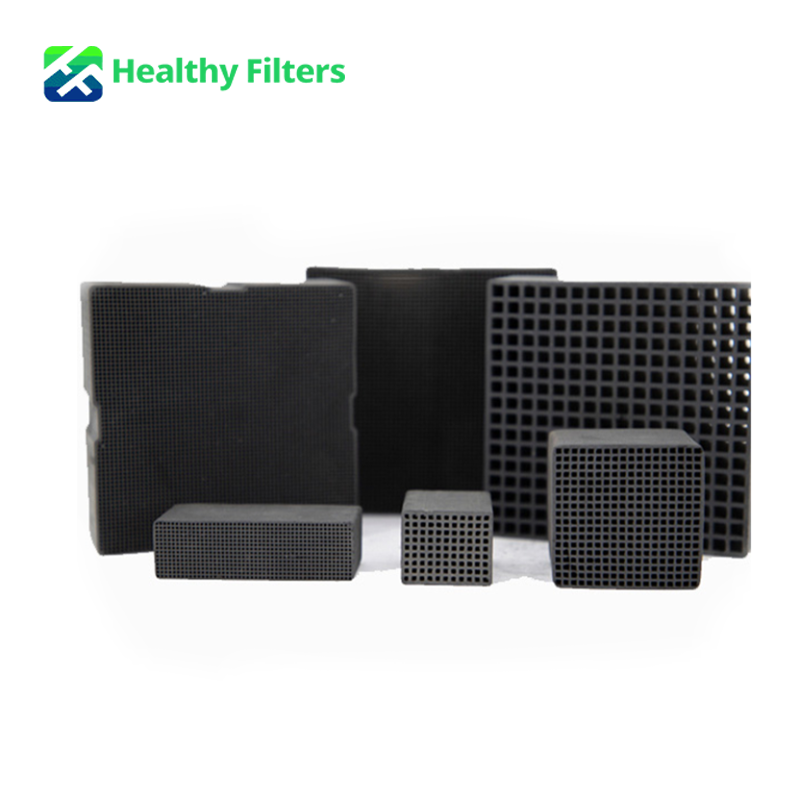
Honeycomb Activated Carbon Filter
Healthy Filters offers a Factory Supply Customized Honeycomb Activated Carbon Filter Air Purifier Filter. It uses a honeycomb structure that increases surface contact while keeping airflow smooth. This design allows strong odor removal with low wind resistance.
How Does Potassium Permanganate Enhance Air Purity?
Activated carbon alone is not always enough. Some gases are too reactive or too difficult to trap. Potassium permanganate is used here because it does not just capture — it changes the gas through oxidation.
Oxidation of Formaldehyde and Sulfur Compounds
This chemical is a strong oxidizer. It reacts with formaldehyde, which is a dangerous indoor pollutant, and changes it into safer forms. It also works well against sulfur gases such as hydrogen sulfide, which has a rotten egg smell.
Works Best in Combination
On its own, potassium permanganate may not be practical. It is usually mixed into porous carriers like alumina or zeolite, or combined with activated carbon. This pairing covers a wider range of contaminants. For example, carbon can handle odors and VOCs, while permanganate breaks down stubborn gases.
Example in Industrial Settings
Healthy Filters provides OEM-grade filters for industries where chemical gases are common. Factories, labs, or plants that release sulfur compounds often use filters embedded with potassium permanganate. This gives them a complete solution that goes beyond normal adsorption.
What Role Does Titanium Dioxide (TiO₂) Play in Air Filters?
Titanium dioxide is well known for its role in photocatalysis. It does not just hold pollutants — it can destroy them when exposed to UV light.
Photocatalytic Decomposition
When UV light hits TiO₂, it sparks chemical reactions that break down VOCs. Harmful gases turn into simple molecules like carbon dioxide and water. This is helpful in places where pollutants need to be removed continuously, not just stored.
Antibacterial Benefits
Another strong point of TiO₂ is its effect on microbes. Under UV light, it damages bacterial walls and even virus particles. That is why TiO₂-coated filters are used in hospitals, schools, or other public spaces where hygiene matters.
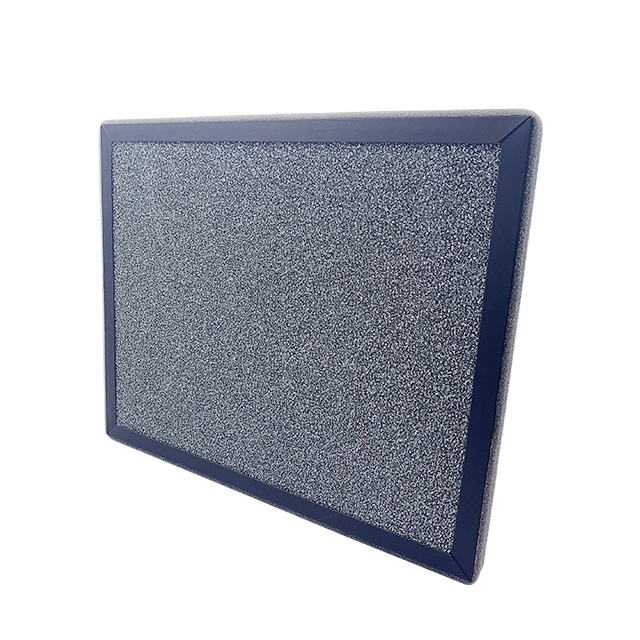
Anti Bacterial Media HEPA Filter for TiO₂ Filter
Healthy Filters offers a Wholesale Customized Anti Bacterial Media Air Hepa Filter for Tio₂ Filter. It works with UV lamps to disinfect the air. This combines HEPA-level dust removal with pathogen control.
How Is Zeolite Utilized in Chemical Filtration?
Zeolite is not a synthetic chemical but a natural mineral with a crystal-like structure. It is widely used because of its ability to filter gases in a very selective way.
Selective Adsorption
Unlike carbon, which traps almost everything, zeolite can target specific molecules. For example, it is very effective for ammonia, which is common in animal farms. It can also trap heavy metal ions released from some industrial processes.
Moisture and Gas Separation
Zeolite also absorbs water. This makes it useful in areas where humidity must be controlled, like cleanrooms or electronics factories. Its ability to separate gases based on molecular size is another advantage.
OEM Customization
Healthy Filters offers OEM designs where zeolite layers can be added into multi-stage filters. Customers can order filters that mix zeolite with other chemical media, depending on the type of gases in their environment.
Why Is Impregnated Alumina Used for Specialized Filtration?
Some gases are especially harmful because they are acidic, such as hydrogen fluoride (HF) or hydrogen chloride (HCl). For these, impregnated alumina is often the best choice.
Neutralizing Acidic Gases
Alumina granules treated with neutralizing agents react with these acidic vapors. They stop the gases before they can corrode equipment or harm people.
High Surface Area
Like activated carbon, alumina has a porous structure. This means gases touch more surface and reactions happen faster. This allows good efficiency even when air flows quickly through the filter.
Compatibility with Modular Designs
Healthy Filters has modular filters that can combine alumina with carbon or other materials. This makes them useful in labs, chemical plants, or anywhere where acidic emissions are a problem.
How Can Distributors Benefit from Offering Advanced Chemical Filters?
For distributors, offering advanced chemical filters is a smart move. Demand for clean indoor air is growing everywhere, and these products provide higher value than simple dust filters.
Access to a Wide Product Line
Healthy Filters has a large range of products, from HEPA-TiO₂ composites to honeycomb carbon filters. All can be customized to local market needs.
Fast Delivery and Global Reach
With overseas warehouses, delivery is faster. This is a big advantage for clients in healthcare or industries that cannot wait weeks for replacements.
Technical Support and Quality Trust
Healthy Filters works under ISO9001 and tests products in CADR-certified centers. This technical support gives distributors confidence when presenting products to demanding clients.
FAQ
Q1: What makes activated carbon so good against odors?
Its structure has countless pores that hold odor molecules. When treated with catalysts, it also removes VOCs like formaldehyde more effectively.
Q2: Can potassium permanganate be used on its own?
It is usually mixed with alumina or other carriers. Alone, it lacks enough structure, but in a mix it works very well.
Q3: Does TiO₂ always need UV light?
Yes. Without UV light, it does not activate. The UV triggers the reactions that break down pollutants and microbes.