
Si estás decidiendo cuándo reemplazar a filtro HEPA En las unidades de una sala limpia o un sistema HVAC, la antigüedad por sí sola no es un buen indicador. No existe una frecuencia de reemplazo universal para los filtros HEPA. La vida útil de un filtro HEPA varía según el flujo de aire, la carga de partículas, la prefiltración, las condiciones de funcionamiento y la integridad del filtro.
La cuestión práctica es si el filtro aún cumple con los requisitos de su sistema. Los distintos filtros HEPA y ULPA también presentan diferencias en el flujo de aire, la resistencia, la eficiencia, los marcos y los sellos.
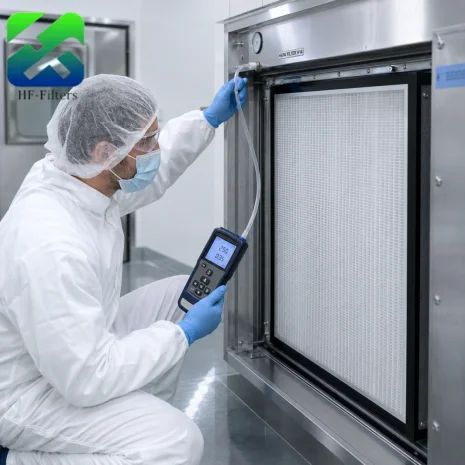
¿Cuáles son las 7 señales de que su filtro HEPA necesita ser reemplazado?
Los principales indicios para la sustitución del filtro HEPA se obtienen a partir de los datos de funcionamiento y la inspección. Un solo síntoma no necesariamente demuestra una falla, pero una tendencia clara merece atención.
1. La caída de presión del filtro HEPA sigue aumentando.
La acumulación de polvo aumenta la resistencia. Monitorea la caída de presión del filtro HEPA en relación con el valor inicial y la resistencia final especificada. Algunos modelos industriales de filtros plisados pequeños indican una resistencia inicial inferior a 220 Pa y una caída de presión final de 400 Pa. Esta es una especificación del producto, no un límite de reemplazo universal.
2. El flujo de aire del filtro HEPA disminuye
Compare el flujo de aire actual con el flujo de aire de diseño o nominal en las mismas condiciones de funcionamiento. Una mayor resistencia puede reducir el flujo de aire del filtro HEPA si el ventilador no puede compensarlo. Primero, revise el prefiltro, el ventilador y las compuertas. A veces, la primera etapa simplemente está obstruida.
3. El filtro no supera la prueba de fugas del filtro HEPA.
Una prueba de fugas fallida en un filtro HEPA puede indicar daños en el material filtrante o un problema de sellado. Una prueba de integridad del filtro HEPA debe verificar la superficie del filtro y el área de sellado. Las pruebas de fugas también se utilizan en el control de calidad de filtros industriales de alta eficiencia.
4. Aumenta el número de partículas.
Un mayor recuento de partículas puede indicar una menor eficiencia del filtro HEPA, pero también pueden deberse a puertas, personas, procesos o desequilibrios en el flujo de aire. Investigue la tendencia antes de culpar al filtro.
5. El consumo de energía aumenta
Un filtro saturado hace que el ventilador trabaje más para mantener el volumen de aire. Si la resistencia y el consumo de energía aumentan simultáneamente, Sustitución del filtro HEPA Puede que tenga más sentido que presionar más al sistema.
6. El soporte, el marco o el sello están dañados.
Los medios filtrantes rasgados, los pliegues aplastados, los marcos deformados o las juntas dañadas pueden provocar fugas. Los filtros HEPA industriales suelen utilizar medios filtrantes de fibra de vidrio o PP, marcos de madera o galvanizados y selladores de PU o neopreno.
7. La eficiencia ya no cumple con los requisitos.
El objetivo depende de la aplicación. Los filtros de alta eficiencia pueden cubrir las clases H13, H14 y U15, mientras que los modelos con sello de gel pueden usar H14 o U15. Si la clase requerida ya no se cumple, el reemplazo del filtro HEPA para salas blancas se convierte en una decisión de rendimiento.
¿Cómo se puede prolongar la vida útil de un filtro HEPA?
Un buen mantenimiento de los filtros HEPA comienza en la etapa inicial. Los filtros de ventilación generales capturan el polvo más grande antes de que llegue a la etapa final, y la filtración primaria o de eficiencia media puede prolongar la vida útil de los filtros de alta eficiencia. Registre la caída de presión, inspeccione los sellos y conserve las fechas de instalación y prueba. Los pequeños registros de mantenimiento pueden resultar sorprendentemente útiles más adelante.
¿Qué debes comprobar antes de comprar un filtro HEPA de repuesto?
El filtro HEPA de repuesto debe ajustarse a la carcasa y al punto de funcionamiento. Verifique el ancho, la altura, la profundidad, la eficiencia del filtro HEPA, el caudal de aire nominal, la resistencia inicial y final, el material del marco, la junta o el sello de gel y la aplicación.
Para un Filtro HEPA personalizadoProporcione las dimensiones exactas o un dibujo, además de los requisitos de flujo de aire y eficiencia. La gama de filtros demuestra por qué los tamaños de cara iguales no siempre implican filtros intercambiables.
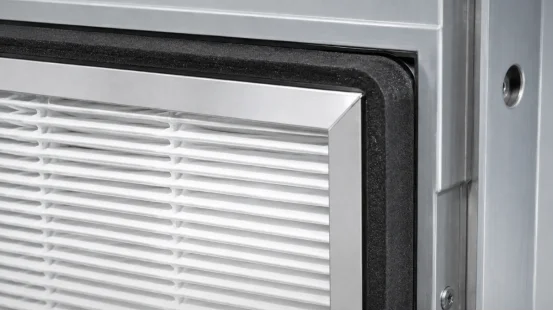
¿Qué factores facilitan la especificación de una pieza de repuesto?
Una vez que se comprende el modo de fallo, resulta más sencillo encontrar el filtro adecuado. Filtros saludables Suministra configuraciones de filtros HEPA con pliegues pequeños, pliegues profundos, tipo V, alta temperatura y sellado de gel.
Los datos del producto incluyen tamaño, caudal de aire nominal, caída de presión, eficiencia, fluidos, estructura y detalles de sellado. Su proceso de producción también abarca el plisado de precisión, el sellado y las pruebas de integridad. Estos detalles son importantes cuando se necesita un reemplazo idéntico sin modificar la carcasa existente.
Preguntas frecuentes
P1: ¿Cuánto duran los filtros HEPA?
R: No existe una única vida útil para los filtros HEPA. La carga, el flujo de aire, la prefiltración, el entorno y los resultados de las pruebas son más importantes que la antigüedad.
P2: ¿Con qué frecuencia se deben reemplazar los filtros HEPA?
A: Utilice datos de condiciones y rendimiento. La frecuencia de reemplazo del filtro HEPA debe basarse en la caída de presión, el flujo de aire, la integridad y la limpieza requerida.
P3: ¿Cuándo se debe reemplazar un filtro HEPA?
A: Reemplácelo cuando la resistencia supere el límite especificado, las pruebas de integridad fallen, aparezcan daños físicos o la eficiencia ya no cumpla con los requisitos.
P4: ¿Puede un filtro HEPA sucio reducir el flujo de aire?
R: Sí. La acumulación de partículas aumenta la resistencia y puede reducir el flujo de aire si el ventilador no puede mantener el volumen deseado.
P5: ¿Se puede limpiar y reutilizar un filtro HEPA?
R: Depende del material filtrante. Los filtros HEPA de fibra de vidrio generalmente no son lavables, así que compruebe las especificaciones antes de limpiarlos.