
La fabricación de semiconductores está experimentando un nuevo crecimiento.
Los servidores de IA, la memoria HBM, los procesadores avanzados y la electrónica de alto rendimiento impulsan la inversión en nuevas fábricas y capacidad de producción. SEMI prevé que el gasto mundial en equipos para fábricas de 300 mm aumente un 18 % en 2026, impulsado principalmente por la demanda de chips relacionados con la IA y la nueva capacidad de fabricación.
Pero construir más fábricas de semiconductores también significa construir más salas blancas.
Y dentro de una sala limpia de semiconductores, un aspecto rápidamente se vuelve más importante que el tamaño de la propia fábrica: control de la contaminación.
Las diminutas partículas en suspensión en el aire —y, en algunos procesos, los contaminantes moleculares— pueden interferir con equipos sensibles y etapas de fabricación. A medida que las estructuras de los chips se vuelven más pequeñas y los procesos más exigentes, mantener limpio el entorno de producción es fundamental para una fabricación fiable.
Por qué la fabricación de semiconductores necesita aire extremadamente limpio
Una fábrica de semiconductores es muy diferente de una fábrica común y corriente.
Las partículas que serían insignificantes en muchos entornos industriales pueden convertirse en un problema en torno a las obleas, los equipos de fotolitografía y otras áreas de proceso sensibles.
Por eso, las salas blancas utilizan varias capas de filtración en lugar de depender de un solo filtro.
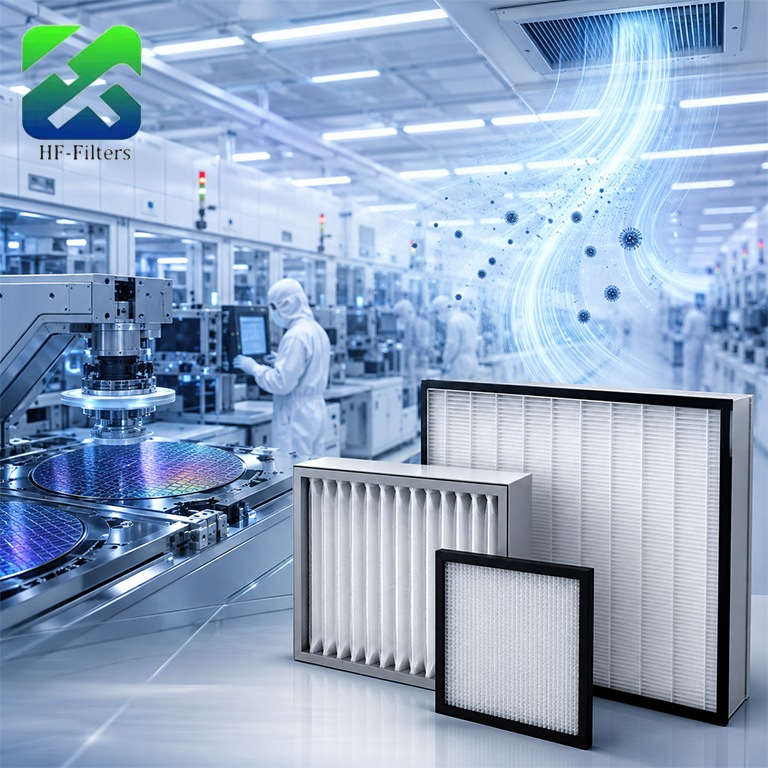
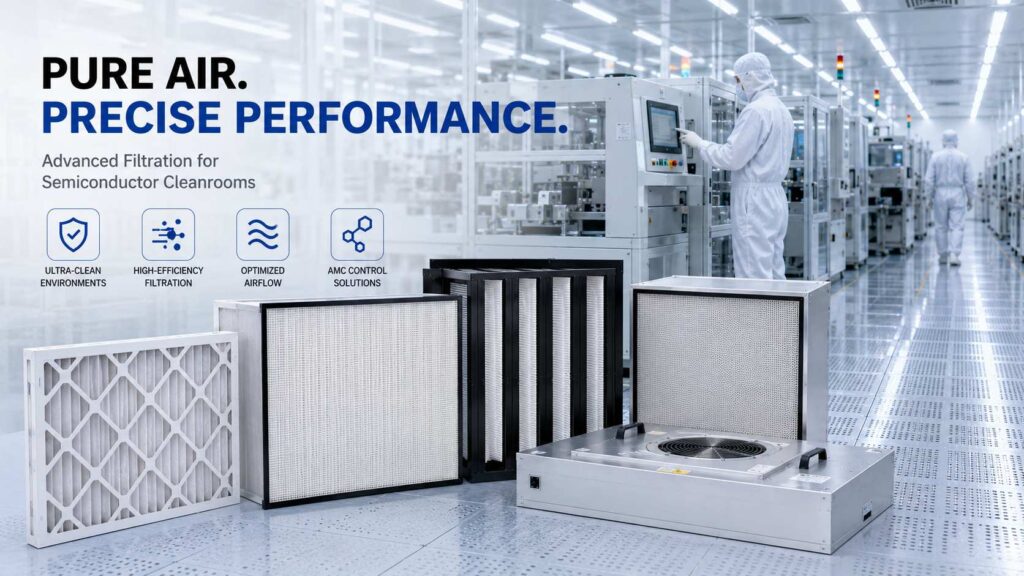
Un sistema típico puede incluir prefiltros en una etapa inicial, seguidos de filtros de alta eficiencia más cerca de la sala limpia. Las unidades de filtración con ventilador (FFU, por sus siglas en inglés) también se utilizan comúnmente para suministrar aire filtrado directamente a espacios controlados.
Suministros de filtros saludables prefiltros, filtros HEPA FFU y filtros de aire para salas blancas para aplicaciones donde se requieren niveles controlados de partículas.
HEPA o ULPA: ¿Cuál es la más adecuada?
Los filtros HEPA y ULPA se utilizan para la filtración de partículas de alta eficiencia, pero no son intercambiables en todas las aplicaciones.
Los filtros HEPA se utilizan ampliamente en salas blancas y espacios de fabricación controlados. Los filtros ULPA ofrecen un nivel aún mayor de filtración de partículas y pueden seleccionarse para áreas más exigentes.
La elección correcta depende de la clasificación de la sala limpia, los requisitos del proceso, el diseño del flujo de aire y el sistema de filtración.
En otras palabras, una mayor eficiencia no es automáticamente el único factor a considerar.
Healthy Filters fabrica ambos Filtros HEPA y ULPA, incluyendo configuraciones diseñadas para semiconductores y otras aplicaciones críticas en salas blancas.
El sellado del filtro es tan importante como su eficiencia.
Un filtro de alta eficiencia solo funciona correctamente si el aire pasa realmente a través del material filtrante.
Si existe una fuga entre el filtro y su carcasa, el aire sin filtrar puede sortear el medio filtrante. En una sala limpia crítica, incluso una pequeña fuga puede comprometer el rendimiento del sistema de filtración.
Por eso, el sellado merece atención.
Filtros HEPA y ULPA con sellado de gel Están diseñados para crear un sellado fiable entre el filtro y la carcasa del terminal. Se suelen utilizar en sistemas de filtración de terminales críticos, donde minimizar las fugas es especialmente importante.
Healthy Filters puede proporcionar configuraciones de sellado de gel como parte de proyectos personalizados de filtración para salas blancas.
La contaminación de los semiconductores no se limita solo a las partículas.
Las partículas son solo una parte del problema.
Algunos procesos de semiconductores también deben controlar contaminación molecular en el aire, o AMCDependiendo del entorno de producción, los contaminantes moleculares pueden incluir ácidos, bases, compuestos orgánicos y otros productos químicos que pueden afectar a procesos o superficies sensibles.
Los filtros de partículas, como los filtros HEPA y ULPA, no están diseñados para retener todos los contaminantes gaseosos.
Aquí es donde la filtración química cobra relevancia.
El carbón activado y otros medios de adsorción pueden utilizarse como parte de una estrategia de control de contaminantes atmosféricos, dependiendo del contaminante en cuestión y de los requisitos del proceso.
Suministros de filtros saludables filtros de carbón activado y puede desarrollar configuraciones de filtración personalizadas para proyectos que requieren el control de la contaminación tanto por partículas como molecular.
La limpieza aún debe ir de la mano con el flujo de aire.
Las salas blancas para semiconductores mueven grandes volúmenes de aire filtrado, a menudo de forma continua.
Por lo tanto, la selección de filtros no puede centrarse únicamente en la eficiencia.
Los ingenieros y los compradores también deben tener en cuenta lo siguiente:
- Eficiencia de filtración
- flujo de aire
- Caída de presión
- Sellado del filtro
- Medio filtrante
- Requisitos de sala limpia
- vida de servicio
- Costo operativo
Un filtro con una eficiencia muy alta pero con una resistencia al flujo de aire inadecuada puede no ser la opción correcta para un sistema de tratamiento de aire o unidad de filtro de aire (FFU) en particular.
Lo mismo se aplica a la selección de medios. Filtros HEPA de PTFEPor ejemplo, pueden considerarse cuando las características de sus medios se ajustan al diseño de la sala limpia o a los requisitos operativos.
El objetivo no es simplemente instalar el filtro de mayor rendimiento disponible, sino construir un sistema de filtración que se adapte al proceso.
Filtros saludables para salas blancas de semiconductores
Healthy Filters es un fabricante profesional de filtros de aire que suministra productos de filtración para salas blancas, edificios comerciales y aplicaciones industriales.
Para entornos de semiconductores y otros entornos críticos, las soluciones disponibles incluyen:
Filtros HEPA, filtros ULPA, filtros HEPA/ULPA con junta de gel, filtros HEPA de PTFE, filtros HEPA FFU, prefiltros, filtros de carbón activado y soluciones de filtración personalizadas para salas blancas.
Los filtros saludables también son compatibles Proyectos OEM/ODM y personalizadosLos filtros se pueden desarrollar en función de las dimensiones, los requisitos de eficiencia, el medio filtrante, el diseño del marco, las condiciones del flujo de aire y las necesidades específicas de la aplicación.
A medida que entren en funcionamiento nuevas fábricas de semiconductores, los requisitos de filtración seguirán variando de un área de proceso a otra. La mejor solución rara vez es un solo filtro; se trata de una combinación bien diseñada de eficiencia de filtración, sellado, flujo de aire y control de la contaminación.
¿Está planificando una sala limpia para semiconductores o busca un proveedor confiable de filtros para salas limpias? Contacte con Healthy Filters para hablar sobre filtros HEPA, ULPA, control AMC y soluciones de filtración de aire personalizadas para su proyecto.
Preguntas frecuentes
¿Por qué se utilizan filtros HEPA y ULPA en las salas blancas de semiconductores?
Los filtros HEPA y ULPA se utilizan para capturar partículas suspendidas en el aire que podrían interferir con procesos sensibles de fabricación de semiconductores. El nivel de filtración requerido depende de la clasificación de la sala limpia, el equipo y los requisitos del proceso.
¿Cuál es la diferencia entre los filtros HEPA y ULPA?
Ambos tipos de filtros proporcionan una filtración de partículas de alta eficiencia, pero los filtros ULPA generalmente ofrecen un nivel de filtración superior al de los filtros HEPA. La mejor opción depende de los requisitos de la sala limpia, el flujo de aire, la caída de presión y el diseño del sistema.
¿Por qué es importante el control AMC en la fabricación de semiconductores?
Algunos procesos de fabricación de semiconductores pueden verse afectados por contaminantes moleculares presentes en el aire, como ácidos, bases y compuestos orgánicos. La filtración AMC utiliza medios de adsorción adecuados para ayudar a controlar estos contaminantes, además de la filtración de partículas.
¿Puede Healthy Filters personalizar los filtros para salas blancas de semiconductores?
Sí. Healthy Filters ofrece filtros para salas blancas OEM/ODM y personalizados según las dimensiones, la eficiencia de filtración, el material filtrante, la estructura del marco, el método de sellado, el flujo de aire y los requisitos de la aplicación.