Industrial environments require effective solutions to control gas-phase contaminants.Dealing with gas-phase pollutants goes beyond simple particle capture; it calls for a detailed method involving adsorption and chemical reaction. Keeping air clean remains key to shielding delicate machinery, meeting legal rules, and protecting worker well-being. Healthy Filters provides industrial air filtration solutions based on cutting-edge material knowledge and eco-friendly production. As a top player in the field, the company delivers full solutions suited for worldwide business allies and major factory sites. Their focus on quality and open company values makes sure each filter follows strict global norms, offering dependability for sellers and final users.
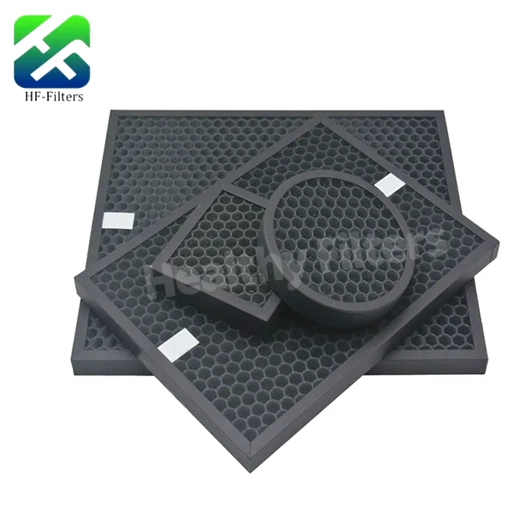
Critical Challenges in Industrial Gas Phase Contamination
Gaseous impurities in production areas bring a range of tough issues that basic particle filters fail to fix. These pollutants operate at the molecular scale, so targeted media must capture and neutralize them before they circulate through HVAC systems or release outdoors.
Volatile Organic Compound Emissions
Numerous factory tasks, such as coating, solvent handling, and chemical mixing, emit volatile organic compounds (VOCs). These materials help form ground-level ozone and create lasting health threats unless controlled by strong adsorption units. Proper management thus prevents environmental harm and supports safe operations.
Corrosive Gas Impact on Infrastructure
Harsh gases like hydrogen sulfide or sulfur dioxide lead to fast wear on electronic parts and steel frames. Stopping tiny corrosion in monitoring areas and server rooms proves essential for steady work and to avoid high-cost equipment breakdowns. Such prevention maintains long-term site reliability.
Complex Molecular Odor Neutralization
Unwanted smells from sewage handling, food preparation, or polymer production often spark neighbor concerns and staff unease. Effective gas filtration removes odor-causing molecules through adsorption and chemical reactions. This focus ensures both community peace and internal comfort.
Mechanism of Molecular Adsorption in Air Purification
Gas elimination depends on adsorption, where pollutant molecules stick to a solid surface. Picking the right media thickness and exposure duration sets the system’s success in various conditions.
Physical Adsorption via Porous Media
Materials with open structures, such as activated carbon, hold vast inner surfaces that hold gas molecules via weak attraction forces. This physical method works well against many organic substances and fuel-based compounds seen in factory outflows. As a result, it broadens protection across common threats.
Chemical Adsorption and Neutralization Processes
If basic adsorption falls short, treated media enable chemisorption through chemical bonding. In this step, the gas reacts with the coated material, turning the impurity into a fixed solid state. Such reactions provide lasting removal for stubborn pollutants.
Retention Capacity and Breakthrough Analysis
A gas filter’s duration hinges on its full holding power. Checking the saturation threshold, when media fills up and lets impurities escape, forms a key part of expert upkeep plans. Regular analysis thus extends system life and performance.
Strategic Implementation of Healthy Filters Carbon 4V Bank Filters
Areas with strong air flow require cleaning units that maximize contact area while allowing smooth passage. A V-bank layout packs more carbon material into regular frames, which balances deep cleaning with overall efficiency.
High Airflow Capacity for Heavy Industry
The Carbon 4v Bank Filter suits tough tasks by handling large air volumes. Its build cuts down on flow barriers, so ventilation setups run smoothly even under heavy impurity pressure. This design supports demanding industrial paces.
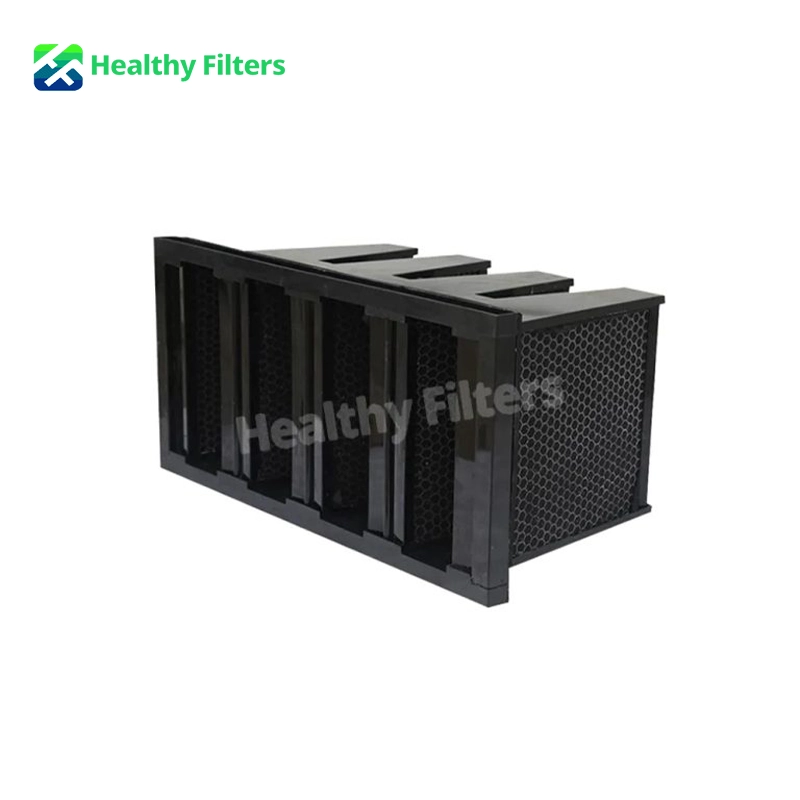
Low Pressure Drop for Energy Efficiency
Lowering the power needed to move air past filter banks aids budget-friendly work. Streamlined shapes give enough dwell time for pollutant binding while keeping resistance minimal. Consequently, operations save on energy without losing effectiveness.
Multi-Stage Filtration for Extended Service Life
Adding these bank units to multi-stage filtration systems shields the carbon layers from dirt and fragments. This placement lets the gas cleaning phase concentrate on vapors and smells alone, which stretches out replacement intervals. Overall, it boosts cost control in maintenance.
Versatility of Carbon Chemical Filters for Specific Pollutants
Plain activated carbon fails as a catch-all for all gases. Often, air flows carry particular non-organic or acid-based items that demand focused chemical media for better handling.
Specialized Media for Acidic Gas Removal
Sites facing high sulfur or chlorine levels use Carbon Chemical Filter with treated granules. These granules react to disable targeted harsh agents that regular carbon might miss. This targeted action enhances protection against specific risks.
Custom Impregnation for Targeted Gas Capture
Various production fields deal with distinct chemical traces. Facilities select impregnants like potassium permanganate to focus on items such as formaldehydes, ethylene, or other vapor wastes. Such choices align closely with sector needs.
Modular Design for Industrial HVAC Integration
The adaptable build of these filters eases fitting into current air units. This setup allows gas cleaning upgrades without full system rebuilds. As a result, transitions prove quick and practical.
Optimizing Pre-Filtration with Carbon Panel Filters
Smart system planning uses compact filters to tackle local smells or guard pricier later stages. Flat panel types serve well in tight spots or moderate gas flows.
Compact Form Factor for Space Constraints
Where channels lack room, the Carbon Panel Filter offers a narrow shape for standard mounts. It enables fast odor control at spread-out air points or single work areas. This fits well in varied layouts.
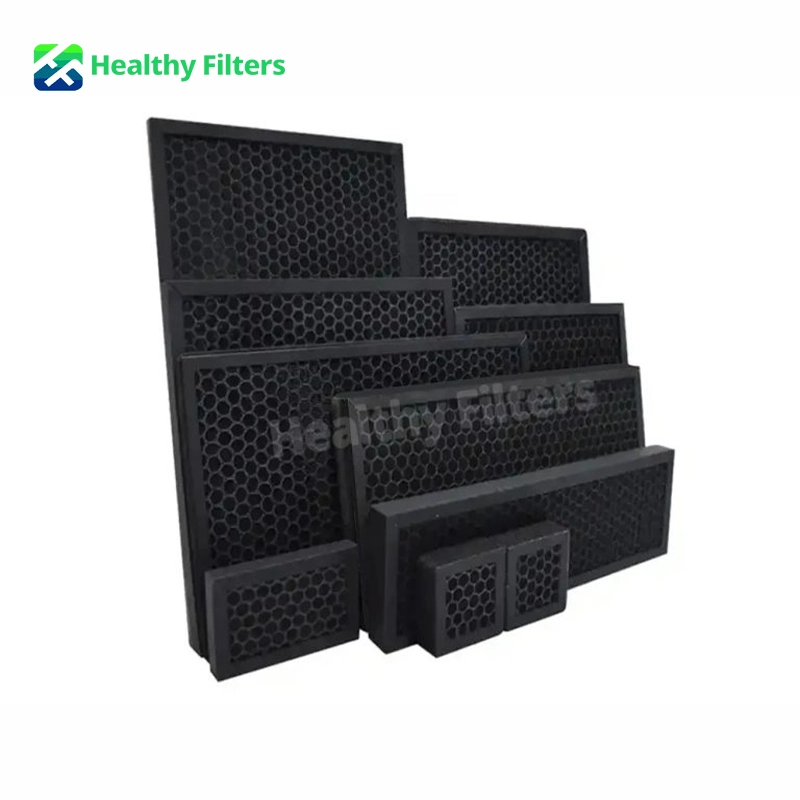
Granular Activated Carbon Efficiency
Premium granular carbon fiber boosts air-material interaction for better binding. Even in slim builds, this choice yields strong gas removal rates for outflow and inflow streams. Thus, it delivers solid results in limited designs.
Cost-Effective Protection for Downstream HEPA Stages
Placing these panels upfront stops vapor impurities from tainting finer particle cleaners. This staged method cuts total upkeep expenses and keeps each part working as planned with sharp focus. In the end, it raises whole-system value.
Partnering with Healthy Filters for Global Clean Air Standards
Gaining steady access to quality cleaning parts stands as a base for good factory oversight. Partnering with a firm strong in production and skill offers the confidence for ongoing success.
Professional Manufacturing and R&D Expertise
Depending on a maker with focused research and development brings the newest air cleaning advances. This support proves vital for tackling hard air issues in niche factory areas. It fosters informed choices and outcomes.
Sustainable ESG Focused Production Values
Current factory norms stress environmental, social, and governance (ESG) principles highly. Teaming with a provider that weaves these into making aids firms in hitting green targets and duties. Such alignment strengthens ethical standing.
Comprehensive Support for International Distributors
In worldwide trade, a provider with solid networks and open lines holds great worth. This framework guarantees steady item supply and tech help over regions. It smooths global efforts reliably.
FAQ
Q1: How do I determine which type of carbon filter is best for my facility?
A: Identifying the exact gases in the setting remains key; organic smells often need plain activated carbon, whereas harsh acid gases call for treated media to achieve proper disabling.
Q2: What is the significance of the V-bank design in carbon filtration?
A: The V-bank layout greatly expands the media surface in the same space, which supports greater air flow and more carbon use without raising airflow resistance.
Q3: Can these filters be washed or reused once they are saturated?
A: No, molecular filters rely on adsorption and chemical bonding; after media fills or agents run out, replacement ensures ongoing air cleaning effectiveness.
Q4: How often should I replace industrial carbon filters?
A: Change rates vary with impurity levels and air volume, but tracking smell escape or lab tests on media sets an accurate timeline.