
A medium-efficiency bag filter is not difficult to replace.
But in real HVAC projects, small mistakes cause many problems: air leakage, higher pressure drop, loose pockets, dust falling into the clean side, or a shorter filter life than expected.
We have seen this during factory after-sales calls. The filter itself was fine, but the bag was installed in the wrong direction or the frame was not sealed tightly.
When should a bag filter be replaced?
Most medium-efficiency bag filters are used after a primary air filter and before a HEPA filter or final filter section.
They usually handle fine dust, fibers, and suspended particles. Common efficiency grades are around MERV 9–14, depending on the system design.
Replace the filter bag when:
- Pressure drop reaches the system limit
- Airflow becomes weak
- Pockets are fully loaded with dust
- The frame is deformed
- Dust appears behind the filter
- The planned maintenance cycle is reached
For many commercial HVAC air filter systems, replacement may be every 3–6 months. In dusty factories, the cycle can be much shorter.
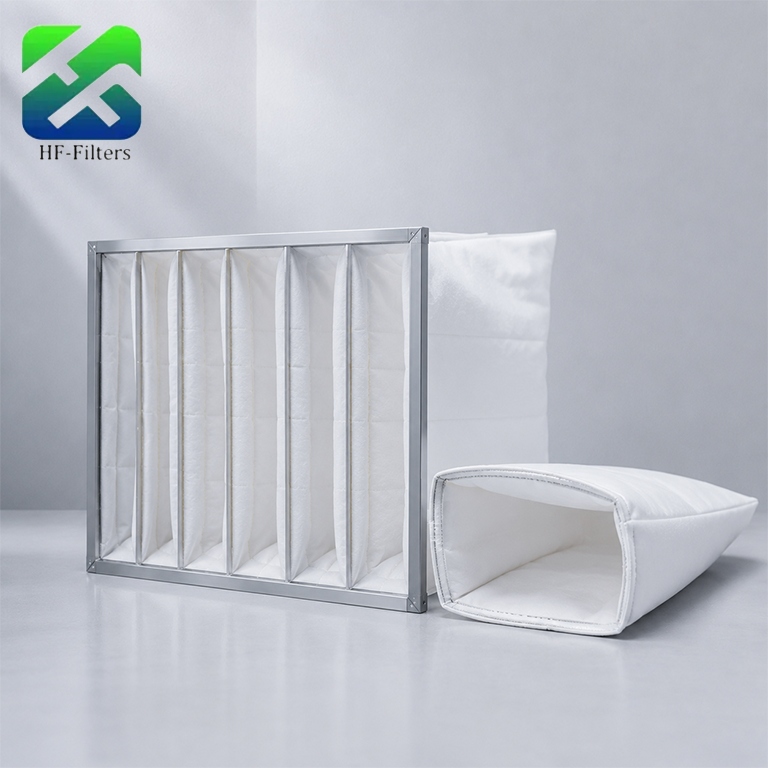
Preparation before replacement
Turn off the fan first.
This step is often skipped, but it matters. If the fan keeps running, loose dust can be pulled into the downstream duct or final HEPA filter.
Wear gloves and a mask. For industrial air filter systems, safety glasses are also useful, especially when the filter handles powder, fiber dust, or process particles.
Check the new bag filter before installation:
- Correct size
- Correct pocket number
- Correct airflow direction
- No broken stitching
- No damaged frame
- No compressed or twisted bag pockets
At Healthy Filters, we usually mark airflow direction on the frame for project orders. It helps installers avoid one of the most common mistakes.
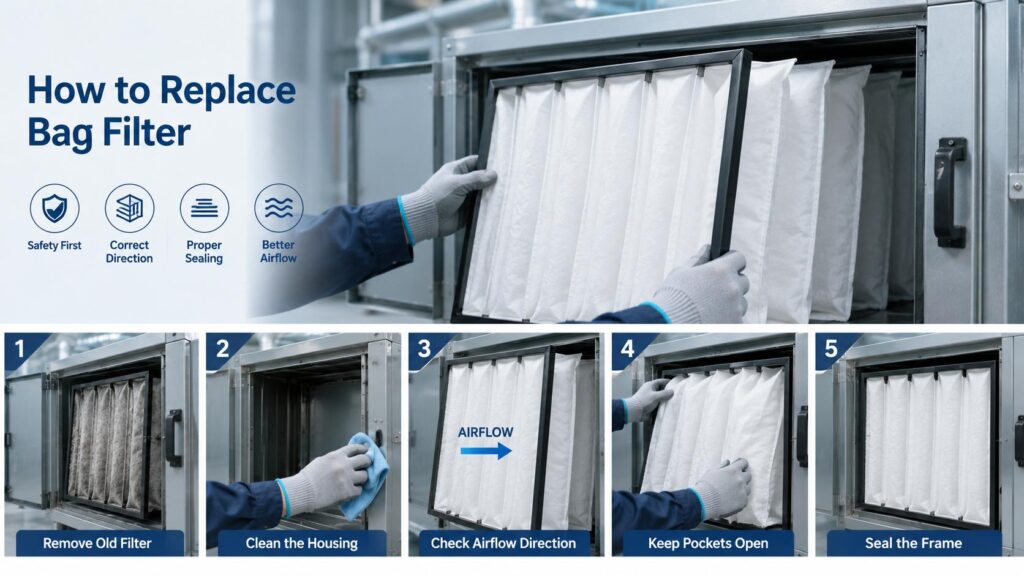
Correct replacement steps
1. Remove the old bag filter carefully
Open the access door slowly.
Pull the old filter out from the frame, keeping the dirty side away from the clean side. Do not shake the filter. Bag filters can hold a lot of dust, and shaking only sends particles back into the system.
Put the used filter into a sealed bag if the site has strict dust control.
2. Clean the filter housing
Before placing the new filter, wipe dust from the frame groove, gasket surface, and sealing edge.
This is a small job, but it prevents bypass leakage.
If the housing is bent or the clips are loose, fix them before installation. A new filter cannot work well in a leaking frame.
3. Install in the correct airflow direction
The bag pockets should open toward the airflow.
If installed backward, the pockets may collapse, airflow resistance rises, and dust holding capacity drops quickly.
Check the arrow on the frame. If there is no arrow, confirm the air direction from the fan side or duct layout.
4. Keep the pockets fully opened
Do not leave the bags folded or twisted.
Each pocket should hang naturally with enough space. If the pockets are squeezed, the usable filter area becomes smaller and pressure drop rises earlier.
For large-size HVAC systems, installers should check the whole row after installation, not only one piece.
5. Seal the frame properly
Lock the clips or holding frame evenly.
The filter should sit flat. No visible gap should appear between the filter frame and the housing.
Air always takes the easiest path. If there is a gap, dust will bypass the filter instead of passing through the media.
Mistakes to avoid
Do not mix different filter grades in the same section unless the system was designed that way.
Do not reuse a dirty bag filter after shaking it. Once the media is loaded, dust holding capacity and airflow performance are already affected.
Do not choose only by price. Thin media, weak stitching, or poor frame strength can make the filter fail early.
Healthy Filters produces medium-efficiency bag filters, primary filters, HVAC air filter products, H13/H14 HEPA filter products, activated carbon filter products, and industrial dust removal filter elements. For OEM and project buyers, Shenzhen Healthy Filters Co., Ltd. can customize size, pocket depth, media grade, frame material, gasket, logo, and packaging.
Maintenance advice after replacement
Record the installation date.
Also record the initial pressure drop after the new filter starts running. This gives the maintenance team a baseline.
Check the pressure drop regularly. If it rises too fast, the primary filter may be missing, overloaded, or selected too low in dust holding capacity.
For cleaner systems, bag filters should protect downstream HEPA filters. If the HEPA filter clogs early, check the bag filter sealing and grade first.
Our Shenzhen factory uses automated production lines, ultrasonic hot-melt sealing where suitable, stable stitching control, and low-resistance media design. With a 10,000㎡ workshop and monthly capacity of 500,000+ filter elements, Healthy Filters supports regular replacement orders and custom project supply.
FAQ
What is a medium-efficiency bag filter?
A medium-efficiency bag filter is an HVAC air filter used to capture fine dust and protect downstream HEPA filters or final filters. Common grades are around MERV 9–14.
How do I know the airflow direction?
Check the arrow on the filter frame. The bag pockets should open toward the airflow and hang naturally after installation.
Can I wash and reuse a medium-efficiency bag filter?
Most disposable bag filters should not be washed or reused. Washing can damage the media and reduce filtration performance.
Why does pressure drop rise quickly after replacement?
Possible reasons include wrong airflow direction, folded pockets, overloaded primary filter, high dust concentration, or a filter grade that is too dense for the system.
How long does a bag filter last?
In commercial HVAC systems, many bag filters last 3–6 months. In industrial sites, service life depends on dust load, airflow, pressure drop limit, and working hours.
Can Healthy Filters customize bag filters?
Yes. Healthy Filters can customize size, pocket number, pocket depth, MERV grade, frame, gasket, logo, and packaging for HVAC contractors, industrial buyers, and OEM projects.