
I get asked this all the time—what does a hepa filter do? And honestly, most people just assume it’s “a better air filter” but don’t really get the details. I figured I’d just talk through it like I would with someone who’s never looked into filters before—no fancy stuff, just what you actually need to know.
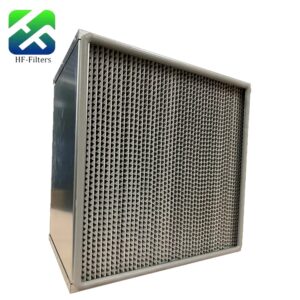
I’ve messed around with all kinds of air filtration over the years—from home units to industrial setups—and the one thing I’ve learned is that not all HEPA filters are the same. There’s the basic hepa filter, then true hepa air filter (which is the real deal), h13 hepa filter (for when you need next-level clean), and even a hepa filter for hvac if you want to upgrade your whole house or office system.
Let’s start with the basics—no jargon, promise
Most people have those cheap filters in their HVAC or small air purifiers. You know the ones—you change ’em every 3 months, they catch dust and pet hair, and that’s about it. But ahepa filter is different. It’s not just for the big stuff.
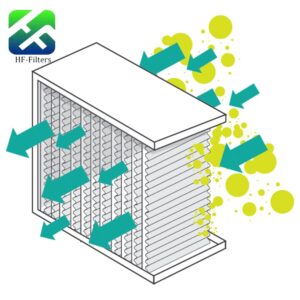
Here’s the simple version: a hepa filter catches the tiny particles that those cheap filters let slip through. We’re talking stuff so small you can’t see it with your eyes—like the fine dust that gets in your lungs, pollen that makes you sneeze even when you can’t see it, or even bacteria and viruses.
I don’t wanna get too technical, but the standard for a real HEPA is catching 99.97% of particles that are 0.3 microns or smaller. To put that in perspective, a human hair is like 70 microns wide. So we’re talking about particles that are 200 times smaller than that. That’s what makes a hepa filter different—it goes after the stuff that actually matters for clean air.
True HEPA Air Filter—don’t fall for the “like” trap
This is a big one. I see so many people buy “HEPA-like” or “HEPA-style” filters and think they’re getting the same as atrue hepa air filter. They’re not. At all.
A true hepa air filter has to meet that 99.97% standard I mentioned. The “like” ones? They cut corners. Maybe they catch 90% of particles, or only particles that are bigger than 0.3 microns. They’re cheaper, but they won’t do what you need if you’re serious about clean air.
I always tell people—if you’re buying a hepa filter because you have allergies, or you work with sensitive equipment, or you just want better air, spend the extra couple bucks on a true hepa air filter. It’s worth it to not waste money on something that doesn’t work.
H13 HEPA Filter—when you need the best of the best
Now, if you need even more filtration—like in a lab, a doctor’s office, or a cleanroom—you’ll want an h13 hepa filter. I use these in some of the industrial setups I work with, and they’re next-level.
HEPA filters have different classes, and H13 is one of the top ones. While a standard true hepa air filter catches 99.97% of 0.3-micron particles, an h13 hepa filter catches 99.95% of particles as small as 0.1 microns. That’s even tinier—think viruses, super fine dust from sanding or construction, or smoke particles from wildfires.
For most people at home, an H13 is overkill. But if you’re in a space where air purity is non-negotiable, it’s the way to go.
HEPA Filter for HVAC—can you put one in your system?
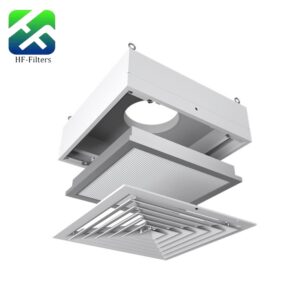
Another common question: can I use ahepa filter for hvac instead of the standard one? The answer is yes, but you have to be careful.
HEPA filters are denser than the cheap ones, which means they can restrict airflow if your HVAC system isn’t built for it. I’ve seen people swap in a hepa filter for hvac without checking, and their system has to work harder, which can cause problems down the line.
My advice? Call your HVAC guy first. They can tell you if your system can handle ahepa filter for hvac—some older systems might struggle. If it can, though, it’s a game-changer. It cleans the air for your whole house or office, not just one room.
What actually gets caught by a HEPA filter?
Let me list the stuff I’ve seen a hepa filter (especially a true hepa air filter) catch, that regular filters miss:
– Fine dust—like the stuff that sticks to your furniture even after you dust
– Pollen and mold spores—total lifesaver for anyone with allergies
– Bacteria and viruses—important if you have kids or work in healthcare
– Pet dander—my friend has a dog and swears by her HEPA filter for her allergies
– Smoke particles—from cigarettes, wildfires, or even cooking smoke
– Microplastics—you can’t see ’em, but they’re in the air, and HEPA catches ’em
Why HEPA isn’t just a “nice to have”
A lot of people think HEPA filters are just for “clean freaks,” but that’s not true. They’re actually necessary for a lot of people and businesses.
For example, I work with a small electronics shop—they use a hepa filter for hvac because even a tiny dust speck can ruin a circuit board. Doctors’ offices use h13 hepa filters to keep germs from spreading. And people with asthma or bad allergies? A true hepa air filter can make their home feel like a safe space.
So, to answer the question—what does a HEPA filter do?
It cleans the air of the tiny particles that regular filters can’t. That’s it. No fancy marketing, no overcomplication.
Whether you’re looking for a basic hepa filter, a true hepa air filter for your home, anh13 hepa filter for a critical space, or a hepa filter for hvac to upgrade your system—they all do the same core job: catch the stuff that matters.
Just don’t fall for the “HEPA-like” scams, and if you’re using one for HVAC, check with a pro first. That’s all you need to know.