When purchasing a HEPA filter, buyers often focus on filtration efficiency. H13 or H14? What is the initial pressure drop? How long will the filter last?
There is another question worth asking before placing an order: What material is used to make the filter media?
The media is the part that captures airborne particles. Its fiber structure, thickness and manufacturing process influence filtration performance, airflow resistance, mechanical strength and the way the finished filter can be manufactured.
So, what materials are commonly used in HEPA filters? The answer is not limited to one type.
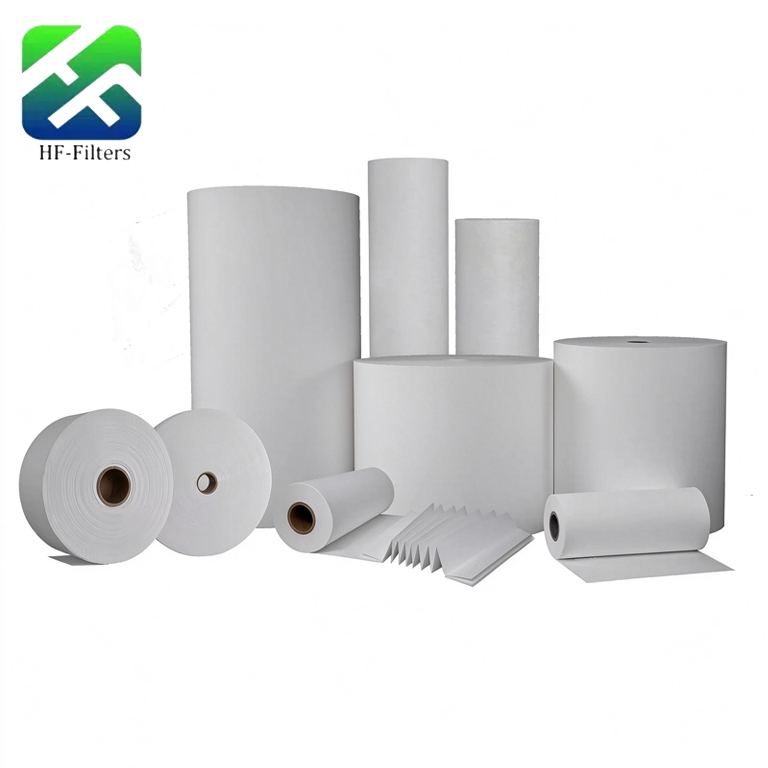
1. Fiberglass: A Common Material for HEPA Filter Media
Fiberglass is widely used in conventional HEPA filter manufacturing. It consists of very fine glass fibers arranged into a porous filter structure.
The small fiber diameter and dense fiber network help capture fine airborne particles through mechanisms such as interception, impaction and diffusion.
For filter manufacturers, fiberglass media offers several practical advantages:
High particle-capture capability
Rendimiento de filtración estable
Good stiffness for pleating and filter-pack assembly
Available in different filtration grades
Suitable for mini-pleat and deep-pleat filter designs
The material is commonly used in cleanroom filtration, pharmaceutical production, hospitals, laboratories and industrial air purification.
However, not every fiberglass medium has the same properties. Fiber structure, basis weight, thickness and binder formulation can affect its performance. A filter manufacturer needs to evaluate these parameters against the intended application.
2. PP and PP+PET: Synthetic Alternatives
Polypropylene (PP) is another material used in high-efficiency air filtration.
Compared with traditional fiberglass media, synthetic filter materials can offer different advantages in processing, flexibility and product construction.
Some media use PP alone, while others combine polypropylene and polyester (PET) fibers to form a composite structure.
For example, PP+PET composite media can be used in mini-pleat filter production. The material structure can be designed to provide suitable strength, air permeability and resistance for downstream converting processes.
These materials may be considered for:
Filtros purificadores de aire
FFU filtration systems
Cleanroom terminal filters
Compact HEPA filter manufacturing
The important point is that synthetic media should not be selected simply because it is an alternative to fiberglass. Buyers should compare the actual filtration efficiency, airflow resistance, mechanical properties and test results of each material.
3. Fiberglass vs. PP vs. PP+PET: What Is the Difference?
The three material options serve different manufacturing and application requirements.
Comparison Fiberglass PP PP+PET Composite
Material structure Fine glass fibers Polypropylene fibers PP and polyester fibers
Main strength High-efficiency filtration Synthetic media construction Composite strength and processability
Typical consideration Efficiency and temperature requirements Media structure and application Mechanical strength and converting
Common processing Pleating and filter-pack assembly Cutting and forming Pleating, slitting and bonding
Selection priority Filtration performance Application compatibility Strength and manufacturing stability
This comparison is a general material guide, not a guarantee that every product made from these materials will have identical performance.
For example, a fiberglass medium designed for a high-temperature HEPA filter has different requirements from a PP+PET medium used in an air purifier. The operating environment should always influence material selection.
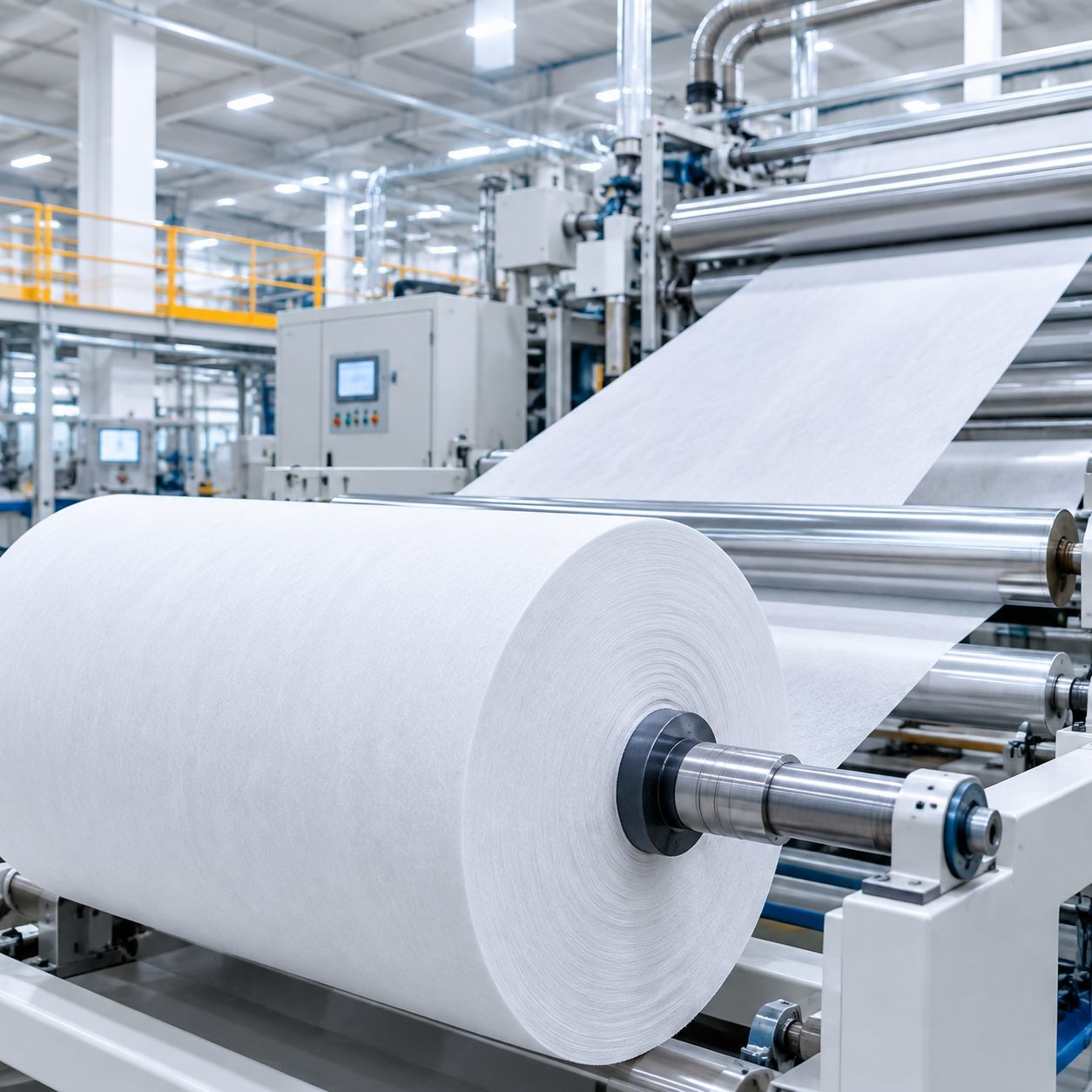
4. Does Filter Media Material Determine the HEPA Grade?
Not by itself.
A common misunderstanding in filter purchasing is that choosing fiberglass automatically means the finished product is H13 or H14.
In reality, HEPA classification depends on the filtration performance of the finished filter and the applicable testing standard. The media is only one part of the complete product.
Pleat spacing, sealing, frame construction and manufacturing quality also matter. Even high-performance media cannot compensate for air leakage around an incorrectly assembled filter.
For this reason, buyers should request relevant efficiency and resistance test data rather than relying on the raw material description alone.
For European projects, EN 1822 is an important reference for HEPA and ULPA filter classification and testing.
5. What Should Buyers Check When Purchasing HEPA Filter Media?
If you manufacture HEPA filters, selecting the right raw material can affect both finished-product performance and production efficiency.
Before requesting a quotation, consider these points:
Filtration grade: Confirm the required grade, such as H13 or H14, and the relevant test requirements.
Airflow resistance: Compare the initial resistance under the specified test conditions. Lower resistance is not useful if the required filtration performance cannot be achieved.
Mechanical properties: Check tensile strength, stiffness and dimensional consistency, particularly if the media will undergo pleating or mini-pleat processing.
Material specifications: Confirm thickness, basis weight, roll width and other parameters required by your production equipment.
Application conditions: Temperature, humidity and operating environment may influence the choice between different media constructions.
At Healthy Filters, fiberglass and synthetic composite media options are available for different filter manufacturing requirements. Custom roll widths, lengths, filtration grades and selected material specifications can be discussed for OEM and ODM projects.
FAQ: HEPA Filter Media Materials
Q1: What is the most common material used in HEPA filters?
Fine fiberglass media is widely used in conventional HEPA filter manufacturing. Synthetic PP and PP+PET media are also available for selected applications.
Q2: Is fiberglass better than polypropylene for HEPA filters?
Neither material is universally better. Fiberglass is widely used for high-efficiency filtration, while synthetic media may offer advantages in specific product constructions and manufacturing processes. Compare actual test results before choosing.
Q3: Can PP+PET material be used to manufacture H13 HEPA filters?
Certain PP+PET media products are offered for high-efficiency filter manufacturing. However, the finished filter must be tested to verify that it meets the required H13 classification.
Q4: Can HEPA filter media withstand high temperatures?
Some specially manufactured fiberglass media can be used in high-temperature applications. The allowable operating temperature depends on the complete filter construction, including adhesives, separators, frames and seals.
Q5: Can HEPA filter media be customized for OEM production?
Yes. Depending on the material and manufacturing process, specifications such as roll width, length, thickness, basis weight and filtration grade can be customized.
