
A HEPA filter can provide the proper filtration efficiency and also create issues with the air handling system. A typical problem with filters that are in operation is the excessive pressure drop. As resistance increases, the flow of air decreases, the fan must operate at higher speeds, which results in increased cost of operations.
Before you choose a new HEPA filter or replace an existing one, it’s essential for all those involved with HVAC design, cleanroom construction and filter purchasing, to understand why HEPA filters can have high pressure drops.
The question is “What makes it difficult for air to move through a HEPA filter and what methods are available to control this difficulty?”
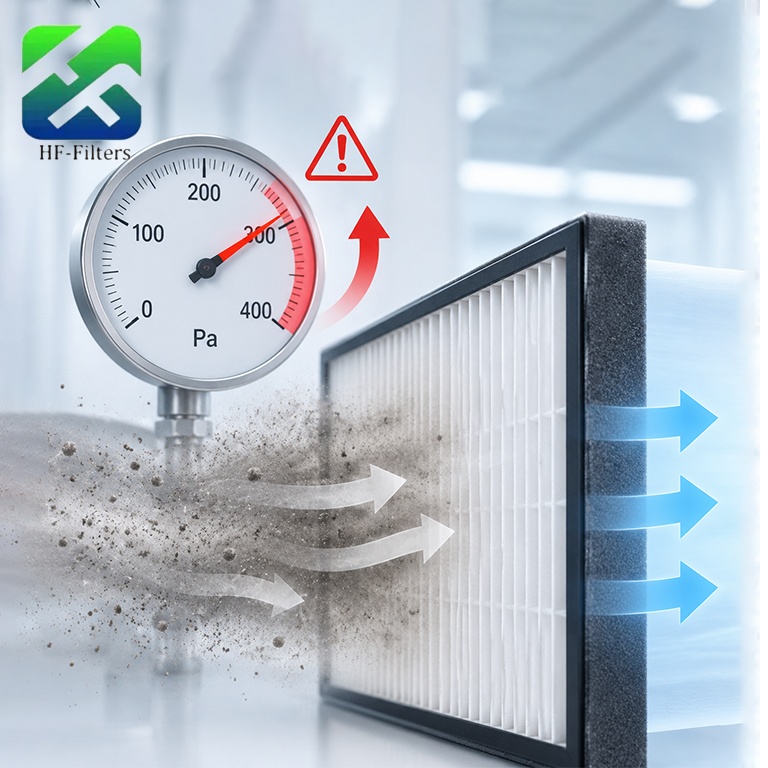
1.What Is HEPA Filter Pressure Drop?
The difference in air pressure on either side of the HEPA filter (the “before” and “after”) is what we call the HEPA filter’s pressure drop. This is essentially how much resistance the filter has to the flow of air.
A filter’s initial pressure drop is typically defined for a specific amount of airflow through the filter. However, as the particles build up on the filter material, there will usually be an increase in resistance to the airflow.
It is important to distinguish between three values:
Initial pressure drop: Resistance of a clean filter at its rated airflow.
Operating pressure drop: Resistance measured during actual use.
Final pressure drop: The specified maximum allowable resistance for determining the time when a component should be replaced or repaired.
Pressure Drop vs. Air Flow & Filter Size Comparison Leads to Misunderstanding.
2.Five Common Causes of High HEPA Filter Pressure Drop
1.High-resistance filter media
Filter media’s physical properties (i.e., structure, thickness, fiber pattern, and porosity) influence air flow through the media. Although a high-efficiency media needs to be able to trap extremely small particles, the pressure drop across the media will also be determined by the design and construction of the media itself.
2.Insufficient effective filtration area
The media area cannot support the amount of air that needs to be moved through it; therefore, the air must travel faster than what is typically allowed by the media. This results in an increase in resistance, which will require the fan to work harder to move the same quantity of air.
3.Poor pleat spacing and filter geometry
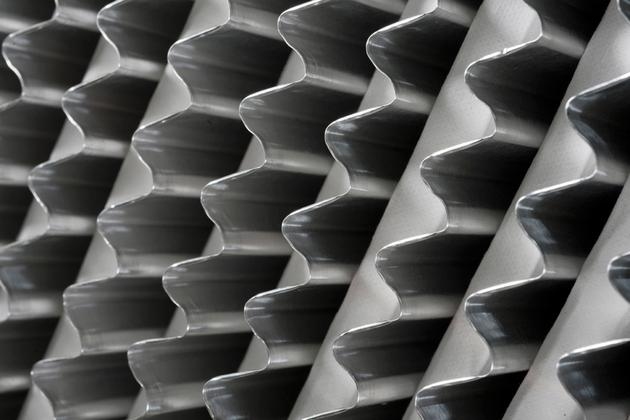
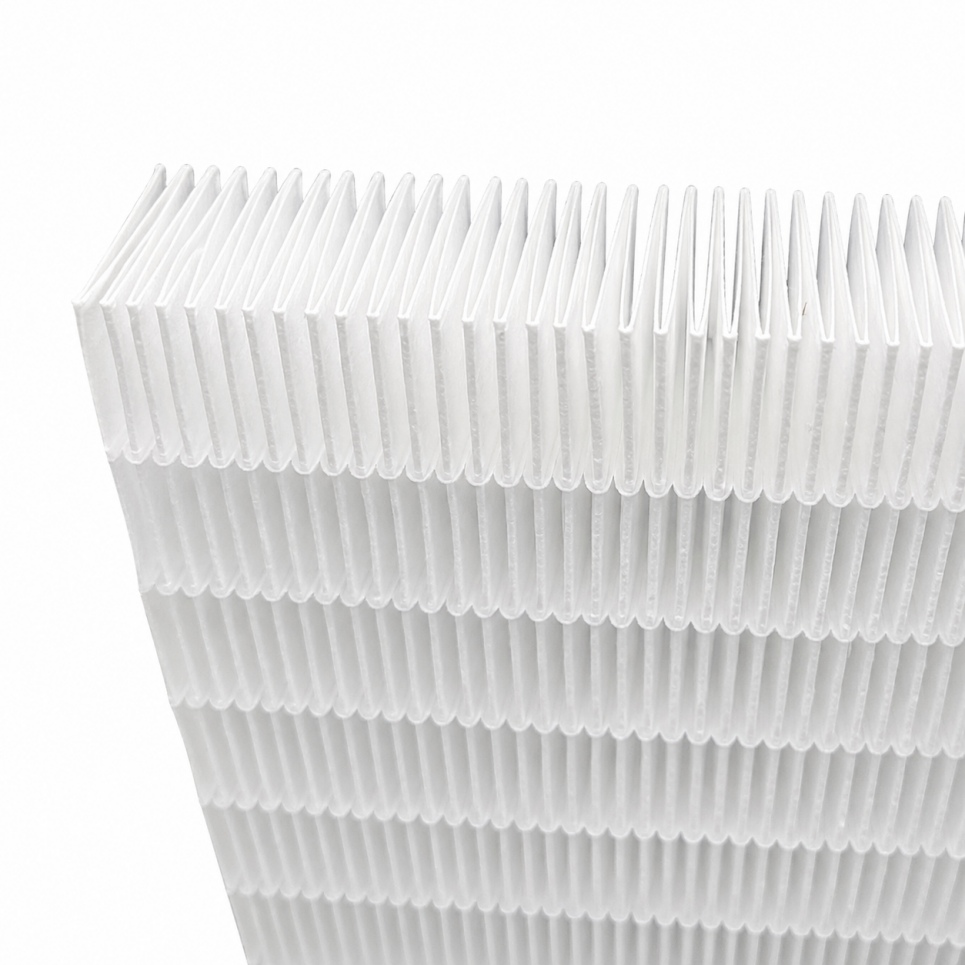
Pleated filter media provides increased surface area for filtering; however, the arrangement of pleats affects the effectiveness of this increased surface area. When pleats are too tightly spaced, they may limit the ability to flow air through the channel created by the pleat. Additionally, if the pleat has an improper geometry, it could create uneven air flow through the channel and provide additional resistance to air flow.
4.Flujo de aire excesivo
If a filter is being operated at a greater rate of air flow than it was engineered for, there will likely be a greater decrease in pressure. In addition, a HEPA filter that has been properly manufactured may have different performance characteristics than what would normally occur, if it is installed in a system with either too little or too much air volume, or with a face velocity that is either too fast or too slow.
5.Dust accumulation and inadequate pre-filtration
As the system operates, the filter media will gradually become blocked by captured particles. Systems with high levels of dust loading or inadequate pre-filtering can cause the HEPA filter to reach its maximum allowable pressure drop faster than anticipated.
3.How Can High Pressure Drop Be Reduced?
Lowering the amount of pressure drop will not always result in a lower filtration rating. A more appropriate response is to select the correct type of filter for your application’s operating environment.
Consider these practical measures:
Select media with suitable permeability and filtration performance.
Optimize pleat depth, spacing, and effective filtration area.
Match rated airflow to the ventilation system.
Use appropriate pre-filters to reduce dust loading.
Monitor the system for signs of resistance during operation and replace filters in accordance with manufacturer guidelines.
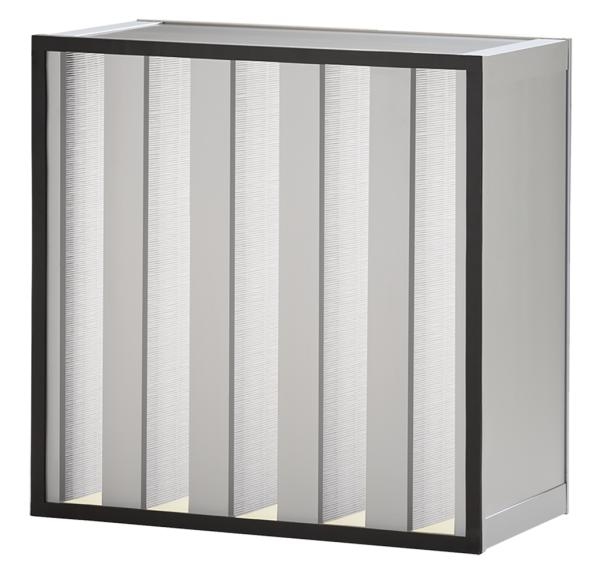
V-Bank HEPA filters may be an option for use with high air-flow equipment due to the fact that they have multiple packs and therefore offer a greater amount of filtering media in a relatively small amount of space.
4、What Should Buyers Check When Selecting Low-Resistance HEPA Filters?
When you place an OEM/replacement order for products, it’s important to give more than just the mandatory H13/H14 grade.
The following information helps manufacturers recommend a suitable design:
| Selection Parameter | What to Confirm |
| Filter efficiency | H13, H14 or other required grade |
| Dimensiones | Width, height and depth |
| Flujo de aire nominal | Required air volume |
| Caída de presión inicial | Maximum acceptable resistance |
| Filter construction | Mini-pleat, deep-pleat or V-bank |
| Frame and sealing | Material, gasket or gel seal |
| Operating conditions | Temperature, humidity and dust load |
The most appropriate filter for your needs may not necessarily be the one that has the lowest initial pressure drop (resistance). Other factors such as filtration performance, how much contaminant can be captured before the filter becomes too clogged to function effectively, how well the filter prevents leaks from occurring, and how long you expect the filter to operate successfully in the given environment must all be taken into account when selecting a filter.
5、Choosing the Right HEPA Filter for Your Application
Healthy Filters provides tailored solutions for custom HEPA filters to be used in industrial HVAC systems, clean rooms, pharmaceutical facilities, and other demanding high efficiency filtration environments.
Designs are available for mini-pleat, deep-pleat and V-bank HEPA filters using different types of media, filter frame materials, filter dimensions and filter seals.
Buyers can submit their filter drawings, required air flow rate, required filter performance level (efficiency), and allowable pressure drop for each OEM project. This enables us to evaluate the best possible filter design based upon the specific needs of the customer’s system instead of solely evaluating the filters’ efficiency ratings.
The objective is to obtain the desired level of air purity while also providing the proper amount of airflow and achieving acceptable performance levels.
Preguntas frecuentes
Q1: What is a normal pressure drop for a HEPA filter?
The initial resistance of a HEPA filter varies based on many factors such as filter size, filter material, how it is made, the level of filtration it provides, and the amount of air that can flow through it. For reference to the manufacturer’s testing data, please see above.
Q2: Does a higher HEPA efficiency grade mean higher pressure drop?
The above doesn’t mean that an H14 will always be more resistant to air flow than an H13. There are other things like how well air flows through the filter (media permeability), how much filter material is used (filtration area), and the shape of the folds in the filter (pleat geometry) that can affect this as well.
Q3: Why does HEPA filter pressure drop increase over time?
Dust and other airborne contaminants can build up on the media over time. This will eventually limit the amount of air that flows through the system and increase pressure drop across the filter.
Q4: Can a V-bank HEPA filter reduce pressure drop?
The larger effective filter area can help to reduce the velocity of air moving through the filter. Performance will depend on how well it was designed, and what level of air flow is expected.
Q5: How can I choose a low-resistance HEPA filter for an OEM project?
The manufacturer will be able to provide recommendations on appropriate media and filter design once you have given him/her the necessary efficiency requirements, filter size limitations, required air flow, and maximum acceptable initial pressure drop.
Looking for a Low-Resistance HEPA Filter Solution?
Healthy Filters provides custom-manufactured H13 and H14 HEPA filters for use in heating, ventilation, air conditioning (HVAC) systems; cleanrooms; and other types of industrial settings.
Please contact us regarding your requirements for filters, as well as the filtering media available to you, the air flow through the filter, and the pressure drop across the filter.