
A rigid bag filter provides a large filtration area within a compact HVAC filter configuration. Unlike conventional soft bag filters, its self-supporting pockets maintain their shape during airflow fluctuations, helping keep the airflow passages open and supporting stable system operation.
For a buyer, the real work is matching size, efficiency, airflow, pressure drop, and installation space to the AHU.
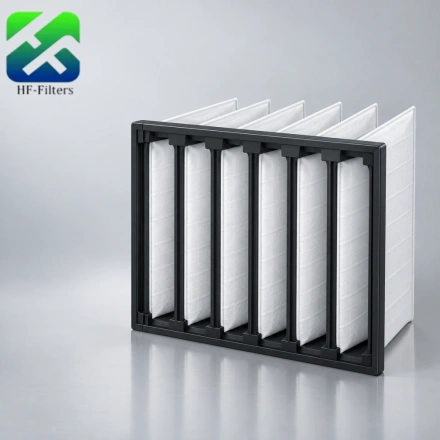
What Is a Rigid Bag Filter?
A Rigid Pocket Filter uses several pleated media packs fixed inside a solid frame. A rigid pocket filter uses multiple pleated media packs secured within a solid frame to form self-supporting air channels. Unlike a conventional soft bag filter, which relies on airflow to fully open the pockets, a rigid bag filter maintains its geometry during startup, shutdown, and variable-air-volume operation.This construction also makes handling easier in a crowded plant room.
Structure and Filter Media
A typical Rigid Bag Air Filter combines synthetic filter media, separators, pocket seals, and a plastic or galvanized frame. Media options can use two, three, or four layers, including spunbond PP, meltblown material, and nonwoven fiber.
Common media grades include M5, M6, F7, F8, and F9. Some rigid formats also use H-class media for specific projects. Current project documents should state the test standard behind every grade. See related Bag Filters for adjacent HVAC configurations.
What Are the Key Features of Rigid Bag Filters?
Four features shape day-to-day performance. Each one affects fan load, change intervals, and the amount of service space your team needs.
Stable Pockets and Large Media Area
The rigid construction resists pocket collapse and keeps air passages open. Pleated media places a large active surface inside each pocket, supporting high airflow and useful dust capacity.
A well-matched unit can run for a long service interval, though actual life depends on dust load, moisture, operating hours, and the chosen final pressure drop. Multiple pockets also spread air across the face.
Where Are Rigid Bag Filters Used?
These filters suit systems that need stable airflow and compact maintenance access. The final choice still follows the site’s particle load, hygiene plan, and fan capacity.
AHUs, Commercial Buildings, and Industrial Ventilation
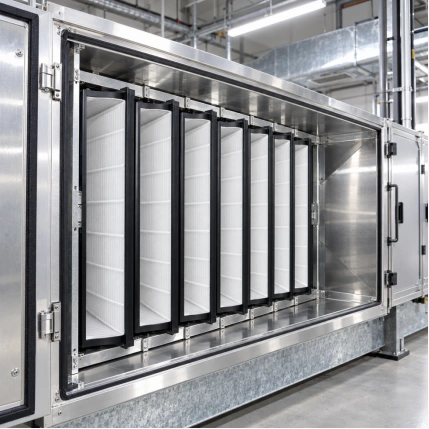
A rigid bag filter for AHU equipment can serve offices, hospitals, healthcare facilities, data centers, and industrial ventilation lines. An HVAC Rigid Bag Filter may act as the main fine-filter stage or protect a downstream high-efficiency filter. In a hospital AHU, for example, a rigid pocket can stay formed when a variable-speed fan ramps down overnight.
A rigid bag filter for HVAC also fits retail and office systems where predictable resistance helps maintenance planning. The same applies to a commercial rigid bag air filter. Browse General Ventilation Air Filters for related system stages.
How Do You Choose the Right Rigid Bag Filter?
Start with the equipment data, then review the filter as a complete assembly. One familiar trap is approving the face size while leaving airflow and resistance for later. Those values belong on the same specification sheet.
Confirm the Working Parameters
Record filter dimensions as width, height, and depth. Confirm filtration efficiency and its test standard, design airflow in m³/h, number of pockets, initial pressure drop at that airflow, frame material, and installation method. Check gasket position, header style, access direction, and available depth. The right Rigid Bag Filter follows the actual airflow, filtration target, and HVAC system design. Media choice matters too; available synthetic bag filter material covers several common efficiency levels.
Ask for a pressure-drop curve when the AHU operates at several air volumes. Also state temperature, humidity, dust type, and the target change-out pressure. These details help prevent a filter with the right label from becoming a poor system match.
From Specification Review to Shipment
Once the operating points are clear, production control becomes part of filter selection. Filtros saludables can review custom dimensions, pocket configurations, efficiency levels, frame choices, and media combinations against your drawing or existing sample. OEM and ODM work can also cover private labels and project packaging.
Incoming material checks, finished-filter inspection, and batch reports give procurement teams a traceable record. Applicable test reports can accompany the order. Sample support helps confirm fit before bulk production, while export packaging, shipping documents, and order coordination carry the approved specification through dispatch.
If you need a Rigid Bag Filter Manufacturer, send the size, efficiency, airflow, pocket count, quantity, and an existing filter photo or specification sheet through the contact page. Healthy Filters can then evaluate a suitable supply configuration for the HVAC or industrial application.
Preguntas frecuentes
Q1: Is a Rigid Bag Filter the Same as a Rigid Pocket Filter?
A: Yes. The two names commonly describe a filter with self-supporting pockets held in a rigid frame.
Q2: Which Efficiency Grade Should You Specify?
A: Use the AHU design target and the required test standard. Common project grades include M5 through F9, with higher grades available for selected duties.
Q3: Why Does Initial Pressure Drop Matter?
A: It shows the resistance at a stated airflow. This figure affects fan duty and helps you compare filters on equal operating terms.
Q4: How Many Pockets Should a Filter Have?
A: Pocket count follows face size, airflow, media area, and pressure target. Ask the supplier to state all four together.
Q5: What Information Is Needed for a Quotation?
A: Send dimensions, efficiency, airflow, pocket count, frame material, quantity, and a photo or drawing of the current filter.