
Para muchos fabricantes, 2026 trae consigo calendarios de producción más intensos. Los nuevos pedidos, las jornadas de funcionamiento más largas de los equipos y las líneas de producción adicionales están sometiendo a las fábricas a una mayor carga de trabajo.
Los equipos de climatización y ventilación también notan ese cambio.
Cuando una planta funciona durante más tiempo o produce más, puede haber mayor cantidad de polvo y partículas en suspensión en el aire que circulen por el edificio. Los filtros que funcionaban correctamente en condiciones menos exigentes pueden empezar a saturarse más rápidamente.
Así pues, mientras los equipos de producción vigilan las máquinas y la producción, merece la pena comprobar algo menos visible: el sistema de filtración de aire de la fábrica.
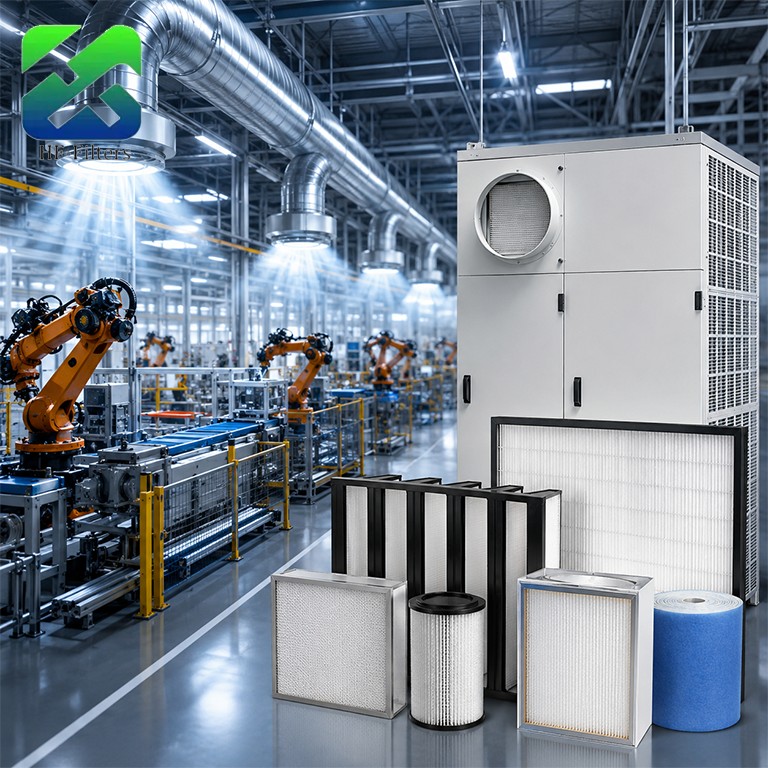
Una mayor producción suele significar más trabajo para los filtros.
El polvo dentro de una fábrica no proviene de un solo lugar.
Puede entrar con el aire exterior, provenir de los materiales y el embalaje, o generarse durante la propia producción. La maquinaria, el movimiento de vehículos y la actividad diaria de la fábrica también pueden devolver las partículas depositadas al aire.
Cuando aumentan las horas de producción, los filtros tienen que procesar más aire y, potencialmente, más polvo.
Un filtro que antes duraba un tiempo determinado podría necesitar revisión antes. El calendario no ha cambiado, pero las condiciones de funcionamiento sí.
La filtración industrial hace más que atrapar el polvo.
Un filtro de aire industrial forma parte del sistema general de climatización.
Puede ayudar a evitar que se acumule polvo dentro de los equipos de climatización, controlar las partículas en el aire suministrado o recirculado y proteger los filtros de mayor eficiencia instalados más adelante.
En las zonas de producción controladas, también puede ser necesario un filtrado más fino para mantener el entorno de fabricación requerido.
La función del filtro depende de su ubicación en el sistema. Por eso, las fábricas suelen utilizar varias etapas de filtración en lugar de esperar que un solo filtro lo gestione todo.
Configuración típica de varias etapas
Una disposición común se parece a esto:
Prefiltro → Filtro de eficiencia media → Filtro HEPA, cuando sea necesario
El prefiltro se encarga primero de las partículas más grandes. Los filtros de bolsillo o de bolsa proporcionan la siguiente etapa de filtración y ofrecen una útil capacidad de retención de polvo.
Los filtros en V son otra opción cuando se necesita una mayor superficie de filtración dentro de una estructura de filtro compacta.
Para áreas controladas que requieren una mayor eficiencia de filtración de partículas, se puede añadir un filtro HEPA en la etapa final. No todas las fábricas, ni todas las salas dentro de una fábrica, necesitan filtración HEPA.
Suministros de filtros saludables prefiltros, filtros de bolsillo/bolsa, filtros en V, filtros HVAC y filtros HEPA para diferentes aplicaciones de ventilación industrial.
La caída de presión es importante cuando los sistemas funcionan todo el día.
Los sistemas de climatización de las fábricas pueden mover grandes cantidades de aire, a veces las 24 horas del día.
Cada filtro añade cierta resistencia al flujo de aire. A medida que se acumula polvo, la resistencia puede aumentar aún más.
Por eso, comprar un filtro basándose únicamente en la eficiencia no siempre es una buena idea.
Para un funcionamiento industrial continuo, los compradores también deberían considerar: caudal de aire, caída de presión, capacidad de retención de polvo, vida útil y frecuencia de mantenimiento.El filtro aún debe funcionar correctamente con el sistema de climatización o el equipo de ventilación.
Un filtro de mayor eficiencia no es automáticamente mejor si el sistema no está diseñado para soportar la resistencia adicional.
¿Cuándo es el momento de revisar los filtros?
No existe un intervalo de reemplazo que se ajuste a todas las fábricas.
Obviamente, un almacén con poco uso y una planta metalúrgica con mucha actividad no someterán a sus filtros a la misma carga.
La intensidad de la producción, la concentración de polvo, las horas de funcionamiento, las condiciones del aire exterior, el tipo de filtro y la caída de presión pueden afectar al momento de la sustitución.
Si la producción ha aumentado recientemente, conviene inspeccionar los filtros con mayor frecuencia. Los equipos de mantenimiento pueden revisar el estado de los filtros y la caída de presión en lugar de esperar automáticamente a la próxima fecha de reemplazo programada.
Diferentes fábricas, diferente aire
Una planta de electrónica tiene necesidades de filtración muy diferentes a las de una fábrica de metalurgia. Lo mismo ocurre con la producción automotriz, la fabricación de maquinaria, el procesamiento de alimentos y los almacenes.
Algunas instalaciones necesitan principalmente una filtración de ventilación general fiable. Otras tienen áreas controladas que requieren una eliminación de partículas más finas.
Ciertos procesos también pueden implicar olores o contaminantes gaseosos. Cuando corresponda, filtros de carbón activado Puede incluirse como una etapa de filtración adicional. El medio filtrante debe seleccionarse en función del contaminante específico, en lugar de tratarse como una solución universal.
Lo importante es sencillo: la selección del filtro debe comenzar en la fábrica y su proceso.
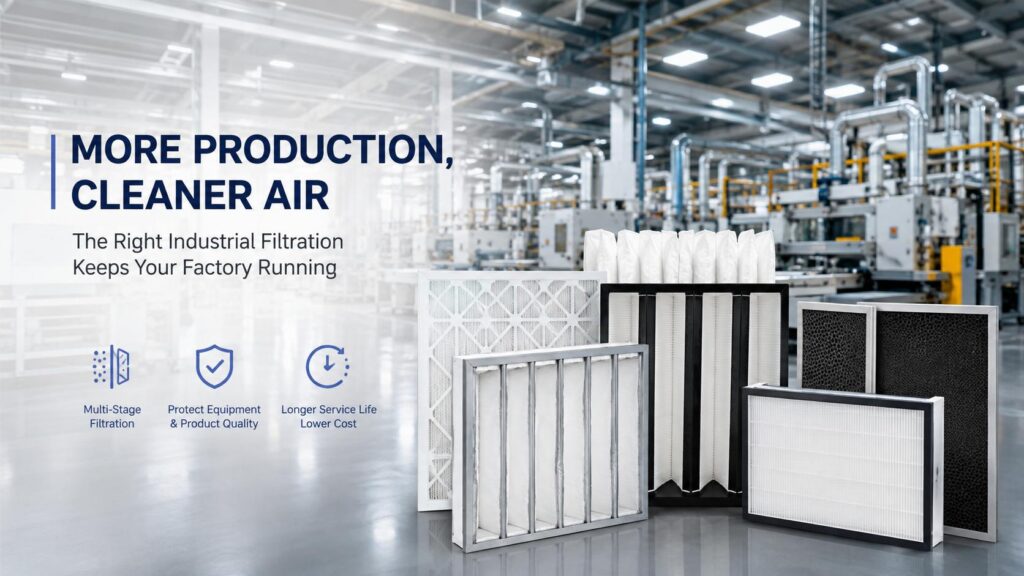
Filtros industriales de Healthy Filters
Healthy Filters es un fabricante profesional de filtros de aire y filtración industrial que suministra Filtros de aire industriales, filtros HVAC, filtros de ventilación general, prefiltros, filtros de bolsa/bolsillo, filtros V-bank, filtros HEPA y filtros de carbón activado..
Los tamaños estándar no se adaptan a todas las plantas. Healthy Filters también desarrolla filtros industriales personalizados según las dimensiones, el material filtrante, la eficiencia, el caudal de aire, la caída de presión, el diseño del bastidor, las condiciones de polvo y los requisitos de la aplicación.
La fabricación OEM/ODM está disponible para distribuidores, marcas de filtros, proveedores de sistemas de climatización y clientes industriales.
A medida que aumenta la producción, los requisitos de filtración pueden cambiar en consecuencia. Comprobar si los filtros existentes siguen siendo adecuados para la carga operativa real es una pequeña tarea de mantenimiento que puede prevenir problemas innecesarios en el futuro.
¿Necesita ampliar la producción o modernizar el sistema de climatización de su fábrica? Póngase en contacto con Healthy Filters para hablar sobre filtros de aire industriales y soluciones de filtración personalizadas para sus instalaciones.
Preguntas frecuentes
¿Por qué los filtros de aire de fábrica se ensucian más rápido cuando aumenta la producción?
Las jornadas de funcionamiento más largas y los mayores volúmenes de producción pueden generar más polvo y partículas en el aire. Un mayor flujo de aire contaminado a través del sistema de climatización puede provocar que los filtros se saturen más rápidamente.
¿Qué tipos de filtros de aire se utilizan habitualmente en las instalaciones de fabricación?
Las fábricas pueden utilizar prefiltros, filtros de bolsa o de bolsillo, filtros en V, filtros HVAC generales y, cuando sea necesario, filtros HEPA. La combinación depende del proceso y del nivel de filtración requerido.
¿Por qué es importante la caída de presión al elegir un filtro de aire industrial?
La caída de presión indica la resistencia que un filtro genera en el flujo de aire. Una resistencia excesiva puede afectar el flujo de aire y el funcionamiento del sistema de climatización, por lo que debe tenerse en cuenta junto con la eficiencia de filtración.
¿Puede Healthy Filters personalizar los filtros de aire industriales para diferentes fábricas?
Sí. Healthy Filters ofrece filtros OEM/ODM y personalizados según el tamaño, el material filtrante, la eficiencia, el flujo de aire, la caída de presión, el diseño del marco y las condiciones de funcionamiento de la fábrica.