
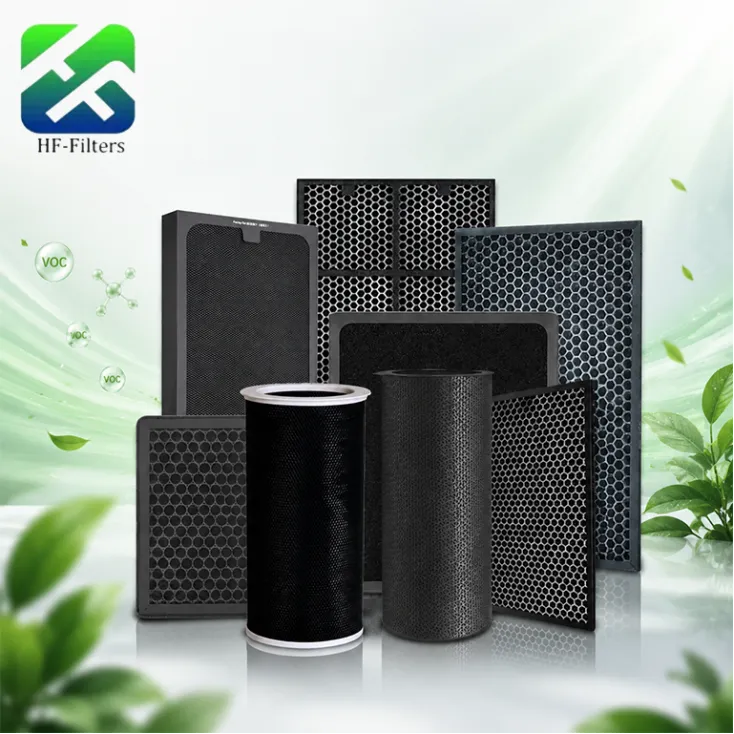
¿Por qué está creciendo el mercado de filtros de carbón activado?
Muchos compradores asumen que un filtro HEPA Puede solucionar cualquier problema de calidad del aire interior.
Desafortunadamente, no siempre es así.
Si después de instalar un filtro HEPA la gente sigue percibiendo olores, humo o productos químicos, el problema suele deberse a los COV (compuestos orgánicos volátiles), que los filtros HEPA no están diseñados para eliminar.
Aquí es donde los filtros de carbón activado se vuelven esenciales.
¿Por qué es difícil eliminar los COV en interiores?
Los COV provienen de pinturas, pegamentos, muebles, pisos, humo, productos de limpieza y procesos de fabricación con disolventes. A menudo son invisibles, aunque algunos producen olores perceptibles; muchos COV dañinos tienen poco o ningún olor, lo que dificulta su detección sin un monitoreo adecuado. En muchas habitaciones, especialmente en espacios recién decorados, los COV en interiores pueden permanecer más tiempo del esperado.
Filtro HEPA frente a filtro de carbón activado
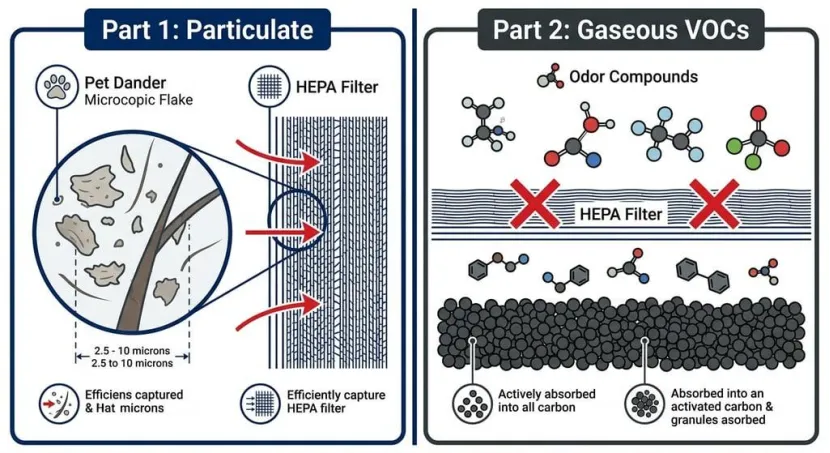
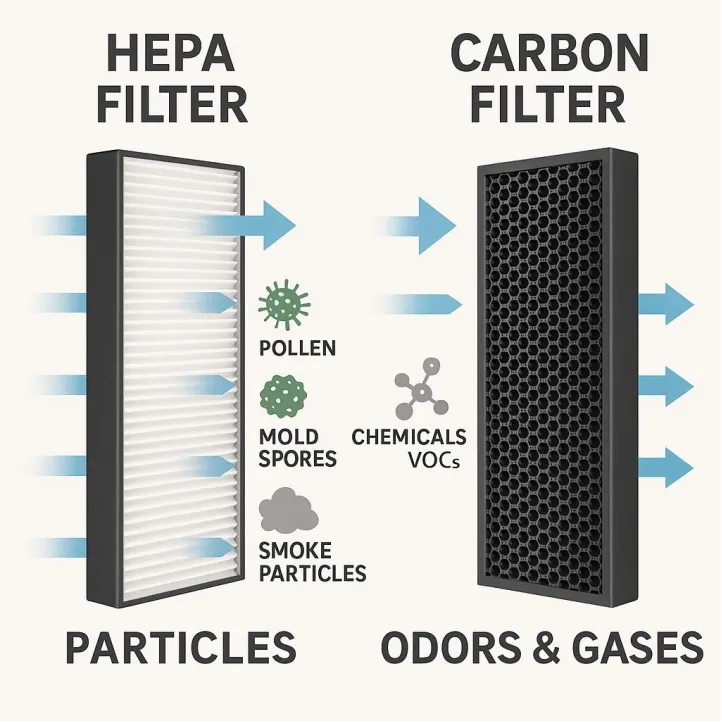
Un filtro HEPA es ideal para partículas finas de polvo. Los filtros HEPA están diseñados para capturar partículas finas en suspensión, como polvo, polen, esporas de moho y PM2.5. Alcanzan su máxima eficiencia con el tamaño de partícula de mayor penetración (MPPS, por sus siglas en inglés), que es de aproximadamente 0,3 micras, pero también pueden capturar eficazmente partículas de mayor y menor tamaño. Logran una alta eficiencia de filtración rápidamente. Se utilizan en salas blancas, hospitales, la industria electrónica, farmacéutica y alimentaria.
Sin embargo, los COV son gases. Nunca son solo polvo. Por lo tanto, la elección entre filtros HEPA y de carbón activado es sencilla. HEPA atrapa partículas. Mientras tanto, un Filtro de carbón activado para COV Gestiona la adsorción de gases.
¿Cómo funciona un filtro de carbón activado para COV?
El carbón activado elimina gases mediante adsorción. Su estructura altamente porosa proporciona una gran superficie interna donde las moléculas de gas se adhieren y quedan atrapadas. Entre estos gases se incluyen el benceno, el formaldehído y el olor a humo. También atrapa otros compuestos orgánicos volátiles. El tiempo de contacto y la cantidad de carbón son factores importantes. El flujo de aire, la humedad y la estructura del filtro también modifican el resultado final.
Carga de carbono, resistencia y vida útil
Los datos de la base de conocimientos para medios filtrantes de carbón activado muestran opciones de contenido de carbón superiores a 70 g/m², 90 g/m² y 150 g/m², con adsorción de benceno listada desde ≥65 % hasta ≥75 % y resistencia inferior a 12 Pa hasta 25 Pa. Eso es útil cuando se necesita un Filtro de eliminación de COV con control tanto de adsorción como de flujo de aire.
En los purificadores de aire, los filtros de carbón pueden utilizar partículas de carbón catalítico tratado, relleno de panal o carbón adherido para absorber el olor a humo, eliminar el formaldehído y reducir los olores con baja resistencia al viento. Una mayor concentración de carbón no siempre se traduce en un mejor rendimiento. La eficiencia del filtro también depende del flujo de aire, el tiempo de contacto, la calidad del carbón, la humedad y el compuesto orgánico volátil (COV) específico que se esté eliminando.
¿Qué tipo de filtro de carbón activado debería elegir?
Las distintas aplicaciones requieren estructuras diferentes. Un purificador de aire para un dormitorio pequeño, una unidad de climatización comercial y un sistema industrial de tratamiento de COV no utilizarán el mismo diseño de carbono.
¿Por qué elegir soluciones personalizadas de filtros de carbón activado?
Un filtro estándar puede ser compatible con la máquina, pero no con el contaminante. Es ahí donde el diseño personalizado de filtros de carbón activado cobra importancia. Puede configurar el tamaño, el marco, el tipo de carbón, la capa filtrante, el flujo de aire, la resistencia y la vida útil según las necesidades específicas.
Capacidad de filtro de carbón de Healthy Filters
Filtros saludables Es un socio de fabricación práctico para compradores que necesitan más que un simple artículo de catálogo. Fundada en Shenzhen en 2016, suministra filtros para purificadores de aire, filtros HEPA, filtros de carbón activado, prefiltros y medios filtrantes, con gestión ISO 9001, pruebas CADR, producción en sala limpia y soporte OEM. Para los compradores, esto significa que las muestras, los planos y las especificaciones personalizadas se gestionan con mayor rapidez.
Un filtro compuesto HEPA y de carbón activado suele ser la opción más segura para los proyectos de filtros de COV en purificadores de aire, ya que combina la captura de partículas con la adsorción de gases. En el caso de los filtros de aire OEM personalizados, esta combinación ayuda a solucionar las quejas más comunes de los clientes: polvo, olores, humo, formaldehído y el típico olor a habitación nueva.
Preguntas frecuentes
P1: ¿Los filtros HEPA eliminan los COV?
R: No. Los filtros HEPA capturan principalmente partículas. Para los gases COV, se necesita un filtro de carbón activado.
P2: ¿Cuál es el mejor filtro para eliminar COV?
R: Un filtro de eliminación de COV con suficiente carbón activado, un flujo de aire adecuado y un tiempo de contacto suficiente suele ser la mejor opción.
P3: ¿Es el carbón activado eficaz para eliminar el formaldehído?
A: El carbón activado puede adsorber formaldehído, pero su eficacia depende del tipo de carbón, la tecnología de impregnación, las condiciones de funcionamiento, la humedad y el tiempo de contacto. Para aplicaciones exigentes, el carbón activado con tratamiento especial suele ofrecer mejores resultados.
P4: ¿Cuál es la diferencia entre un filtro de carbón activado en forma de panal y un filtro de carbón activado granular?
A: Un filtro de carbón activado tipo panal suele tener menor resistencia. Un filtro de carbón activado granular puede contener más carbón para una adsorción más fuerte.
P5: ¿Por qué elegir un filtro de carbón activado esférico?
A: Un filtro de carbón activado esférico es adecuado cuando se necesita bajo nivel de polvo, baja resistencia, alta resistencia y mayor vida útil.